







When your factory produces steel pipes — whether seamless, welded, or spiral‑welded — putting them through rigorous hydraulic tests is non‑negotiable. The right hydraulic testing machine ensures your pipes meet pressure standards, resist leaks, and stand up under real-world operating conditions. But how do you choose the right machine? It depends on the interplay between your factory’s production capacity and the specifications of the pipes you make. If you skip or get this wrong, you risk producing sub‑standard pipes — which can lead to costly reworks, safety hazards, or reputational damage.
1. Start by Clarifying Your Pipe Specifications
Before anything else: get crystal clear on what kinds of pipes you produce now — and what you plan to produce in the future. Key factors include:
-
Outer diameter (OD) and wall thickness — different machines support different diameter and thickness ranges.
-
Pipe length — some machines only accommodate certain pipe lengths. For example, certain hydrostatic testers support lengths between 4–13 m.
-
Material type (carbon steel, stainless steel, welded vs. seamless) — because sealing/clamping methods and pressure/strength requirements may vary.
-
Maximum internal pressure the pipes must withstand — e.g. for water supply vs. oil/gas pipelines, or high‑pressure industrial applications.
2. Match Machine Capacity to Your Production Volume
Your factory’s throughput — pipes per day/week, variety of sizes, degree of automation — affects what kind of testing machine you need.
-
Low-volume or small-diameter pipe production can often use simpler hydrostatic testers, sometimes even manually controlled or semi‑automatic, especially if variety is small.
-
High-volume production, or frequent size changeovers, benefits greatly from machines with automatic loading/unloading, PLC or computer control, digital pressure curves and data logging. These reduce labor, speed up testing, and ensure consistent results.
-
If your factory expects growth — e.g. larger-diameter pipes, thicker walls, more variety — it’s wiser to invest in a more flexible, higher-capacity machine now, rather than risk being “boxed in” later.
3. Key Technical Criteria: What the Machine Must Support
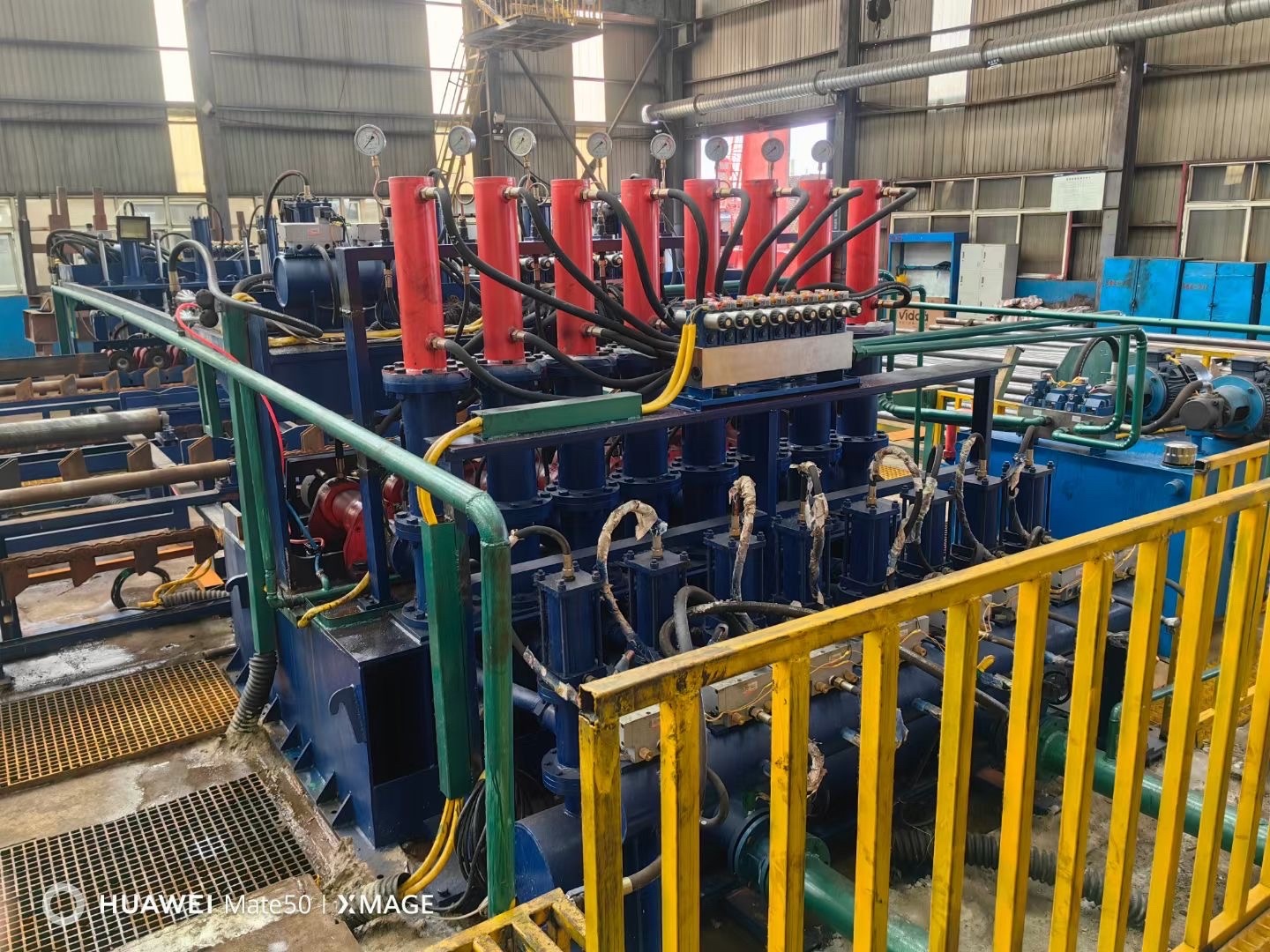
When evaluating hydraulic testing machines for steel pipes, pay attention to these critical technical aspects:
|
Criterion |
What to Check |
Why It Matters |
|
Pressure range / headroom |
Max test pressure ≥ your worst-case pipe internal pressure (ideally with margin) |
Underpowered machine → risk of false pass or failure under real load |
|
Diameter & length range |
OD, wall-thickness, length capacity match your pipe specs |
A mismatch can lead to improper sealing/clamping or even inability to test some pipes |
|
Sealing / clamping system quality |
End-face seals, radial seals, robust clamps, cylinder thrust capacity, proper fixtures |
Poor sealing leads to leaks, false failures, or wasted time diagnosing issues |
|
Automation & control features |
PLC/PC control, digital pressure/time curves, automatic filling/pressurizing/venting, data logging |
Enables higher throughput, consistency, traceability and compliance records |
|
Flexibility & upgrade potential |
Ability to handle future pipe sizes or pressures, optional accessories, adjustable fixtures |
Future‑proofing ensures long-term value and avoids frequent equipment replacements |
4. Align Selection with Intended Industry/Application
What your pipes will be used for should influence your machine choice:
-
Oil & Gas pipelines — demand high-pressure capacity, tight tolerances, strong sealing/clamping, robust testing protocols (often to standards such as API 5L or other regional equivalents).
-
Water supply / sewage / general civil infrastructure — pressure requirements may be moderate; throughput and cost-efficiency may matter more. Machines optimized for medium-pressure, high-cycle testing may suffice.
-
Industrial, structural, or custom applications — may require flexibility: varying diameters, wall thicknesses and possibly non-standard lengths/materials. A more versatile machine with adjustable fixtures and programmable control will pay off.
5. Future‑Proofing: Why Scalability & Flexibility Matter
In manufacturing, demand and specifications rarely stay static. Even if you now produce small-diameter pipes for general water supply, you might expand into oil‑gas pipelines, thicker walls, or larger diameters.
If the testing machine you choose today cannot adapt — to larger OD, higher pressure, different sealing/clamping configurations — you might end up buying a new machine later, which is costly. That’s why many equipment‑buyers consciously choose machines with:
-
Broad diameter and length ranges.
-
Adjustable fixtures and modular sealing/clamping heads.
-
Programmable control & data logging to meet future standards or audit demands.
6. Practical Selection Steps (for Your Factory)
Putting all the above together — here is a recommended selection process, which you as a decision‑maker at a steel-pipe manufacturing firm could follow:
-
List current product specs: OD range, wall thickness, lengths, materials, and required test pressures.
-
Forecast future production needs: Any plan to increase capacity, expand product range to larger/heavier pipes or higher-pressure pipes?
-
Define throughput requirements: How many pipes per day/week? Consider cycles per hour, automation needs, staffing.
-
Survey supplier machines: Request detailed specifications — diameter/length range, max pressure, sealing/clamping type, automation level, data logging capability, maintenance requirements.
-
Compare vs. your needs + future projection: Avoid machines that barely meet current specs — prefer ones with margin and flexibility.
-
Validate compliance & safety features: Strong sealing, stable clamps, safe pressurization, data traceability — particularly if pipes are for critical applications (oil/gas, high‑pressure fluid transport).
-
Consider total cost of ownership: Not only upfront price, but operating costs, maintenance, downtime risk, flexibility (future-proofing), and quality assurance (reducing rejects).
This structured approach helps avoid ad‑hoc decisions and ensures the machine you pick remains an asset — not a liability — as your business grows.
7. Why This Matters — Not Just for Safety, but for Business Success
Choosing the right Steel pipe hydrostatic testing machine isn’t just a technical detail: it impacts product quality, production efficiency, operational cost, and the reputation of your company. A poor choice might sneak through sub‑standard pipes, leading to warranty claims, safety issues, or liability risks.