








When you manufacture steel pipes — whether for water supply, oil & gas, industrial pipelines or structural use — quality control isn’t a “nice‑to‑have,” but must‑have. A well‑designed hydrostatic testing machine is among the most important tools in your quality assurance line. But what kinds of defects can such a machine reliably catch? And what are its limits? In this article, I’ll walk you through the typical defects revealed by hydrostatic testing, and why the test remains a cornerstone for steel‑pipe manufacturers.
What is hydrostatic testing — and how it works
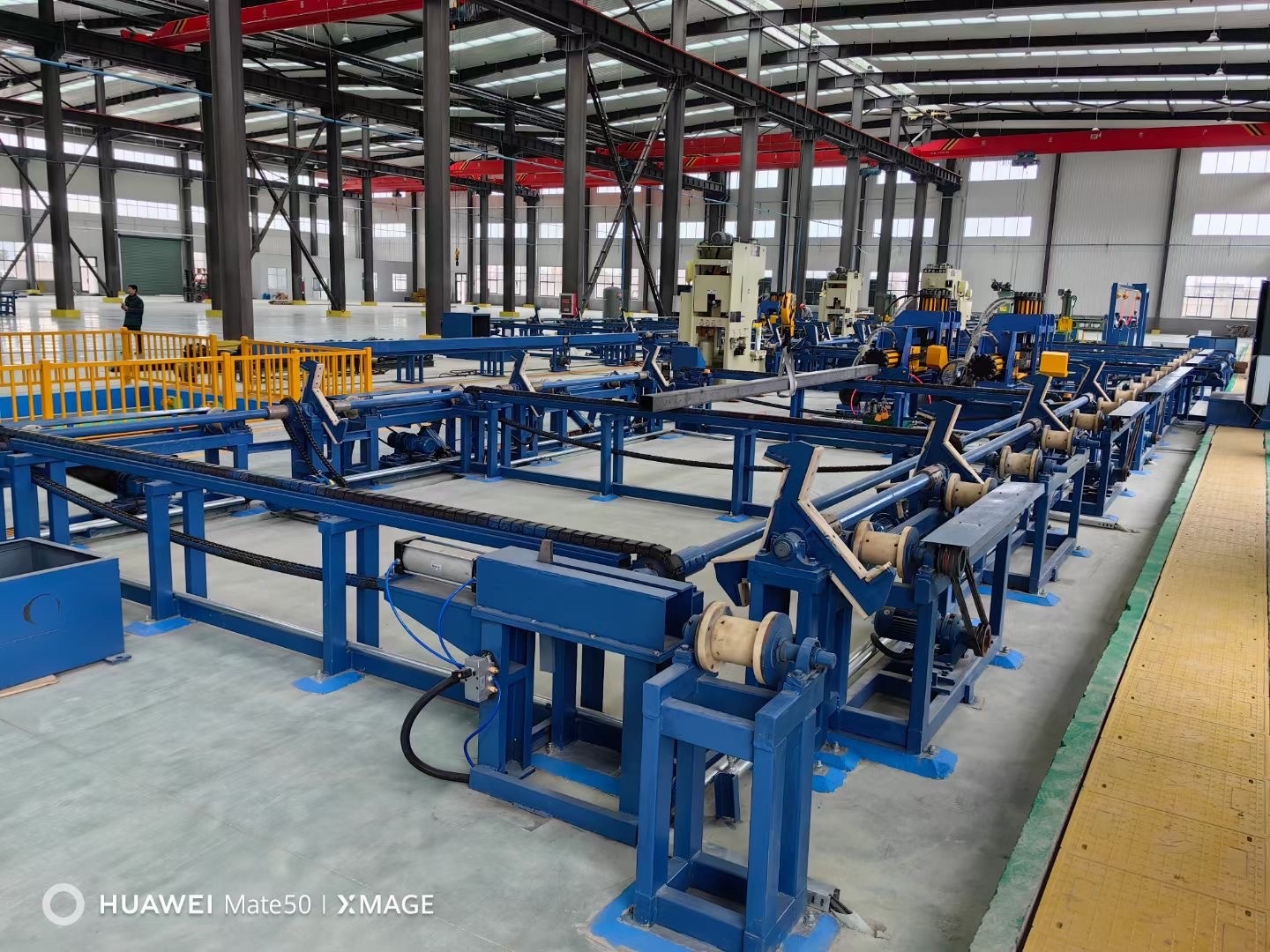
Hydrostatic testing means filling the pipe with fluid (usually water), removing all air, then applying internal pressure (often above the pipe’s intended working pressure) and holding it for a specified time. The idea is simple: water doesn’t compress like air, so if there’s a leak, crack, weak seam, thin wall or structural weakness — the pressure will drop, or you’ll see a visible leak. A properly equipped hydrostatic testing machine adds precision: accurate pressure gauges or transducers, controlled pressure ramp‑up and hold, data logging, and reliable end‑sealing fixtures.
Because of this, hydrostatic testing serves as a “densification test” — verifying that each pipe can hold designed internal pressure without leaking or deforming.
Common defects and failures revealed by hydrostatic testing
Here are the most frequent issues that hydrostatic testing can detect in steel pipes:
-
Leaks, cracks or holes — If the pipe wall has cracks (surface or internal), micro‑fissures, or small holes (maybe due to inclusions, slag, or internal voids), pressurizing the pipe with water under pressure often forces water out, or causes a pressure drop. This is the textbook pass/fail scenario hydrostatic testing is built for.
-
Weak welds or seam failures — For welded or seam pipes (e.g. ERW, SSAW, LSAW), the weld seam or joint area is often the weakest point. If welding quality is poor, or if there’s a seam defect (like incomplete fusion, inner laps, or internal delamination), the internal pressure may push the seam to leak or even split. Hydrostatic testing helps expose these weld/seam‑related defects before the pipes leave the plant.
-
Material defects: lamination, voids, inclusions — Sometimes the raw material (billet) may contain defects: internal voids, inclusions, delaminations, or non‑homogeneities. Under pressure, these weak spots may cause leakages or even rupture. Indeed, industry case studies note hydrostatic test failures due to mid‑wall laminations or voids that became critical under pressure.
-
Wall thickness reduction / internal corrosion or erosion (in reused or reconditioned pipes) — Though hydrostatic testing is primarily a pressure test, a pipe that has lost wall thickness due to internal corrosion or erosion may also fail under test, since the thinner sections lack sufficient strength to hold pressure.
-
Deformation / bulging / permanent distortion — Under pressure, if the pipe material or geometry is marginal, the pipe could deform — bulge, ovalize, or distort. Even if there’s no visible leak, such deformation is a red flag that the pipe may fail under real-world loading.
Hydrostatic testing doesn’t “see” defects in the sense of imaging them — but it proves whether the pipe can perform under pressure. If a pipe passes hydrostatic test, you gain strong confidence in its structural integrity and sealing performance.
What hydrostatic testing cannot reliably detect — limits to be aware of
Hydrostatic testing is powerful — but it isn’t a silver bullet. Because it is a pressure/leak test, certain defect types may pass unnoticed. Typical limitations include:
-
Very small internal cracks or defects that don’t puncture or propagate under test pressure — if a crack is shallow or aligned such that pressure doesn’t open it up, water might not leak and the pipe may pass the test.
-
Near‐surface or surface defects that aren’t open to the internal bore — for example, external corrosion pits, surface scratches, metallurgical discontinuities on outer wall surfaces may not show up if they don’t penetrate or weaken under pressure.
-
Material property issues (non‑uniformity, brittleness, micro‑cracks) that only manifest under cyclic loading, fatigue, or thermal stress in real operation — hydrostatic testing is static; it doesn’t replicate real‑life dynamic conditions like pressure cycling, vibration, temperature swings, corrosive environments, etc.
-
Subtle geometry defects, internal inclusions, or internal lamination in thick‑walled pipes — sometimes these may not lead to leakage under test conditions but can reduce long‑term reliability, especially under dynamic load or stress corrosion conditions.
Because of these limitations, many standards and manufacturers complement hydrostatic testing with other non‑destructive testing (NDT) methods — such as ultrasonic testing (UT), radiographic testing (RT), or electromagnetic‑based methods (like eddy current testing) — to detect internal voids, inclusions, weld discontinuities, or outer surface defects.
Why hydrostatic testing remains indispensable — and how to use it most effectively
Despite its limitations, hydrostatic testing remains a foundational quality control method. Here’s why:
-
It gives functional proof — not just a theoretical or superficial “look” at the pipe’s condition, but real confirmation that under pressure the pipe holds water, doesn’t leak or deform. For many applications, that’s the most relevant measure.
-
It’s relatively simple, cost‑effective, and quick, especially with a good hydrostatic testing machine that supports automatic fill/bleed, controlled pressure, data logging and safety interlocks.
-
It supports traceability and documentation — test records, pressure‑time charts, pass/fail logs. This is critical when you supply to clients in oil & gas, infrastructure, or other regulated industries, where customers may require proof of testing.
-
Combined with other NDT methods (UT, RT, ECT), hydrostatic testing forms part of a multi‑layered quality assurance program — maximizing the chance that pipes meet both strength and metallurgical standards.
For manufacturers (like your company), this means: integrate hydrostatic testing into every production batch, invest in quality hydro testers (with precise pressure control, good sealing fixtures, data logging), and — when needed — combine with complementary inspection (ultrasonic, radiographic, electromagnetic) for critical pipe types (high‑pressure, thick‑walled, or high‑risk applications).
Hydrostatic testing is not magic — but it is one of the most effective, practical and reliable ways to detect many of the most critical defects in steel pipes: leaks, weak welds, internal voids, wall‑thickness issues, and structural weakness under pressure. When your testing setup is well‑designed, and when hydrostatic testing is combined with other inspection techniques, you can deliver steel pipes that meet high standards of safety and reliability.