








Seamless steel pipes are valued throughout the industrial world — from high‑pressure boilers to oil and gas pipelines, from structural frameworks to water systems. Because these pipes are expected to perform perfectly under demanding conditions, quality control isn’t optional. That’s where steel pipe testing machines play a crucial role. They help manufacturers and buyers alike be confident that a pipe won’t let anyone down once it’s in service.
What makes seamless pipes special?
Seamless steel pipes are made without any welded joint along their length. Instead, a solid steel billet is transformed into a hollow tube through piercing and rolling processes. Because there’s no weld seam, the grain structure and strength distribution are more uniform than in welded alternatives — and that’s a real advantage in high‑pressure applications.
Yet—even though these pipes lack seams—they still require careful testing to make sure nothing hidden will fail when put under stress. Factors like small internal cracks, inconsistent wall thickness, or microscopic flaws are invisible to the eye but dangerous in use.
What a steel pipe testing machine does
At its heart, a steel pipe testing machine pushes a pipe beyond normal working conditions and watches how it behaves.
For seamless steel pipes, two test categories are especially important:
1. Pressure testing
The pipe is filled with water or air and pressurized above its design working pressure for a defined time. The aim is to find leaks, weak spots, or permanent deformation under stress. Most manufacturers use water (hydrostatic test) because it holds energy safely and makes leak detection easier.
How this protects safety:
-
Reveals hidden defects before installation.
-
Demonstrates that pipes can endure pressures above their expected service levels.
-
Provides documented results that buyers and inspectors can trust.
2. Nondestructive tests (NDT) — extra safety checks
In addition to simple pressure tests, seamless pipes often undergo nondestructive testing such as ultrasonic or eddy current checks. These scans reveal internal flaws — like small voids or uneven wall thickness — without harming the pipe.
Together with visual and dimensional checks, these methods ensure a pipe is structurally sound before further inspection.
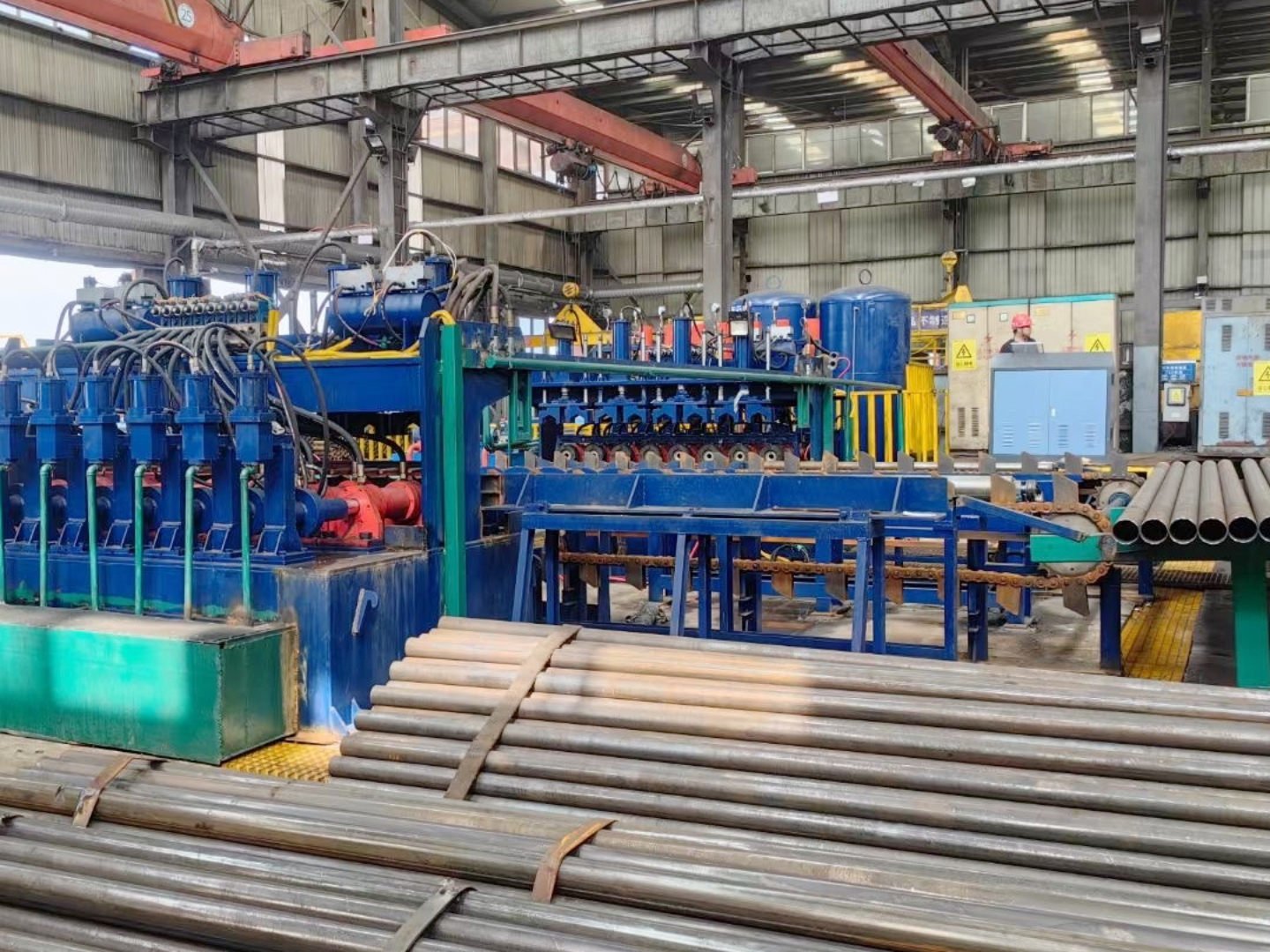
Common Tests Used for Seamless Pipes
Here’s a clear table showing typical tests and what each one checks:
|
|
|
|
|---|---|---|
|
Test type |
What it checks |
How it improves safety or reliability |
| Hydrostatic pressure test | Leak tightness under water pressure | Confirms pipe won’t leak or deform under working conditions |
| Pneumatic pressure test | Air pressure decay | Detects tiny leaks quickly when water is impractical |
| Ultrasonic testing (UT) | Internal flaws/cracks | Finds hidden defects not visible on surface |
| Eddy current testing | Surface & near‑surface defects | Rapid detection of small cracks or inclusions |
| Dimensional check | Diameter and wall thickness | Ensures pipe meets size and tolerance requirements |
How does a testing machine help on the factory floor?
Even with skilled inspectors, manual checks alone aren’t enough once you’re dealing with thousands of pipes. Testing machines automate much of the work:
-
Consistent test procedures: Machines apply the same pressure ramp‑up and hold time every time — that means reliable results batch after batch.
-
Digital logging: Modern machines record pressure graphs, hold durations, and results in digital form — vital for audits and traceability.
-
Safety features: Overpressure protection, emergency shutdowns, and automated release mechanisms protect operators.
-
Higher throughput: Some models test multiple pipes at once or have automated clamping to speed up production checks.
All of this means fewer manual errors, better documented quality, and more efficient inspection compared to old‑fashioned techniques.
A steel pipe testing machine for seamless pipes is not just another piece of production equipment. It’s an essential part of quality control that helps eliminate hidden risks and ensures every pipe is safe, reliable, and ready for service. In industries that cannot afford failures — from petrochemical plants to city water networks — rigorous testing is the backbone of trust and performance.