








When you watch a steel pipe testing machine in action, one of the most important details isn’t the pressure gauge or the digital controller — it’s the seal that keeps the test medium (water or air) from escaping. Without the right kind of sealing, pressure tests are useless: leaks hide real defects or show false failures, and the whole point of testing is lost.
Why Sealing Matters in Pipe Testing
During a pressure test, a pipe is pressurized above its expected service level to check for leaks, deformation, or failure. If the machine itself leaks — at the pipe end, the test head, or any connection — the result could be misinterpreted as a defect in the pipe. Good sealing is what makes the test reliable.
In general, sealing types fall into two broad categories:
-
Seals that contact the pipe itself
-
Seals used at the ends or interfaces of the test machine
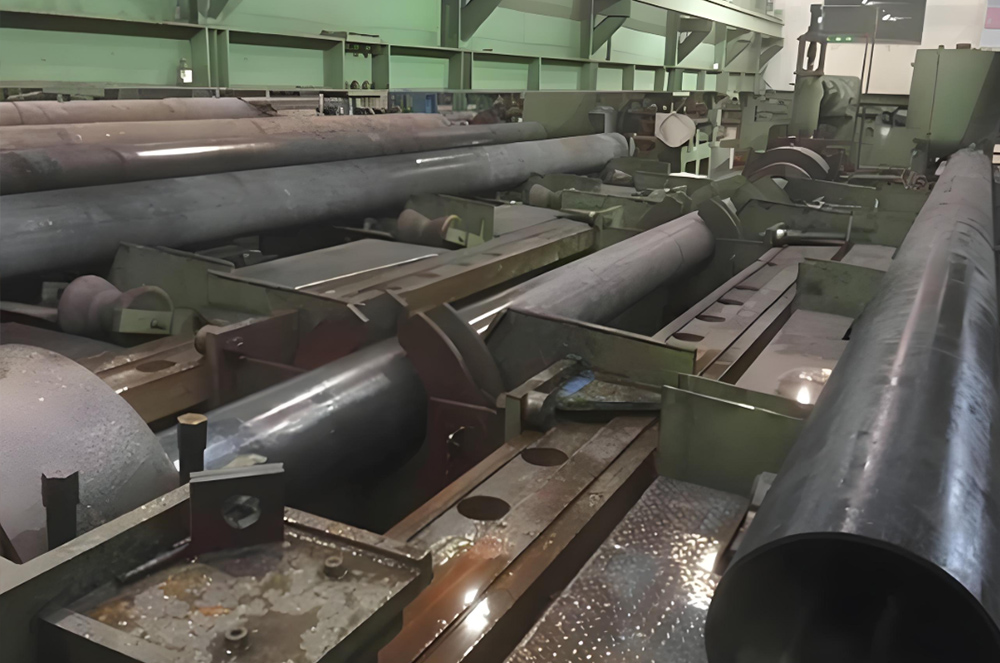
1. Radial Seals / Large-Gap Sealing Components
These seals wrap around the outer surface of a pipe and squeeze inward or expand outward to form a tight barrier against pressure.
Common uses: Hydrostatic testing machines, especially when a range of pipe sizes must be accommodated without changing fixtures.
How they work: A sealing ring — often made from polyurethane — sits around the pipe. Under pressure, it compresses or expands to maintain a tight interface with the pipe surface.
Benefits:
-
Works with a variety of diameters
-
Handles high pressure without slipping
-
Wear-resistant for frequent testing use
Variants like Type C or Type CD large-gap sealing components are designed with backup support blocks and fan-shaped angles that help keep the sealing ring pressed against the pipe even under very high pressures. These types are common in steel pipe pressure testing machines used for oil casing, natural gas lines, and heavy pipeline steel.
2. End Face Seals / End Caps
In many testing machines, the pipe’s ends are sealed by mechanical end caps that push against the pipe faces.
Common uses: Hydrostatic tests where the pipe ends are closed to hold internal pressure.
Typical design: A split or clamshell end cap made of stainless steel or carbon steel, paired with a sealing ring such as an elastomer or silicone gasket, clamps onto the pipe end.
Why this works: By sealing the end face rather than the outside diameter, this method isolates the interior of the pipe efficiently.
Real-world detail: Specialized end caps are designed to handle big diameters and still seal tightly without welding, making them useful when pipes must remain undamaged.
3. O-Rings
Though they may seem simple, O-rings are one of the most common mechanical seals across many types of pressure equipment — including pipe testing rigs.
What they are: A soft elastomer gasket in a circular ring shape, compressed to fill the gap between two parts (such as pipe end connectors or test head components).
Why engineers like them: O-rings are affordable, easy to replace, and work well when seated in properly machined grooves. They provide a reliable static seal — especially in end-cap or test joint applications rather than along the length of a pipe.
4. Skeleton / Profile Seals
Some machines use specially shaped seals with a cross-sectional profile designed to enhance sealing performance.
PYG type seal: A flat sealing ring with a “Y” shaped cross-section, often used for flat sealing surfaces in water filling heads or exhaust heads on a steel pipe hydrostatic tester.
Y-type skeleton seal: Similar in concept, but paired with reinforced PTFE gaskets to handle higher pressures or simplify installation.
These profile seals can be easier to install correctly and can offer performance advantages in certain test head designs.
Comparison of Common Sealing Types
| Sealing type | Where it’s used | Key strength | Typical material |
|---|---|---|---|
| Radial seal / large-gap | Around pipe OD in hydrostatic testers | Flexible for wide range of diameters, high pressure | Polyurethane |
| End face seal / end caps | Pipe ends during internal pressure test | Isolates pipe interior reliably | Stainless/carb. steel + gaskets |
| O-Ring | Test joints / connectors | Simple, inexpensive, widely compatible | Elastomers (NBR, Viton) |
| Profile seals (PYG/Y-type) | Flat surfaces on test heads | Enhanced face contact, ease of assembly | PTFE, reinforced elastomer |
Tips for Reliable Sealing in Practice
Seals can wear out, so it’s not enough to pick the right type — they must be maintained and inspected:
-
Check seal surfaces before every test. Dirt or scratches can ruin a seal’s effectiveness.
-
Match seal material to the test medium. Water, air, or special hydraulic fluids can affect elastomers differently.
-
Rotate or replace high-use seals periodically. Even polyurethane can fatigue after many cycles.
-
Follow groove and fitting design carefully. A seal is only as good as the surface it seats against.
The sealing system in a steel pipe testing machine may not be glamorous, but it’s fundamental. The right sealing design — whether a large radial ring, precision end cap, or carefully seated O-ring — can make the difference between an accurate test and misleading results.