








In pipe manufacturing, quality inspection isn’t just another box to tick — it’s the safety net that protects your products, your customers, and your company’s reputation. At the heart of many quality assurance programs lies the hydro testing machine for pipe — a tool that doesn’t just test pressure, but gives manufacturers confidence that their pipes will perform reliably in the field.
But what makes a proven hydro testing machine truly effective at reducing inspection risks? And why are so many manufacturers choosing one over older, manual testing methods? Let’s break it down in practical terms.
1. Detect Hidden Flaws Before Shipment
One of the biggest risks in pipe quality inspection is not knowing what you didn’t see. Surface inspections or visual checks can miss subtle but critical defects — like micro-cracks, incomplete welds, or internal stress points.
A hydro testing machine for pipe subjects the entire pipe to controlled high pressure, usually higher than its expected working pressure, and monitors response. Because water is nearly incompressible and transmits pressure evenly, even small leaks or weaknesses become detectable during the test cycle.
This early detection prevents failures in the field, which are far more costly than repairing or replacing a pipe before shipment.
2. Standardizes Every Test, Reducing Human Error
Manual testing is inherently variable — two technicians might run the same test differently, or forget to record crucial test conditions. That inconsistency increases risk because you can’t be sure that every pipe was tested under the same conditions.
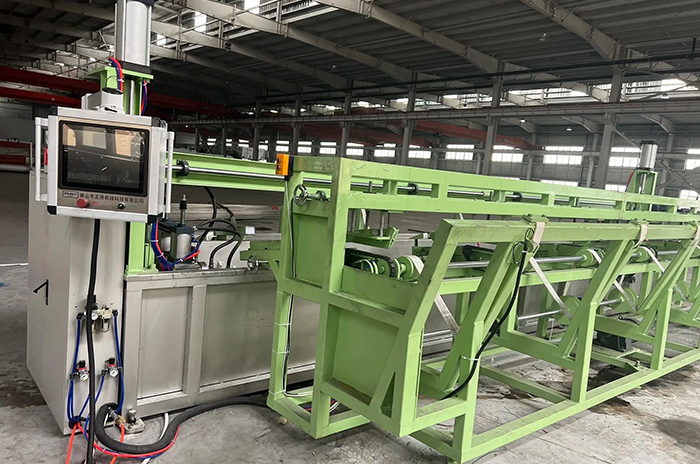
A modern hydro testing machine for pipe automates critical parts of the process:
-
Controlled pressure ramp-up
-
Defined pressure hold times
-
Digital pass/fail criteria
-
Automated data logging
By enforcing repeatable, standardized tests across batches, the machine minimizes variation and human error. This consistency dramatically reduces the chances of a defective pipe slipping through inspection.
3. Creates Objective, Traceable Quality Records
Risk isn’t only about what fails — it’s about what you can prove. In regulated industries like oil & gas, water infrastructure, or industrial fluid systems, documented proof of quality — including complete test records — isn’t just helpful, it’s often mandatory.
A hydro testing machine for pipe equipped with digital monitoring can automatically capture pressure curves, duration data, and failure points. These records provide:
-
Traceability for each production batch
-
Easy audit trails for compliance purposes
-
Clear documentation to share with customers
Objective data replaces guesswork and protects both internal quality teams and customer relationships.
4. Reduces Risk of Costly Rework and Field Failures
The cost of an undetected flaw extends far beyond a failed test. Pipes that fail in service can cause:
-
Project delays
-
Emergency repairs
-
Customer complaints and returns
-
Safety incidents
Catching these issues before pipes leave your facility avoids emergency downtime and expensive remediation.
A proven hydro testing machine for pipe helps prevent these downstream costs by ensuring pipes are tested under conditions that mimic real-world stress, giving you confidence that what passed inspection will perform as expected later.
5. Ensures Compliance With Global Standards
Different markets have different rules. Standards like ISO 1167, ASTM D1598/D1599, API, and various national codes specify how hydrostatic tests should be carried out and recorded. A reliable hydro testing machine for pipe not only meets these standards — it makes compliance easier by generating verifiable digital test outputs.
This is key for manufacturers selling into export markets or bidding on large infrastructure projects, where documented proof of pressure testing isn’t just nice to have — it’s a contractual or regulatory requirement.
6. Improves Safety and Reduces Operational Risk
Unlike pneumatic testing (using air or gas), hydrostatic testing with water is inherently safer because water stores less compressible energy. This makes failures less violent and reduces risk to personnel and equipment.
A hydro testing machine for pipe is designed with safety in mind:
-
Controlled pressurization and depressurization
-
Emergency shutdown systems
-
Relief valves and interlocks
These features protect operators and provide peace of mind — especially when working with high-pressure systems.
7. Supports Faster, More Reliable Production
Inspection risk isn’t only about what you miss, but how long it takes to catch it. Proven hydro testing machines can run faster, automated test cycles and even handle multiple pipes in parallel. This reduces inspection bottlenecks while keeping quality consistently high — a critical factor in meeting delivery deadlines without cutting corners.
Bottom Line: Risk Mitigation Through Quality Assurance
Here’s a quick summary of how a proven hydro testing machine for pipe helps manufacturers reduce quality inspection risks:
| Benefit | How It Reduces Risk |
|---|---|
| Detects hidden defects early | Ensures weak spots are caught before shipment |
| Standardized tests | Removes variability from manual inspections |
| Digital records | Improves traceability and compliance |
| Prevents field failures | Lowers cost of rework and customer service |
| Meets global standards | Supports certification and market access |
| Enhanced safety features | Protects personnel during high-pressure tests |
| Faster cycles with automation | Improves throughput without sacrificing reliability |
When you invest in a reliable hydro testing machine for pipe, you’re investing in certainty — certainty that every pipe meets design expectations, every test is documented, and every risk is understood and managed.