







When manufacturers search for hydrostatic testing equipment, one of the first questions they ask is simple: why does the Hydro Testing Machine Price vary so much between suppliers?
You might see one quotation at $30,000 and another at $150,000 for what appears to be a similar machine. In reality, several technical factors influence the final cost, and pipe diameter range is one of the most important.
If your production line handles pipes from DN50 to DN200, the equipment design will be completely different from a system that must test large-diameter pipes above DN1200. The wider the diameter range, the more complex the machine becomes—and that directly affects the Hydro Testing Machine Price.Let’s break down why pipe diameter has such a strong impact on the cost of hydrostatic testing equipment.
1. Larger Pipe Diameters Require More Powerful Machines
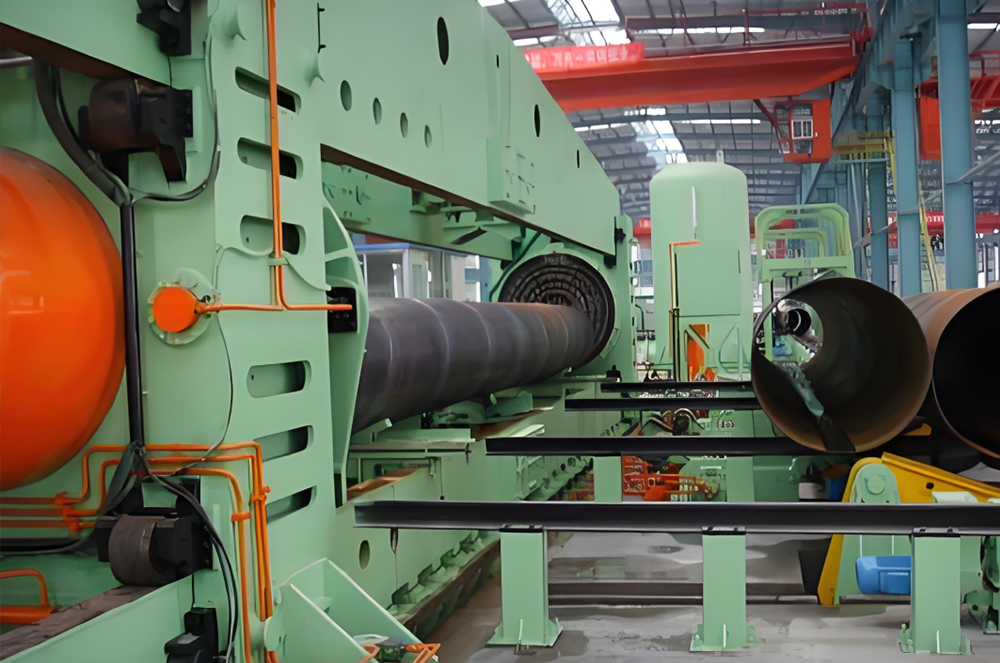
The most obvious factor is testing force. Larger pipes require higher hydraulic force and stronger clamping systems.
For example, some industrial hydrostatic testing machines are designed for pipe diameters ranging from 20 mm to more than 1420 mm, depending on the production line requirements.
As the pipe diameter increases:
-
The sealing head must be larger
-
The clamping system must withstand higher loads
-
The hydraulic cylinders must generate greater force
For large-diameter steel pipes used in pipeline projects, hydro testing machines may even require multi-cylinder hydraulic systems with thousands of tons of thrust to maintain sealing and pressure stability.
All of this adds complexity to the machine design—and increases the Hydro Testing Machine Price.
2. Wider Diameter Range Means More Adjustable Components
A machine designed for one fixed pipe size is relatively simple.
But many pipe manufacturers need equipment that can test multiple sizes, for example:
| Pipe Diameter Range | Typical Application |
|---|---|
| DN20 – DN200 | Small industrial pipes |
| DN200 – DN600 | Medium steel pipe production |
| DN600 – DN1400+ | Oil & gas pipeline manufacturing |
Hydrostatic testing systems for large industrial pipes may support diameters up to 1422 mm or more, depending on the factory’s product range.
To accommodate different sizes, the machine must include:
-
Adjustable test heads
-
Movable sealing devices
-
Flexible clamping systems
-
Programmable PLC control
These features improve production flexibility—but they also increase the Hydro Testing Machine Price.
3. Sealing Systems Become More Complex for Large Pipes
Hydrostatic testing requires a perfect seal at both pipe ends.
For small pipes, this is relatively easy. Standard rubber seals and simple fixtures are often sufficient.
However, large-diameter pipes introduce several engineering challenges:
-
Increased sealing area
-
Higher axial force during pressure testing
-
Risk of deformation at pipe ends
Industrial hydro testing machines therefore use specialized sealing technologies such as:
-
End-face sealing
-
Radial sealing
-
Expandable sealing heads
These advanced sealing systems ensure reliable testing but also raise the overall Hydro Testing Machine Price.
4. Testing Pressure and Diameter Are Closely Related
Another technical reason diameter affects cost is the pressure calculation.
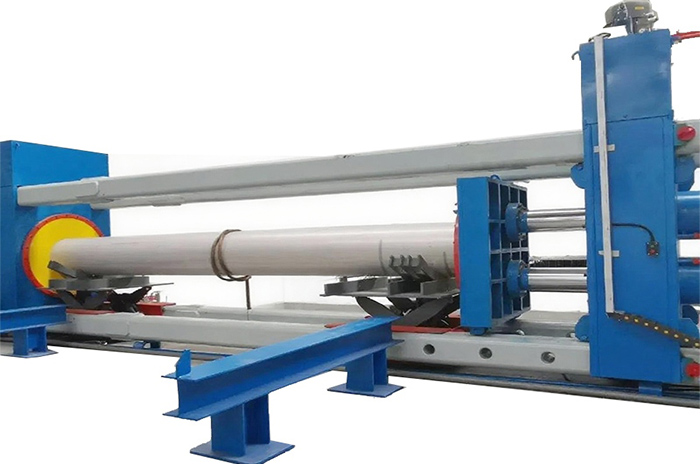
In hydrostatic testing, the required pressure depends on pipe material, wall thickness, and diameter. One common calculation formula is:
Where:
-
P = test pressure
-
S = wall thickness
-
R = allowable stress
-
D = pipe diameter
When the pipe diameter changes, the machine must handle different pressure requirements and structural loads.
As a result, manufacturers must design the equipment with:
-
stronger frames
-
higher-capacity pumps
-
more advanced pressure control systems
These engineering upgrades directly influence the Hydro Testing Machine Price.
5. Large Diameter Machines Require Bigger Structures
Testing a small pipe may only require a compact machine.
Testing large pipes used in pipelines is another story entirely.
Machines for large-diameter pipes often require:
-
long testing beds (up to 12 m or more)
-
heavy-duty rollers
-
reinforced frames
-
automated loading systems
For example, hydrostatic testers for steel pipe production lines may support pipe lengths between 4 m and 12 m while maintaining stable pressure during testing cycles.
The larger the structure, the higher the manufacturing cost—which again increases the Hydro Testing Machine Price.
Example: How Diameter Range Changes Machine Cost
Here’s a simplified comparison.
| Pipe Diameter Capacity | Machine Complexity | Typical Hydro Testing Machine Price |
|---|---|---|
| DN20 – DN200 | Basic machine | $5,000 – $20,000 |
| DN200 – DN600 | Medium industrial system | $20,000 – $80,000 |
| DN600 – DN1400+ | Heavy-duty testing line | $80,000 – $300,000+ |
This is why two hydro testing machines that look similar in pictures can have dramatically different Hydro Testing Machine Price quotations.
How Buyers Should Evaluate Hydro Testing Machine Price
Instead of focusing only on the number in the quotation, experienced buyers usually ask a few key questions:
-
What pipe diameter range does the machine support?
-
Does the system allow fast diameter adjustment?
-
Is the sealing system suitable for large pipes?
-
Can the machine integrate with the production line?
-
What is the maximum testing pressure?
These factors determine whether the Hydro Testing Machine Price represents good value for your production needs.
Pipe diameter range plays a major role in determining the final Hydro Testing Machine Price. The larger and more flexible the diameter range, the more engineering work is required—from hydraulic systems to sealing technology and machine structure.
For pipe manufacturers, choosing the right hydro testing equipment means balancing price, capability, and long-term reliability.A slightly higher Hydro Testing Machine Price often means stronger equipment, better accuracy, and smoother production.And in industrial manufacturing, reliability is almost always worth the investment.