








In modern steel pipe manufacturing plants, quality control is not optional—it’s a critical part of the production process. Whether a factory produces seamless pipes or welded pipes, each pipe must be tested to ensure it can safely withstand internal pressure before it leaves the production line.
This is where Pipe Pressure Testing Equipment becomes essential. Installed at the finishing stage of pipe production lines, the equipment verifies the pressure resistance and leak-tightness of pipes before shipment.
For manufacturers serving industries like oil & gas, construction, water supply, and energy infrastructure, reliable Pipe Pressure Testing Equipment is one of the most important tools in maintaining product quality and meeting international standards.
Why Seamless and Welded Pipes Need Pressure Testing
Although seamless and welded pipes are manufactured differently, both types must undergo strict pressure testing before entering the market.
-
Seamless pipes are formed by piercing and rolling solid steel billets.
-
Welded pipes are produced by forming steel plates or strips and welding the seam.
Despite these different manufacturing methods, both pipe types may develop defects such as:
-
Micro-cracks
-
Welding imperfections
-
Material inconsistencies
-
Structural weaknesses
Hydrostatic pressure testing exposes these defects by filling the pipe with water and applying pressure beyond its operating level. If the pipe cannot maintain pressure without leakage or deformation, it fails the test.
Because of this, Pipe Pressure Testing Equipment is typically installed at the end of seamless pipe mills, ERW pipe lines, and spiral welded pipe production systems.
How Pipe Pressure Testing Equipment Works in Production Lines
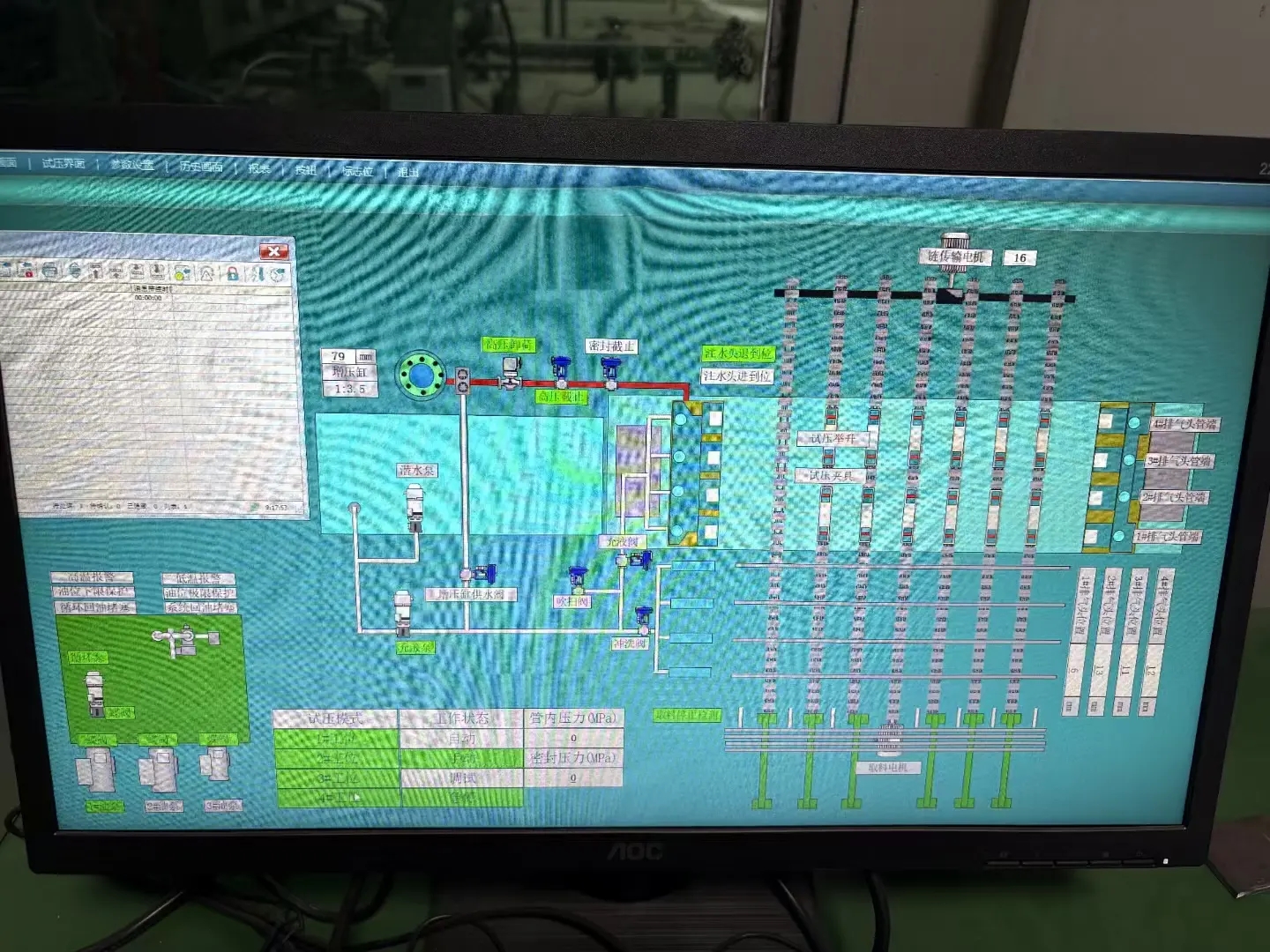
Modern Pipe Pressure Testing Equipment is designed to operate automatically within a pipe production line.
A typical hydrostatic testing cycle includes the following steps:
-
Pipe enters the testing station
-
The pipe ends are sealed with specialized fixtures
-
Water fills the pipe to remove trapped air
-
Hydraulic pumps increase pressure gradually
-
Pressure is held for a specified duration
-
Sensors monitor pressure stability
-
The system releases pressure and drains water
This entire process can be automated using PLC control systems and digital monitoring interfaces.
With modern Pipe Pressure Testing Equipment, the test results can be automatically stored and printed, providing documented proof of product quality.
Key Features Required in Seamless and Welded Pipe Testing Lines
Manufacturers typically choose Pipe Pressure Testing Equipment with several key capabilities to match the requirements of both seamless and welded pipe production.
1. Wide Diameter Testing Range
Pipe mills often produce pipes of multiple sizes, so testing machines must accommodate different diameters.
For example, some hydrostatic testing machines support pipe diameters from Φ20 mm up to several thousand millimeters, depending on the production line configuration.
This flexibility allows the same Pipe Pressure Testing Equipment to test both small seamless pipes and large welded pipeline sections.
2. High Pressure Testing Capacity
Industrial pipes used in oil & gas or energy infrastructure must withstand extremely high pressures.
Modern Pipe Pressure Testing Equipment can reach testing pressures of 50 MPa or even higher, depending on the pipe specification.
High-pressure capability is especially important when testing:
-
oil and gas pipeline pipes
-
boiler tubes
-
high-pressure fluid transport pipes
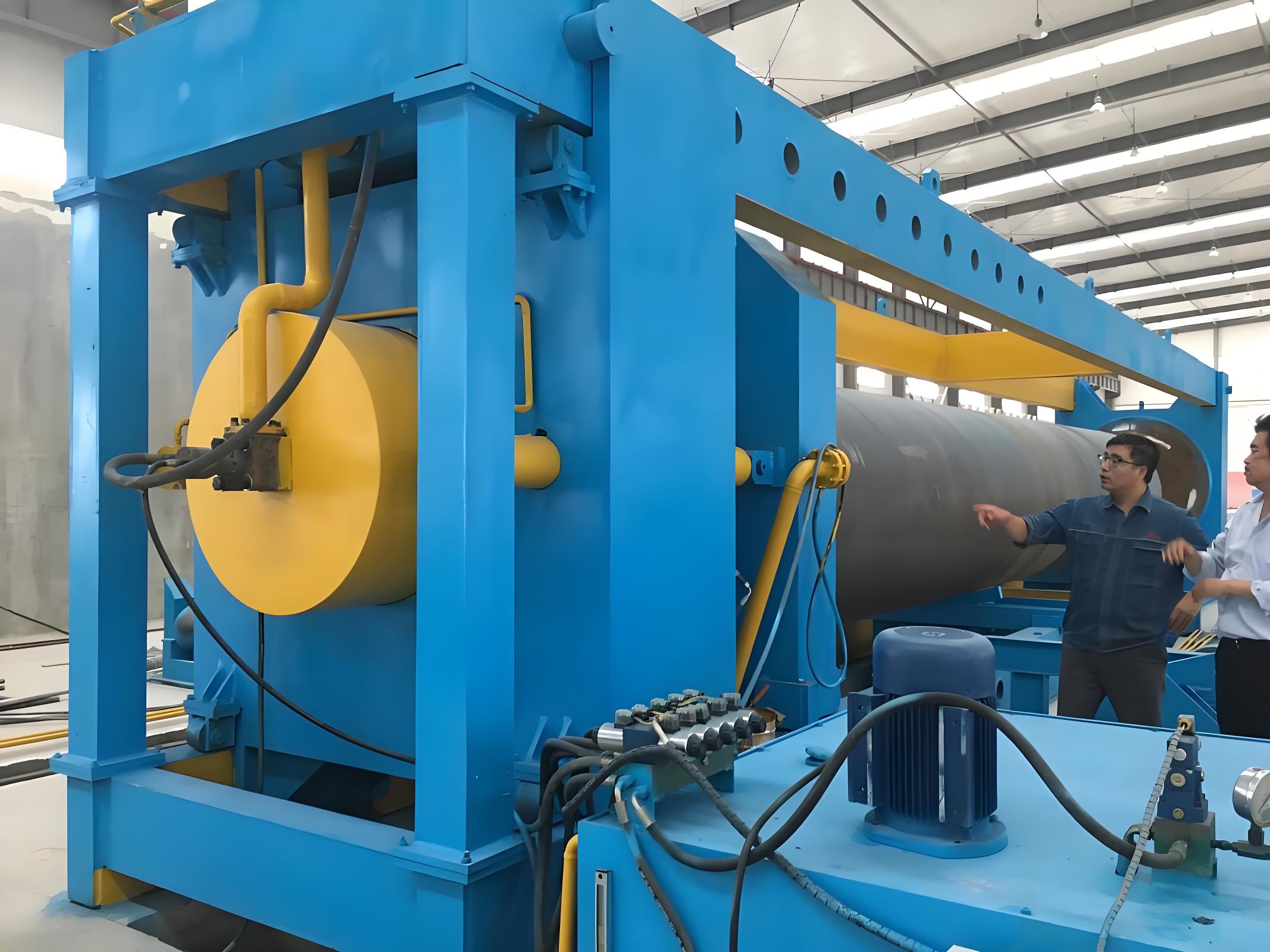
3. Advanced Sealing Systems
During hydrostatic testing, the pipe ends must be sealed perfectly to prevent leakage.
Modern Pipe Pressure Testing Equipment typically uses:
-
End-face sealing systems
-
Radial sealing mechanisms
-
Polyurethane sealing rings
These sealing technologies ensure stable pressure during testing and help avoid measurement errors.
4. Automated Control and Data Logging
Automation is now standard in advanced Pipe Pressure Testing Equipment.
Modern systems include:
-
PLC-based control panels
-
Real-time pressure monitoring
-
Automatic test result recording
-
Data storage and printing
Automation improves testing efficiency and reduces operator error, especially in high-volume pipe production environments.
Seamless vs Welded Pipe Testing Requirements
Although the same Pipe Pressure Testing Equipment can be used for both types of pipes, there are some practical differences in testing requirements.
| Pipe Type | Key Concern During Testing | Testing Focus |
|---|---|---|
| Seamless pipe | Material integrity | Pressure resistance |
| ERW welded pipe | Weld seam quality | Leak detection |
| Spiral welded pipe | Long weld seam | Structural strength |
Modern hydrostatic testing machines are designed to handle all three pipe categories, making them suitable for mixed production lines.
Benefits of Pipe Pressure Testing Equipment in Pipe Mills
Using reliable Pipe Pressure Testing Equipment offers several important benefits for pipe manufacturers.
1. Ensures Compliance With Industry Standards
Global standards such as API, ASTM, and ISO require hydrostatic pressure testing for many types of steel pipes before they can be used in pipelines or industrial systems.
2. Detects Defects Before Shipment
Testing pipes in the factory helps identify defective pipes early, preventing costly returns or customer complaints.
3. Improves Production Efficiency
Automated Pipe Pressure Testing Equipment can operate continuously within the production line, testing large numbers of pipes quickly and consistently.
4. Builds Customer Trust
Providing documented hydrostatic testing reports increases confidence among customers and project engineers.
Typical Technical Parameters
Here is a simplified example of common specifications for industrial Pipe Pressure Testing Equipment used in pipe mills.
| Parameter | Typical Range |
|---|---|
| Pipe diameter | 20 mm – 3000 mm |
| Pipe length | 4 m – 20 m |
| Test pressure | 5 MPa – 70 MPa |
| Control system | PLC automated control |
| Test method | Hydrostatic pressure |
These capabilities allow the equipment to support both seamless pipe mills and welded pipe production lines.
By integrating Pipe Pressure Testing Equipment into seamless and welded pipe testing lines, manufacturers can ensure that every pipe leaving the factory meets strict pressure and quality standards.From detecting hidden defects to generating traceable testing data, modern Pipe Pressure Testing Equipment has become a cornerstone of quality assurance in steel pipe production.