








Heavy wall pipe testing is one of the most demanding applications in the pipe manufacturing industry. When wall thickness increases, everything changes—pressure build-up time, sealing force, system stability, and even how operators interpret test results.
In real production environments, a hydro testing machine for pipe used for heavy wall applications is not just a standard testing unit scaled up. It is a reinforced system designed to handle higher loads, longer pressure retention, and more stable control under extreme resistance.For American pipe mills producing structural, oil & gas, or offshore-grade heavy wall pipes, the testing stage is often where hidden production issues finally appear.
Why heavy wall pipes are harder to test than standard pipes
At first glance, thicker pipe should be easier to test because it is stronger. In practice, it is the opposite.
A hydro testing machine for pipe working with heavy wall sections must deal with:
- Longer filling time due to reduced internal volume efficiency
- Higher pressure ramp requirements
- Greater sealing force at pipe ends
- Increased energy demand from hydraulic systems
- Slower stabilization during pressure holding
|
Challenge Area |
What Happens in Production |
Engineering Impact |
|
Pressure build-up |
Takes longer to reach target |
Pump capacity becomes critical |
|
Sealing force |
Higher stress on sealing heads |
Faster wear if not designed properly |
|
Pressure stability |
Small fluctuations matter more |
Requires better control system |
|
Cycle time |
Testing becomes slower |
Affects overall output capacity |
This is why not every hydro testing machine for pipe is suitable for heavy wall applications.
Engineering reality: pressure stability matters more than peak pressure
Many buyers focus on maximum pressure rating when selecting equipment. But in heavy wall pipe testing, stability is more important than peak capability.
A real production line needs a hydro testing machine for pipe that can:
- Reach pressure smoothly (not aggressively)
- Maintain stable pressure during long hold periods
- Avoid micro-drop fluctuations
- Handle repeated cycles without overheating
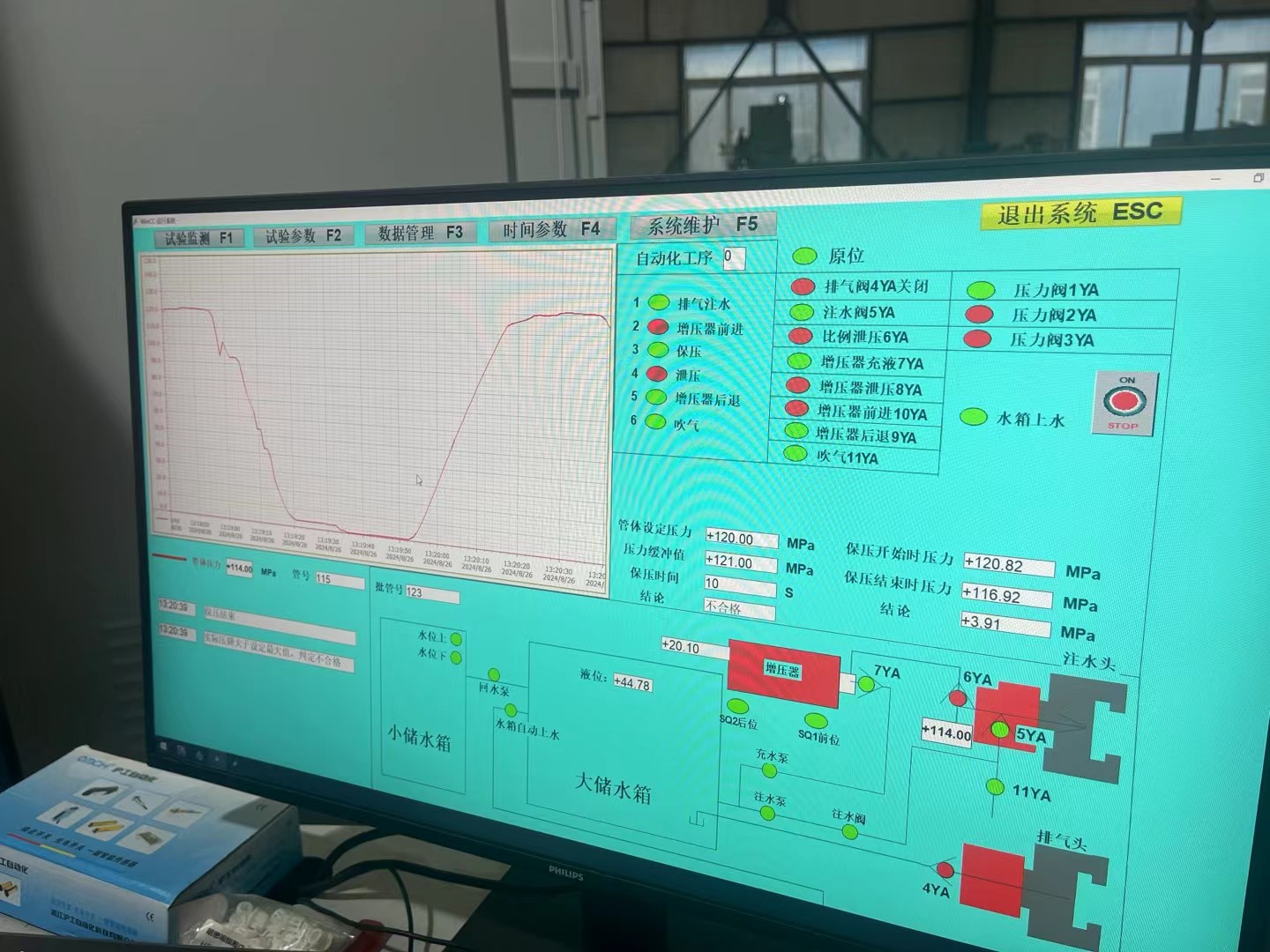
In one U.S. project involving heavy wall structural pipes, the initial issue was not failure rate—it was inconsistent hold pressure behavior. Pipes were passing, but results were fluctuating between cycles, creating uncertainty for quality documentation.
After adjusting hydraulic response tuning and improving sealing consistency, the testing process became stable, and the engineering team regained confidence in batch-level quality control.
That is a key point: a hydro testing machine for pipe is not only about passing tests—it is about producing reliable data.
What makes a heavy wall testing system different
A proper heavy wall system is structurally and functionally reinforced in several areas:
1. Reinforced frame design
Heavy wall pipes generate higher reaction forces during pressurization. The machine structure must remain stable under continuous load.
2. High-capacity hydraulic system
A hydro testing machine for pipe for thick pipes requires stronger pump output and smoother pressure regulation.
3. Enhanced sealing system
Sealing is one of the most critical components. Heavy wall pipes require higher clamping force without damaging pipe ends.
4. Extended pressure holding control
Holding time is often longer for heavy wall inspection, especially in API and infrastructure applications.
5. Thermal and fatigue management
Continuous high-load cycles can cause system fatigue if cooling and hydraulic circulation are not designed properly.
Common problems seen in heavy wall pipe factories
Based on field experience, most production issues do not come from pipe quality itself but from testing limitations.
|
Problem |
Root Cause |
Practical Solution |
|
Slow cycle time |
Underpowered hydraulic system |
Upgrade pump response control |
|
Seal damage |
Excessive clamping force |
Adjust sealing pressure distribution |
|
Unstable pressure reading |
Air trapped in pipe |
Improve venting system |
|
Frequent retesting |
Over-sensitive settings |
Optimize pressure ramp curve |
A well-configured hydro testing machine for pipe should reduce retesting—not increase it.
Real-world case: heavy wall line pipe project
A pipeline supplier in North America producing heavy wall line pipes for infrastructure expansion faced a recurring issue: although pipes passed testing, cycle time was too slow to meet daily output targets.
The bottleneck was not pipe strength—it was pressure stabilization time.
After reviewing the system, engineers found that the pressure ramp profile was too aggressive at the start phase, causing instability during transition to hold pressure. Once the ramp curve was adjusted and sealing response improved, the hydro testing machine for pipe achieved smoother cycles and improved throughput without hardware replacement.
This is a common pattern in heavy wall production: optimization often matters more than replacement.
How engineers evaluate a heavy wall testing machine
Experienced buyers rarely start with price. They start with performance behavior.
Key evaluation points include:
- How stable is pressure during long hold cycles?
- How quickly does the system recover between tests?
- Can sealing handle repeated heavy-duty cycles?
- Does the system support continuous operation without drift?
- How consistent are test results across batches?
A reliable hydro testing machine for pipe should perform consistently even under high mechanical stress conditions.
Why heavy wall testing is critical for U.S. pipe mills
In the U.S. market, heavy wall pipes are often used in:
- structural infrastructure
- oil & gas transmission
- bridge and high-load construction
- industrial pressure systems
For these applications, failure is not an option. That is why a hydro testing machine for pipe is considered part of the final safety validation chain, not just a production tool.
Procurement teams are increasingly focused on:
- traceable test records
- stable pressure curves
- repeatable batch validation
- reduced field failure risk
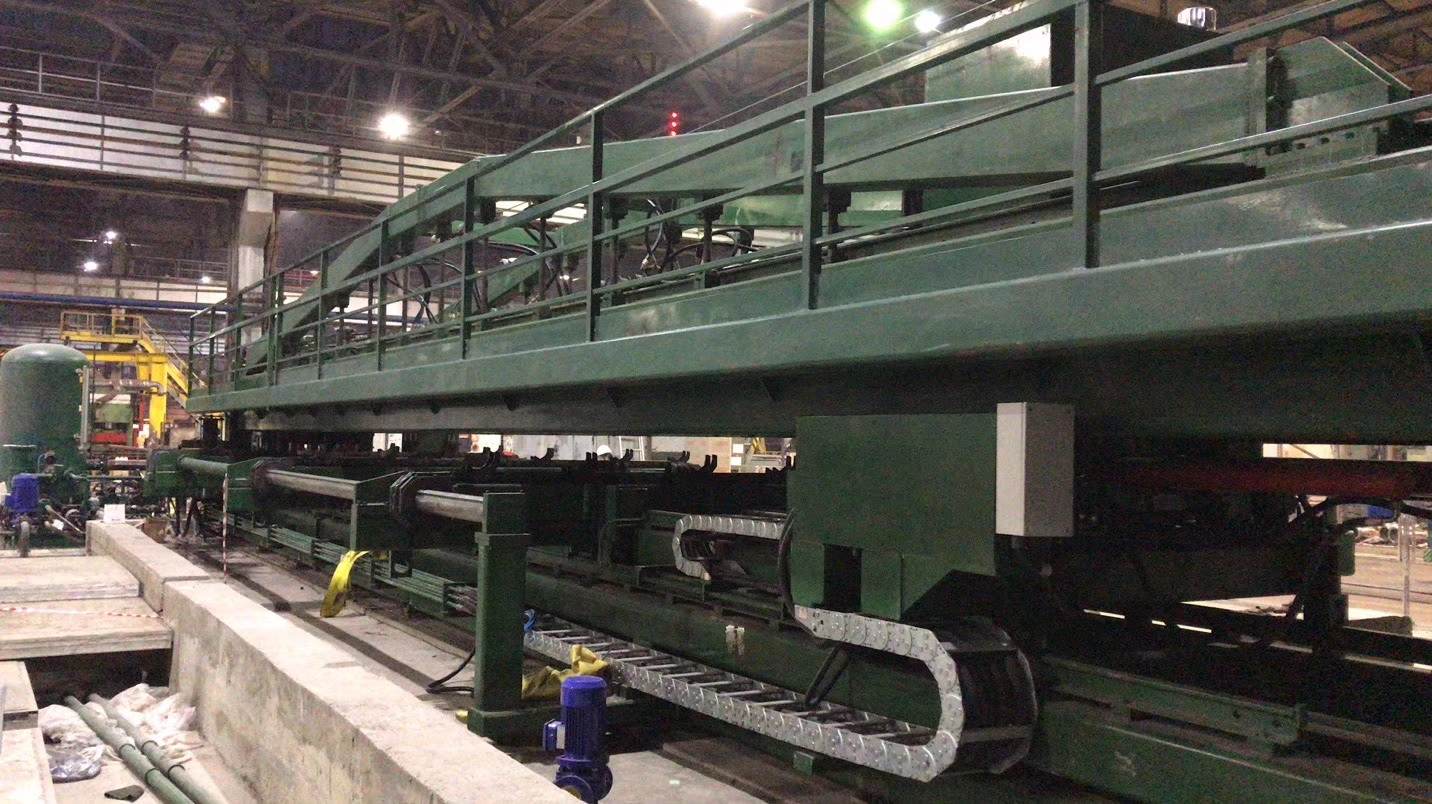
Heavy wall pipe testing is not about pushing more pressure into stronger material. It is about controlling a more demanding physical process with precision and consistency.
A properly designed hydro testing machine for pipe helps manufacturers stabilize pressure behavior, reduce retesting cycles, and ensure that every pipe leaving the plant meets strict structural requirements.
In modern heavy wall production, the real value of testing equipment is not only in its strength—but in its control.