







For steel pipe mills in India, the best hydro testing machine supplier should be selected based on pipe size range, test pressure, applicable testing standards, production capacity, sealing method, automation, and after-sales support. These factors determine whether the hydrostatic testing machine can reliably meet the mill’s testing and production requirements.
1. Start With the Pipe Mill's Actual Testing Requirements
The first step is to define the operating range of the steel pipe production line. A supplier should not recommend a standard machine before understanding the pipes that will actually be tested.
Key parameters include:
| Requirement | Why It Matters |
|---|---|
| Pipe outside diameter | Determines the machine's working range and sealing arrangement |
| Wall thickness | Influences required test pressure and equipment loading |
| Pipe length | Affects machine layout, handling, and testing cycle |
| Maximum test pressure | Determines the pressure system, valves, pumps, and instrumentation |
| Pipe type | Seamless, ERW, LSAW, or SSAW pipes may require different configurations |
| Production volume | Determines the number of testing stations and cycle-time requirements |
| Applicable standard | Defines testing and documentation requirements |
For mills producing API line pipe, for example, the equipment specification should be developed against the applicable edition of API Spec 5L rather than relying on a generic hydrostatic testing machine specification. API published the 47th edition of API Spec 5L in June 2026, with updated requirements covering areas including hydrotest pressure gauge calibration and other line-pipe manufacturing controls.
2. Check the Supplier's Hydro Testing Capability
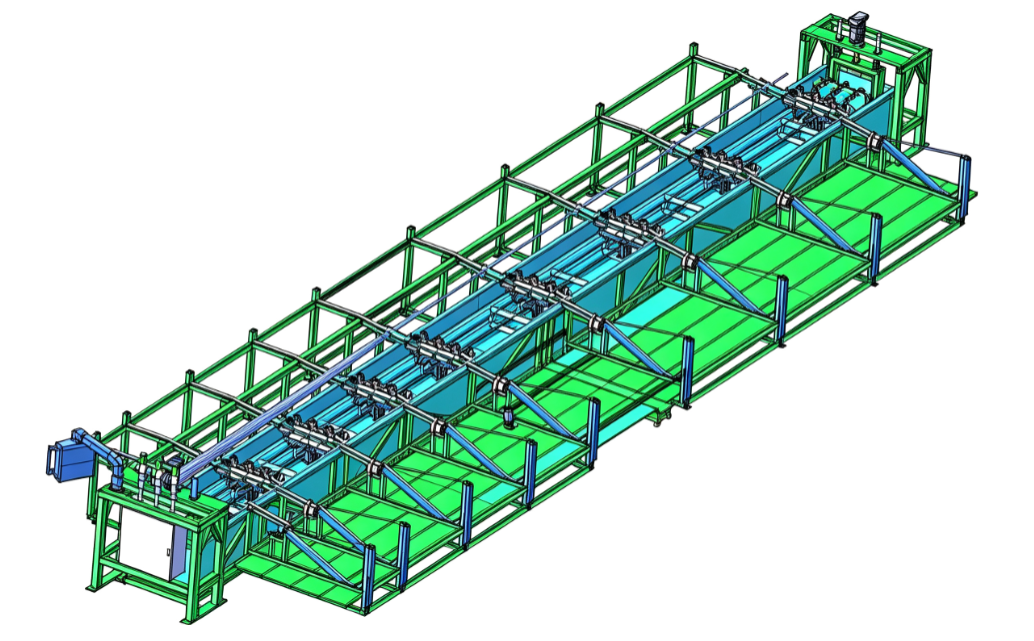
A qualified supplier should be able to explain how its hydro testing machine for pipe is configured for the required pressure and pipe range.
Do not evaluate pressure capacity alone. Ask how the machine achieves stable pressure, maintains the specified hold time, detects pressure loss, and safely releases pressure after testing.
The pressure system should also be matched to the actual production cycle. A machine designed for occasional testing may not be suitable for a high-throughput steel pipe mill where hundreds of pipes must be processed consistently.
For large-diameter or high-pressure applications, particular attention should be given to:
- Hydraulic or water-pressure generation capacity
- Pressure control accuracy
- Pressure measurement and calibration
- Sealing reliability
- Pressure holding stability
- Automatic filling and draining
- Test-cycle control
- Safety interlocks
These details often have a greater effect on production reliability than the nominal maximum pressure stated on a machine datasheet.
3. Evaluate the Sealing System Carefully
Sealing is one of the most important engineering considerations when selecting a pipe hydrostatic testing machine.
The sealing method must accommodate the pipe's outside diameter, wall thickness, end condition, pressure level, and production requirements. Depending on the application, equipment may use different end-sealing or radial-sealing arrangements.
For an Indian steel pipe mill producing multiple pipe sizes, flexibility is particularly important. A supplier should explain the allowable diameter range, changeover procedure, expected seal life, and how leakage is controlled during high-pressure testing.
A machine with excellent pressure-generation capability can still become a production bottleneck if the sealing system causes frequent leakage, adjustment, or maintenance.
4. Match Automation to Production Requirements
Automation should be evaluated according to the mill's production process rather than treated as a feature checklist.
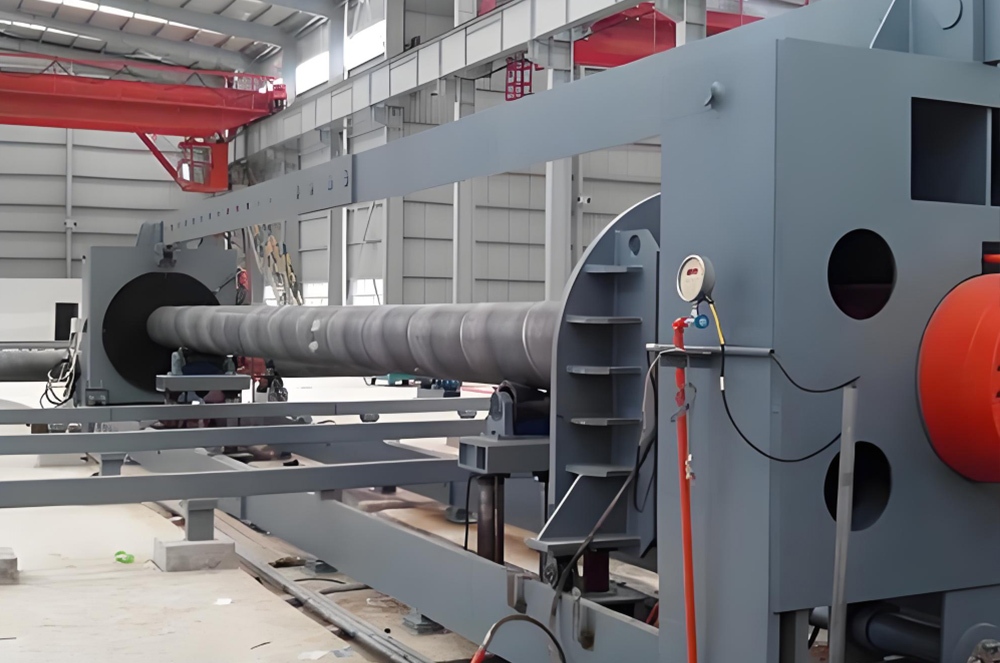
For a modern pipe mill, useful functions may include automatic pipe loading, positioning, filling, pressurization, pressure holding, depressurization, draining, and unloading. PLC-based control can also record key testing parameters for quality traceability.
However, the objective is not simply to purchase the most automated machine. The better approach is to identify which operations genuinely reduce cycle time, operator intervention, and testing variability.
A supplier should be able to demonstrate the complete testing sequence and explain what happens when a pipe fails to reach pressure, loses pressure during the hold period, or experiences a sealing problem.
5. Verify Standards, Documentation, and Traceability
A serious equipment supplier should be comfortable working with the standards specified by the pipe mill and its customers.
This is particularly important for API-related production. API Spec 5L covers the manufacture, inspection, testing, marking, and traceability of seamless and welded steel line pipe.
The hydro testing machine supplier should therefore be able to provide appropriate technical documentation, equipment specifications, testing procedures, calibration information, electrical documentation, and commissioning records.
The supplier should also clearly distinguish between equipment capability and product compliance. The testing machine performs the required test; it does not by itself make the pipe compliant with API, ASTM, ISO, or another specification.
6. Consider China-Based Suppliers for Indian Pipe Mills
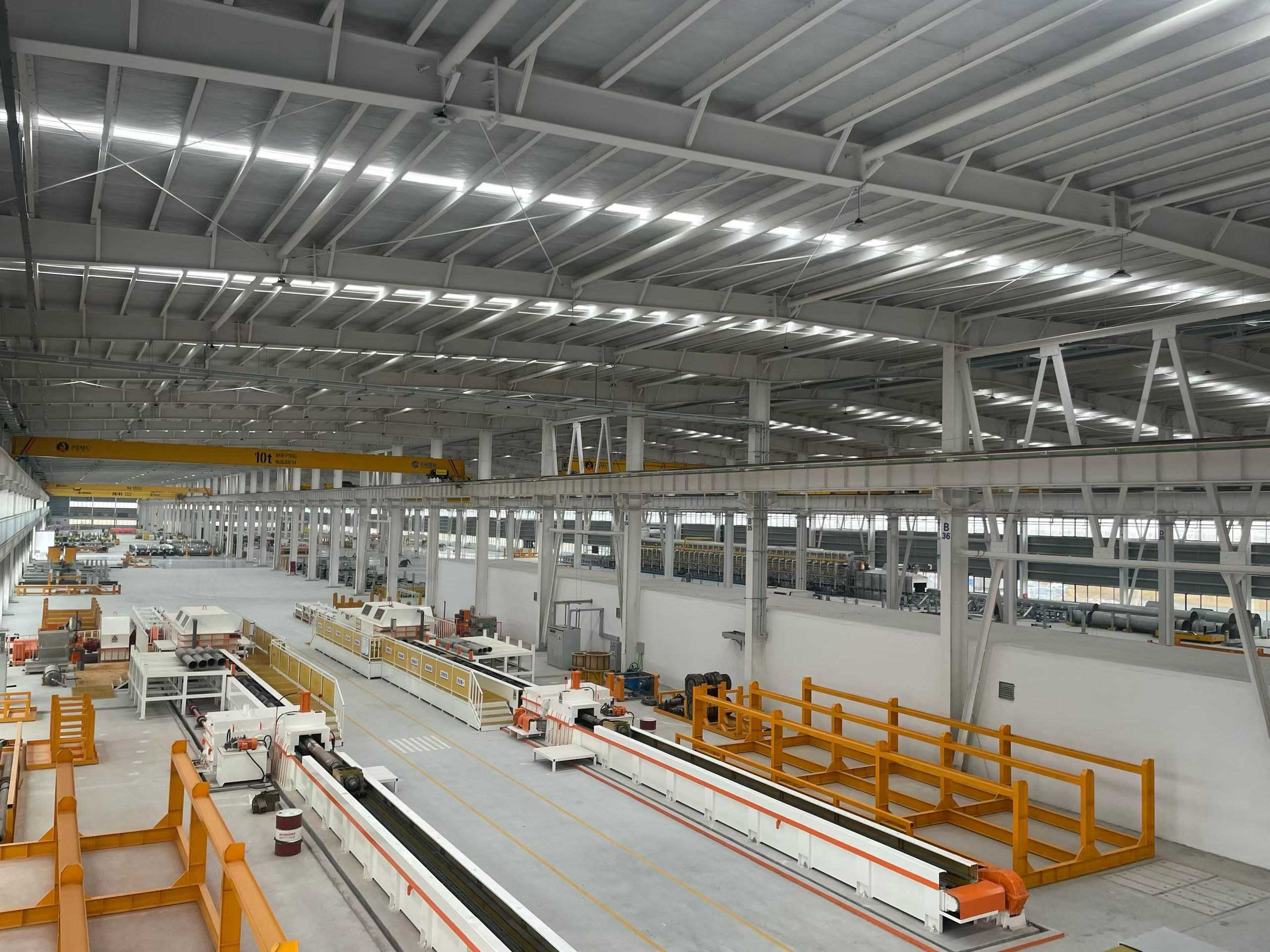
For Indian steel pipe manufacturers, purchasing from a Chinese hydro testing machine manufacturer can be a practical option when the supplier has relevant export experience and can provide complete technical support.
The key question is not whether the machine is manufactured in China or India. It is whether the supplier can provide a configuration that fits the Indian mill's pipe range, production capacity, testing standards, installation conditions, and service requirements.
Before placing an order, request references for comparable installations, detailed machine drawings, utility requirements, delivery scope, commissioning procedures, spare-parts recommendations, and remote or on-site technical support.
What Indian Steel Pipe Mills Should Ask a Supplier
- What pipe diameter and length range can the machine test?
- What is the maximum continuous testing pressure?
- How is pressure measured and controlled?
- Which sealing method is used for each pipe size?
- What is the typical testing cycle time?
- How many testing stations are required for the target production rate?
- What testing standards can the machine configuration support?
- What commissioning and after-sales services are included?
A supplier that gives clear engineering answers to these questions is generally a stronger candidate than one that focuses mainly on machine price.
For an Indian steel pipe mill, supplier selection ultimately comes down to one question: can the proposed hydro testing machine reliably meet the required pipe range, test pressure, production rate, and testing standards?