







As steel pipe mills move toward larger diameters, higher production rates, and tighter quality requirements, large-diameter steel pipe hydrostatic testing is placing greater demands on testing equipment. A machine designed for smaller pipe cannot simply be scaled up by increasing its frame size. Pipe diameter, test pressure, sealing load, water filling, pressure control, pipe handling, and production-line integration all become more demanding as pipe dimensions increase.
For modern pipe mills, the key requirement is therefore not only achieving the specified test pressure. The hydrostatic testing system must maintain stable pressure, provide reliable sealing, handle large and heavy pipes safely, and complete the test cycle consistently without creating a bottleneck in production.
Why Large-Diameter Pipe Testing Requires Different Equipment Considerations
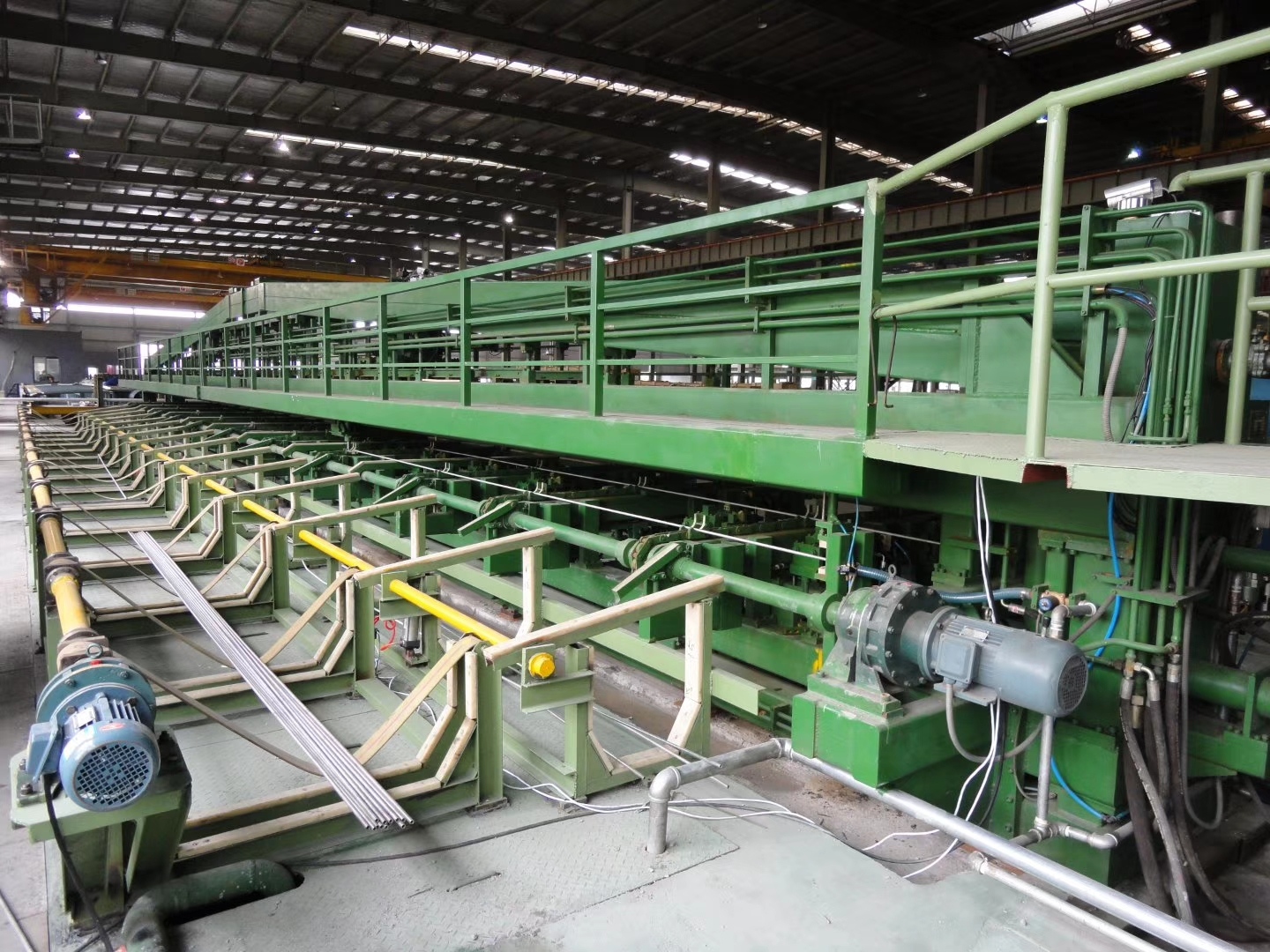
Large-diameter steel pipes present several engineering challenges that become less significant with smaller pipe sizes.
The first is sealing. As pipe diameter increases, the sealing area and the hydraulic forces acting on the sealing system also increase. An end-sealing system that performs adequately on smaller pipes may require substantially greater mechanical strength and hydraulic capacity when applied to large-diameter pipe.
The second challenge is pipe handling. Large pipes are heavy, long, and difficult to position accurately. Loading, centering, filling, testing, draining, and unloading must therefore be coordinated with the testing machine rather than treated as separate operations.
The third challenge is pressure stability. A large-volume pipe contains significantly more water than a small pipe. Water filling, air removal, pressure buildup, pressure holding, and depressurization must be carefully controlled to achieve repeatable test conditions.
These factors make equipment configuration particularly important for large-diameter steel pipe hydrostatic testing.
1. Sealing Capacity Must Match Pipe Diameter and Test Pressure
The sealing system is one of the most critical components of a large-diameter hydrostatic testing machine.
During testing, hydraulic pressure acts over the internal cross-sectional area of the pipe. As diameter increases, the resulting axial force can become extremely high. The sealing structure must therefore be designed according to both the pipe diameter range and the required test pressure.
Depending on the application, manufacturers may use different approaches, including end-face sealing, internal sealing, external radial sealing, or other customized configurations.
For large-diameter steel pipes, the important consideration is not simply whether a sealing method can prevent leakage. It must also maintain sealing stability throughout the complete pressure cycle without damaging the pipe end or causing excessive setup time.
This is particularly important for mills testing pipes with different diameters or wall thicknesses on the same production line.
2. Pressure Control Must Remain Stable During the Test Cycle
Large-diameter steel pipe hydrostatic testing involves a relatively large internal water volume. This affects the dynamic response of the hydraulic system.
A modern testing system should provide controlled:
- Water filling
- Air removal
- Pressure buildup
- Pressure stabilization
- Pressure holding
- Pressure release
Simply reaching the target pressure is not enough. Excessive pressure overshoot can create unnecessary mechanical loading, while unstable pressure during the holding period can complicate test evaluation and increase false rejection risks.
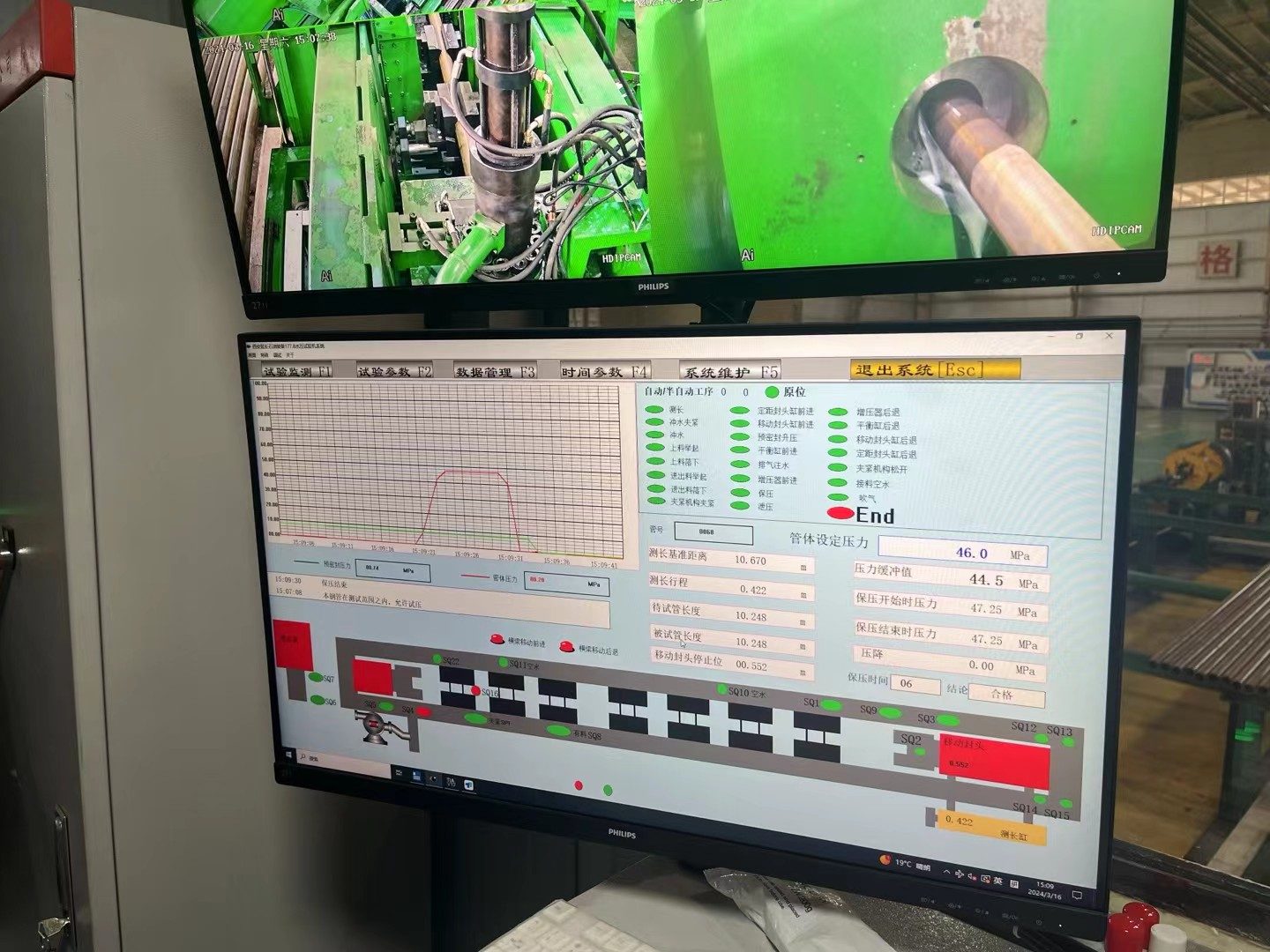
For this reason, modern equipment increasingly relies on coordinated hydraulic control, pressure sensors, valves, pumps, and PLC-based control systems to manage the complete testing cycle.
The objective is repeatable pressure behavior from one pipe to the next.
3. Water Filling and Air Removal Become More Important at Large Diameters
A large-diameter pipe can contain a substantial volume of water. If filling is inefficient or air remains trapped inside the pipe, the testing cycle can become longer and pressure behavior can become less predictable.
Modern pipe mills therefore need to consider the water filling system as part of the overall testing solution rather than as an auxiliary function.
Efficient filling should minimize unnecessary cycle time while providing effective air removal before pressurization. The system should also support controlled draining after the test so that the tested pipe can return to the production flow without excessive handling delays.
For high-throughput applications, water circulation and recovery can also influence operating efficiency and water consumption.
4. Pipe Handling and Alignment Are Part of Testing Performance
Large-diameter steel pipe hydrostatic testing cannot be separated from material handling.
A pipe must be positioned accurately before sealing. Poor alignment can increase sealing stress, complicate end closure, and create unnecessary mechanical loading on the equipment.
For this reason, large-diameter testing systems may require:
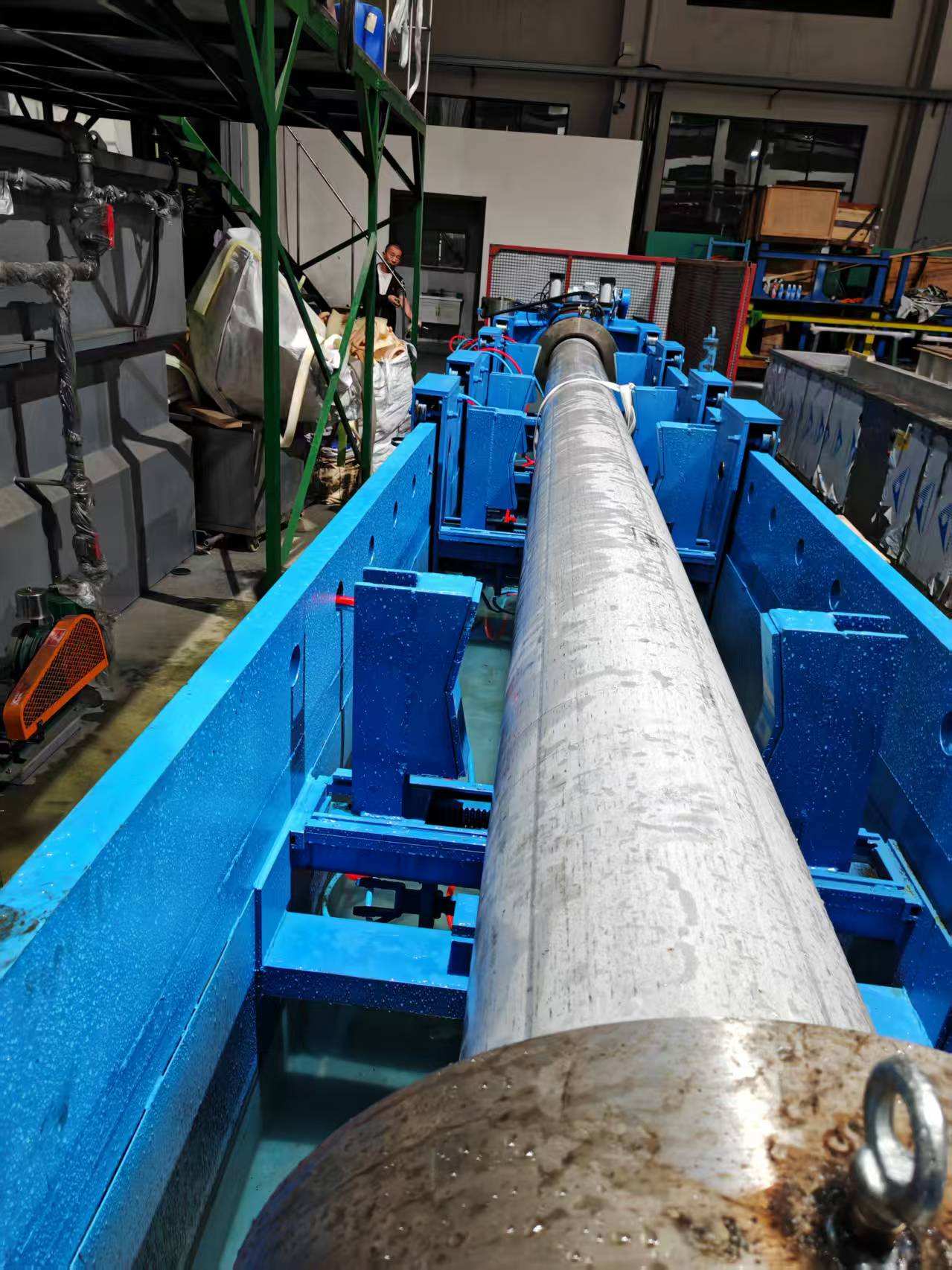
- Heavy-duty pipe supports
- Centering mechanisms
- Powered rollers
- Automatic loading and unloading
- Controlled pipe positioning
- Drainage and water recovery arrangements
The appropriate configuration depends on pipe dimensions, production volume, available floor space, and the degree of automation required by the mill.
For high-volume production, automated handling can be particularly valuable because it reduces manual intervention between test cycles and improves consistency.
5. Machine Structure Must Be Designed for Repeated Hydraulic Loading
The structural design of a large-diameter hydrostatic testing machine must account for repeated loads generated during pressurization.
The machine frame, sealing assemblies, hydraulic cylinders, supports, and pipe positioning components must work together as a mechanically stable system.
This is especially important when the machine is designed for high test pressures or a wide pipe diameter range.
A suitable design should consider not only the maximum pressure but also:
- Maximum pipe diameter
- Pipe length
- Pipe wall thickness
- Pipe weight
- Sealing force
- Hydraulic cylinder capacity
- Repeated test cycles
- Safety requirements
These parameters should be established before equipment selection because they directly affect machine configuration and structural design.
6. Automation Should Support Production-Line Requirements
For modern pipe mills, hydrostatic testing is increasingly expected to operate as part of an integrated production process rather than as an isolated testing station.
Automation can coordinate pipe loading, positioning, sealing, water filling, pressurization, pressure holding, depressurization, draining, and unloading.
A PLC-based control system can also monitor pressure and test status throughout the cycle. Depending on the customer's requirements, test records may be associated with individual pipes or production batches.
This becomes increasingly valuable when the mill needs traceability for quality assurance or customer documentation.
The appropriate automation level depends on production volume. A lower-volume facility may benefit from semi-automatic operation, while a high-throughput pipe mill may require automatic material handling and coordinated testing sequences.
7. Equipment Configuration Should Be Based on the Complete Pipe Range
One of the most important considerations when selecting equipment for large-diameter steel pipe hydrostatic testing is the actual operating range.
The machine should not be selected only according to the maximum pipe diameter.
A proper engineering evaluation should include:
| Parameter | Why It Matters |
|---|---|
| Pipe outside diameter | Determines sealing and structural requirements |
| Pipe length | Influences handling, support and machine layout |
| Wall thickness | Affects pipe weight and test requirements |
| Pipe material | Influences testing and handling conditions |
| Test pressure | Determines hydraulic and sealing capacity |
| Production rate | Determines automation and cycle-time requirements |
| Pipe weight | Determines support and handling requirements |
| Testing standard | Defines applicable test conditions |
| Automation level | Determines handling and control configuration |
For example, a machine intended for occasional testing of large-diameter pipes may require a different configuration from a fully automatic system installed directly into a high-volume pipe production line.
8. What Modern Pipe Mills Should Evaluate Before Equipment Selection
Before selecting a large-diameter hydrostatic testing system, engineering and procurement teams should establish the complete testing profile rather than starting with machine capacity alone.
The key questions include:
- What is the minimum and maximum pipe diameter?
- What pipe lengths and wall thicknesses will be tested?
- What is the required test pressure?
- How many pipes must be tested per hour?
- What sealing method is appropriate for the pipe range?
- How will pipes be loaded, centered, and unloaded?
- How should water filling and draining be integrated into the cycle?
- What level of automatic operation is required?
- Is test data recording or traceability required?
- How will the testing machine integrate with the existing pipe mill?
Answering these questions allows the machine configuration to be designed around the actual production requirement instead of relying on a generic equipment specification.
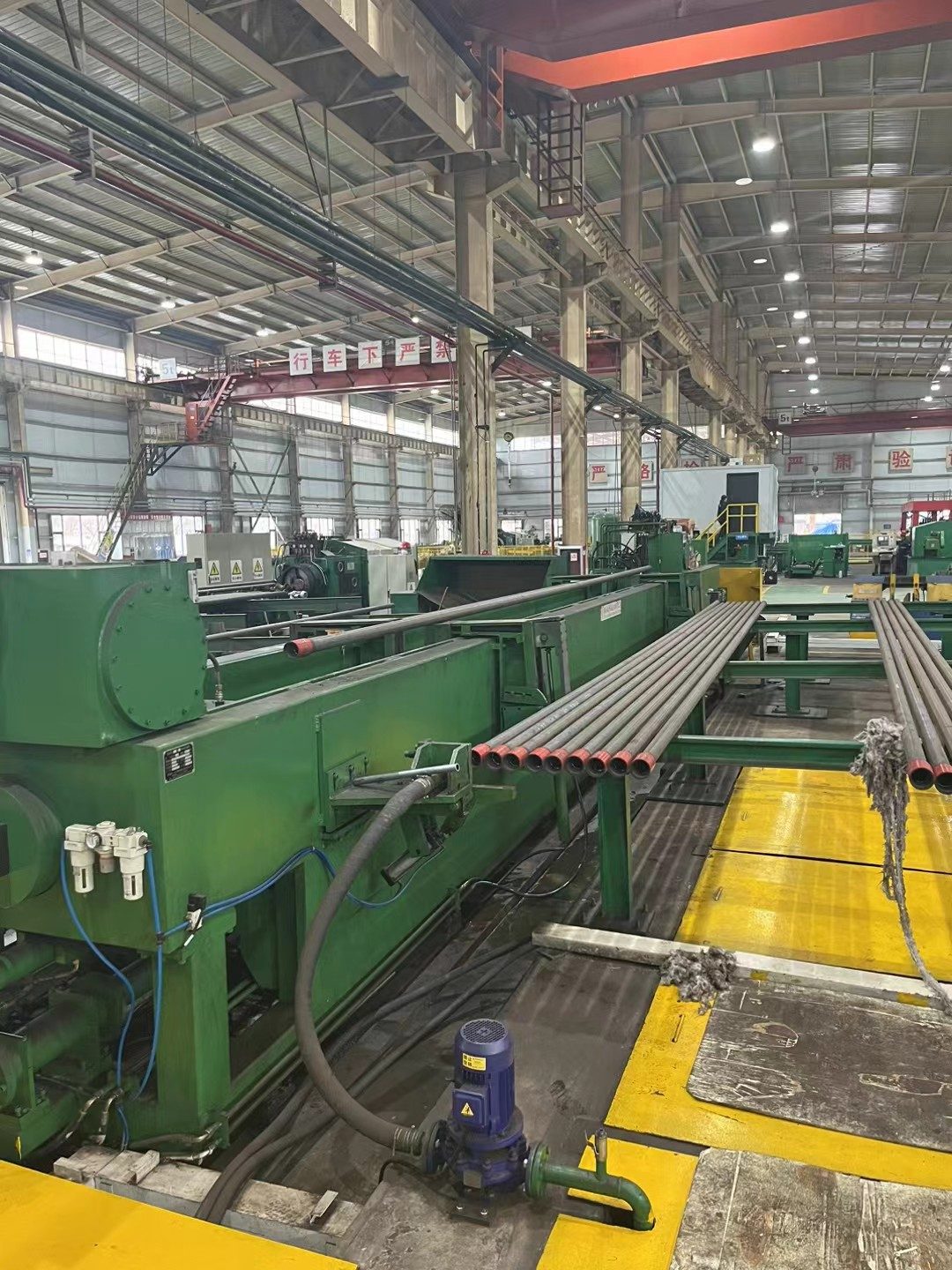
The Direction of Large-Diameter Steel Pipe Hydrostatic Testing
As pipe mills increase production capacity and move toward greater automation, hydrostatic testing equipment is also becoming more integrated with the overall production line.
For large-diameter applications, the key trend is not simply higher test pressure. It is the combination of reliable sealing, stable pressure control, efficient water management, heavy-duty pipe handling, automation, and repeatable testing performance.
A well-designed system should therefore be evaluated as a complete engineering solution rather than as a pressure-testing machine alone.
For manufacturers processing large-diameter steel pipes, the appropriate equipment configuration should ultimately be determined by pipe dimensions, test pressure, production requirements, sealing conditions, and the required level of automation.
For production applications, Marley Machinery provides customized hydrostatic testing machines for steel pipes, with equipment configurations developed according to pipe diameter, pipe length, testing pressure, sealing requirements, and production-line requirements.