








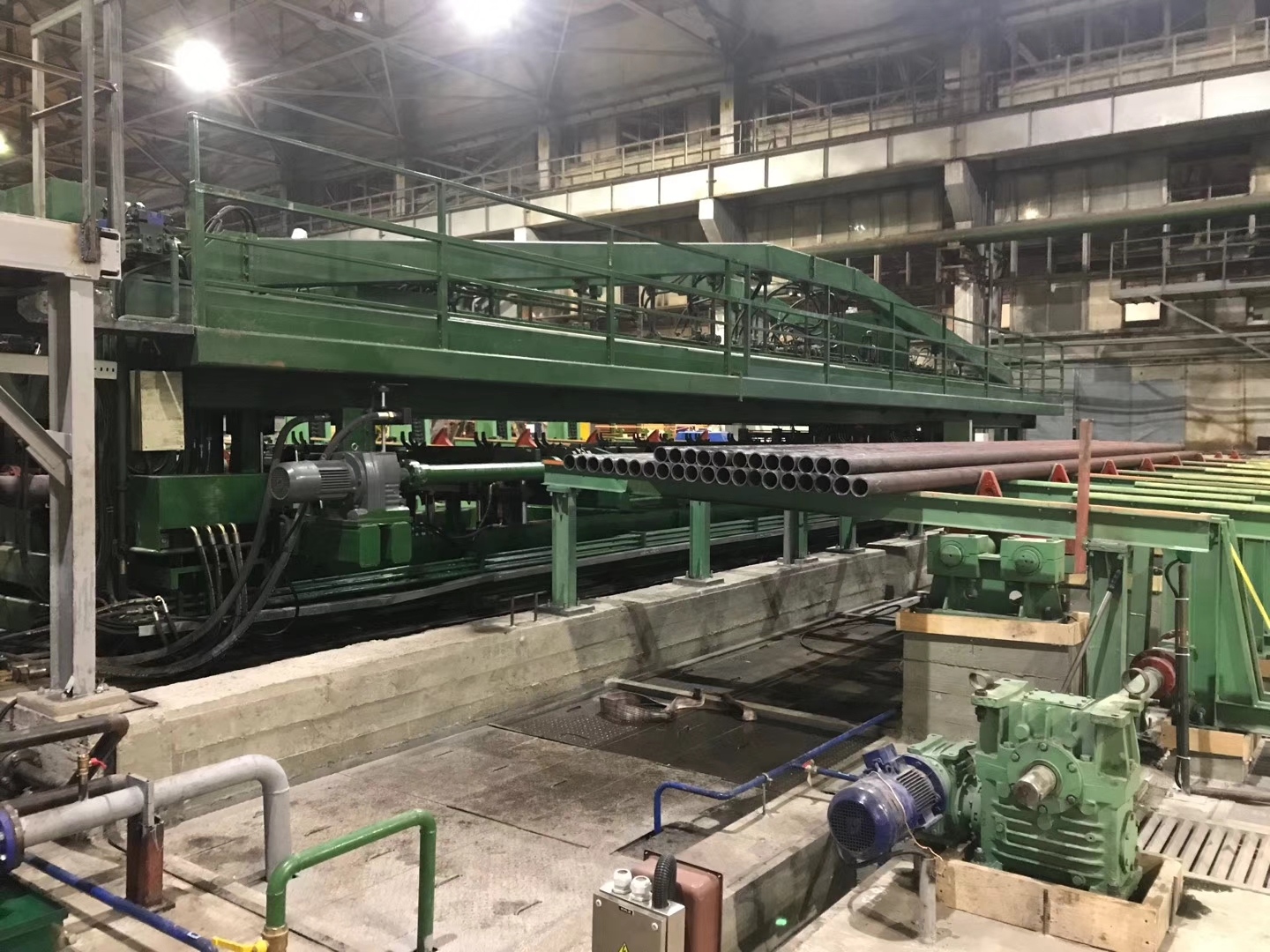
Pipe length affects more than the maximum working range of a pipe hydro testing machine. It changes pipe handling, test-head travel, water volume, drainage time and the space required around the testing station. A machine designed for short pipes may not handle long pipes reliably simply by extending its frame.
The configuration must match the actual pipe length range and the production cycle.
1. Pipe Length Determines the Handling Arrangement
Long pipes require adequate support during transfer and positioning. If support spacing or alignment is unsuitable, the pipe may sag or enter the test station off-center, making end sealing less repeatable.
|
Length-Related Factor |
Configuration Requirement |
|
Maximum pipe length |
Sufficient machine travel and line space |
|
Pipe weight and stiffness |
Suitable rollers, supports and transfer mechanism |
|
Pipe straightness |
Stable centering before sealing |
|
Length variation |
Adjustable positioning and test-head travel |
|
Production speed |
Coordinated loading, testing and unloading |
For long products, handling and alignment should be checked before selecting the pressure system. A pump cannot compensate for poor pipe positioning.
2. Longer Pipes Increase Filling and Drainage Demand
For pipes with the same internal diameter, increasing length increases internal water volume in direct proportion to length. This affects filling time and the amount of water that must be discharged or recovered after testing.
|
Change in Pipe Length |
Likely Effect |
|
Longer pipe, same internal diameter |
Greater water volume |
|
Greater water volume |
Higher filling and drainage demand |
|
Longer transfer distance |
Potentially longer handling cycle |
|
More variable pipe lengths |
Greater need for positioning adjustment |
Actual cycle time also depends on filling flow, venting arrangement, drainage design and pipe orientation. Increasing pump capacity alone will not necessarily shorten the entire cycle.
3. Length Affects Test-Head Positioning and Sealing
In a steel pipe hydrostatic testing machine, both ends must align correctly with the test heads before pressurization. Longer pipes place greater demands on support layout and transfer accuracy, particularly when straightness and dimensional variation are not tightly controlled.
Before specifying a machine, verify:
-
Maximum and minimum pipe lengths
-
Pipe-end condition and dimensional tolerances
-
Support and roller arrangement
-
Test-head travel and positioning accuracy
-
Sealing method across the complete pipe range
If leakage occurs mainly on longer pipes, check pipe alignment, support conditions and test-head positioning before assuming the seal material or pump is unsuitable.
4. How Pipe Length Changes Production Capacity
The longest pipe does not always determine the entire line’s output, but it often creates the most demanding handling and water-management conditions.
| Production Requirement | Engineering Priority |
|---|---|
| Long pipes at high throughput | Fast, synchronized transfer and positioning |
| Mixed pipe lengths | Adjustable supports and repeatable positioning |
| Long pipes with large internal volume | Filling, venting and drainage capacity |
| Frequent length changes | Minimize setup and adjustment time |
| Automated line integration | Coordinate transfer with test-cycle control |
When evaluating a hydro testing machine for pipe, compare cycle times for representative short, medium and maximum-length pipes. Using only the shortest pipe to estimate production capacity can produce an unrealistic output target.
5. What Buyers Should Specify
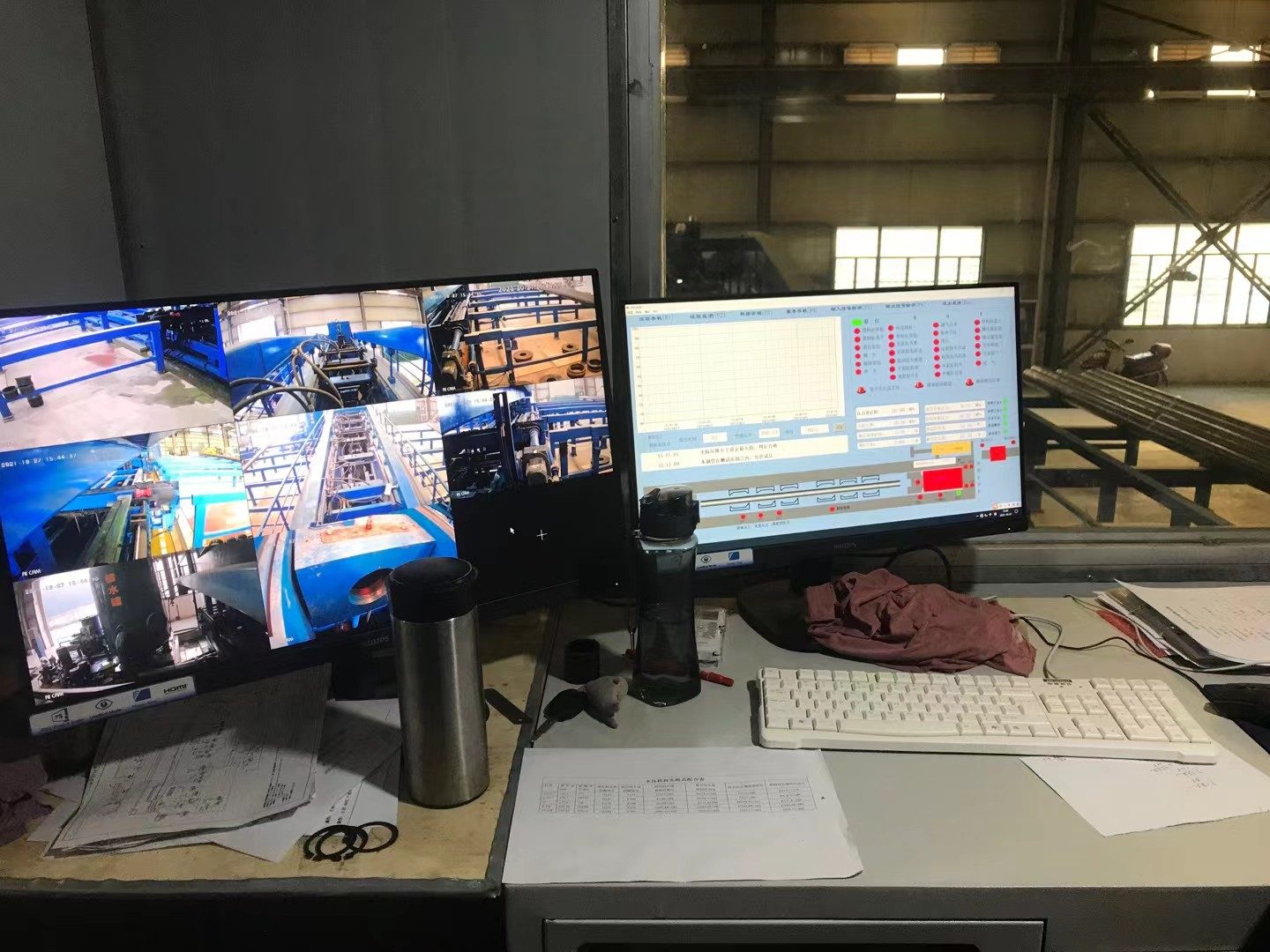
Before ordering a pipe hydro testing machine, provide the minimum and maximum pipe lengths, OD, wall thickness, weight range, required test pressure, target output and available installation space. Ask the supplier to confirm handling capacity, test-head travel, filling and drainage arrangements, and expected cycle time at the longest specified length.
At Marley Machinery, we treat pipe length as a handling, sealing and cycle-time parameter—not merely a frame dimension. The machine must position the pipe reliably, maintain the required test condition and return it to the production line within the planned cycle.