


A hydro testing machine for pipe operating at 3,000 psi (20.7 MPa) must provide reliable end sealing, controlled pressurization, and sufficient structural strength to withstand the resulting loads. For steel pipes measuring 101–219 mm in diameter and 3–12 m in length, the design must also accommodate the specified range of pipe sizes and lengths.
Wuxi Marley Machinery Technology Co., Ltd. supplied a customized steel pipe hydrostatic testing machine for Jindal SAW Ltd. The confirmed project parameters provide a practical basis for examining the main engineering requirements of high-pressure pipe testing.
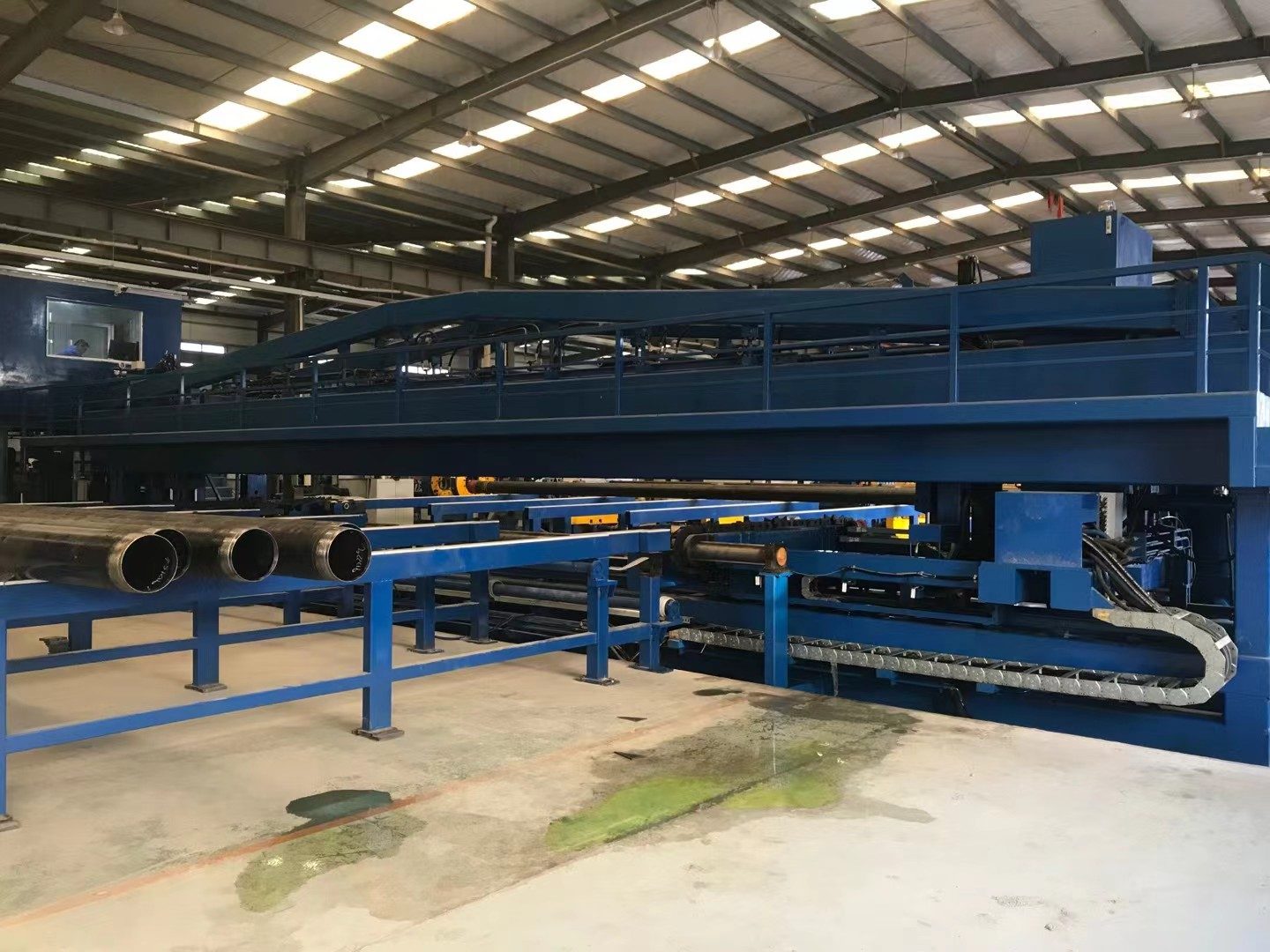
1. Project Parameters and Design Requirements
| Parameter | Jindal SAW project |
|---|---|
| Pipe diameter | 101–219 mm |
| Pipe length | 3–12 m |
| Maximum test pressure | 3,000 psi (20.7 MPa) |
| Test medium | Water |
| Equipment | Customized steel pipe hydrostatic testing machine |
These parameters define the operating range that the equipment must accommodate. They do not, by themselves, determine the sealing design, pump capacity, pressure-holding time, or production rate. Those details depend on the pipe specifications, test procedure, machine configuration, and required production cycle.
2. End Sealing: Pressure Resistance and Pipe Size
At 3,000 psi, end sealing is a major design consideration. The sealing assembly must contain the test water while the pipe is pressurized, and the end heads must remain correctly aligned under load.
The required axial force can be estimated from:
[
F=Ptimes A
]
where (F) is the axial force, (P) is the test pressure, and (A) is the effective pressure area.
For illustration, if the effective pressure diameter were 219 mm at 20.7 MPa, the resulting force would be approximately 780 kN, or 79.5 metric tons-force.
This is a theoretical example, not the confirmed axial load of the Jindal SAW machine. The actual force depends on the effective pressure area defined by the sealing arrangement. Equipment design must use the actual geometry and account for the resulting loads on the end heads, locking mechanism, frame, and supporting structure.
The 101–219 mm diameter range also affects seal selection and end-head positioning. A sealing arrangement must suit the specified pipe dimensions and end conditions; dimensional compatibility alone does not establish that a seal is suitable for the maximum test pressure.
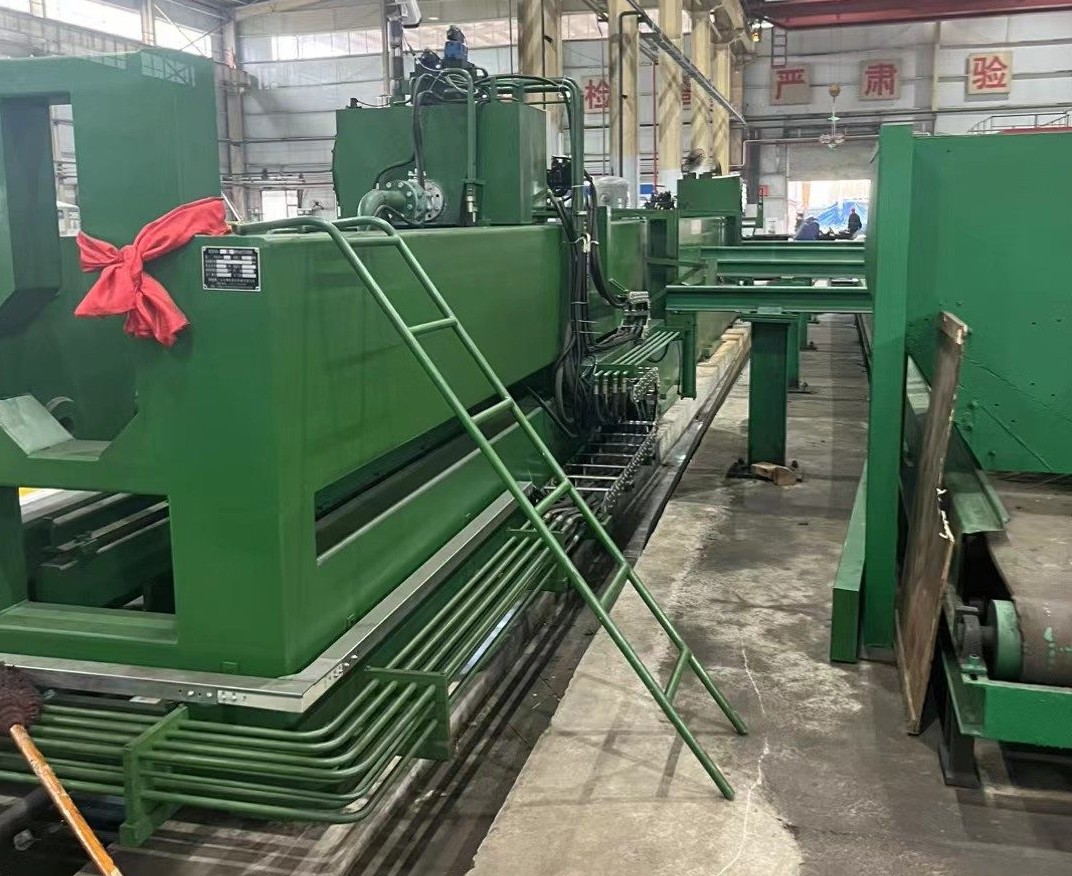
3. Water Filling, Air Venting, and Pressurization
Before pressure is applied, the pipe must be filled with water and adequately vented. Trapped air can affect pressure response and increase stored energy, making proper filling and venting important to both test reliability and safety.
The operating sequence generally includes pipe positioning, end closure, water filling, air venting, pressurization, pressure holding, controlled depressurization, and release of the pipe.
Pump selection depends on the required pressure, pipe volume, filling time, and production cycle. Filling a long pipe and raising its pressure to the test level are different operating demands; the system must be designed to meet both.
The holding period should follow the applicable product specification and inspection procedure. There is no single holding time that applies to every steel pipe or every hydrostatic testing application.
4. Pressure Control and Test Results
Pressure control must allow the machine to reach the specified test pressure and maintain it for the required period. Pressure measurement, control response, and the ability to identify abnormal behavior are therefore important parts of the system.
A pressure drop during the holding stage does not automatically mean that the pipe has failed. Possible causes include leakage from the pipe or test circuit, temperature changes, trapped gas, and measurement variation. The test result must be assessed against the applicable procedure and the observed conditions.
Where the production process requires traceability, pressure readings and test results can be recorded according to the machine's actual control and data-management configuration. Automatic recording should not be assumed unless it is included in the supplied equipment.
5. Handling Pipes from 3 to 12 m Long
The specified length range introduces a separate mechanical requirement: the pipe must be positioned and supported correctly throughout loading, testing, and unloading.
The handling arrangement should account for pipe length, weight, alignment with the sealing heads, and the customer's production layout. Incorrect alignment can interfere with sealing and place additional stress on mechanical components.
For a customized hydro testing machine, the loading method and handling mechanism should therefore be evaluated alongside the pressure system. The appropriate solution depends on the customer's operating conditions and required production cycle, rather than pipe length alone.
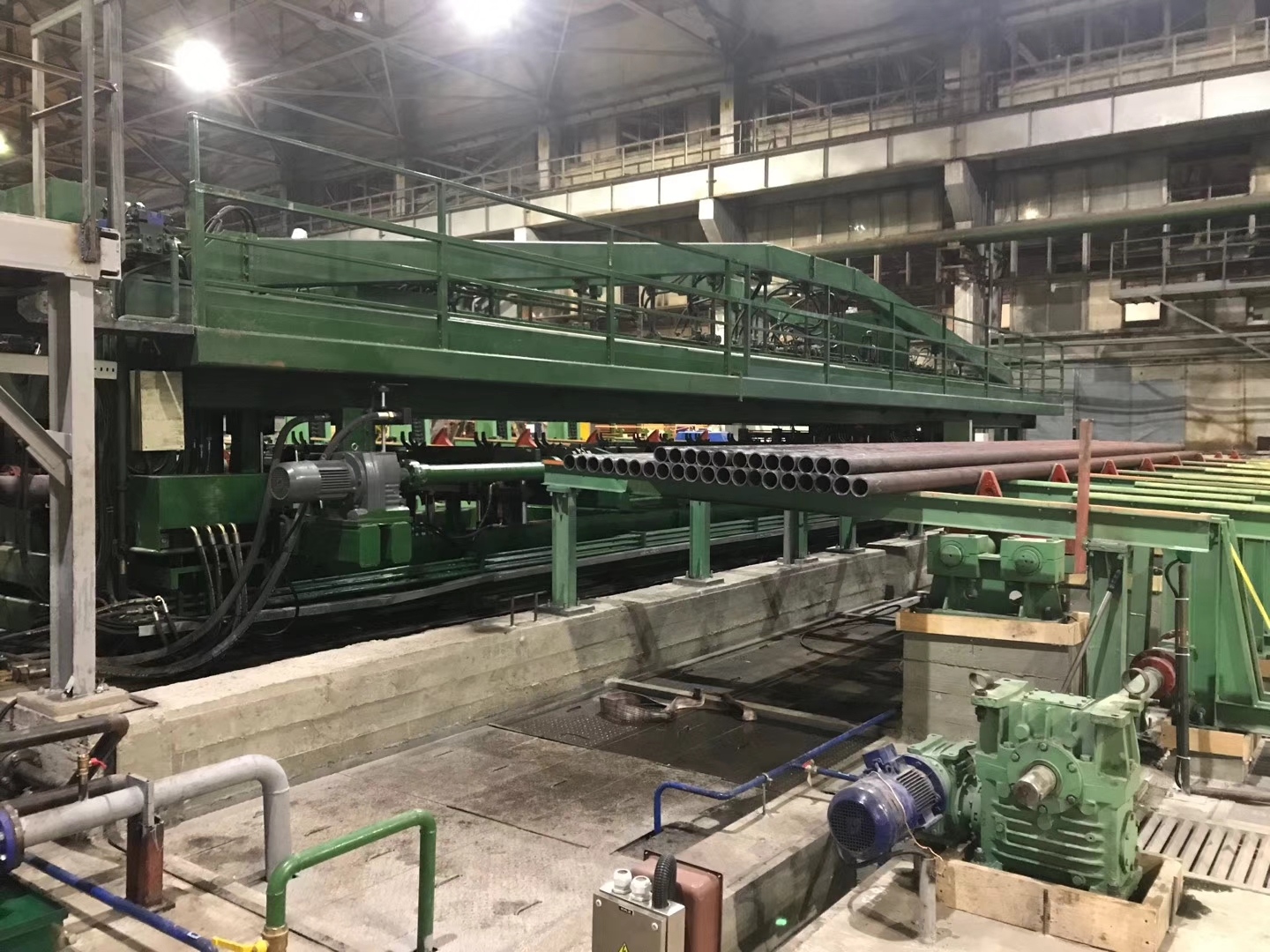
6. Safety and Applicable Test Standards
The machine must prevent the end-sealing assemblies from being released while the pipe remains pressurized. Pressure should be reduced to a verified safe state before the sealing mechanism is opened. The operating procedure should also define how leakage, abnormal pressure behavior, and incomplete depressurization are handled.
The required test pressure and holding period must be established from the applicable pipe specification and inspection procedure. Where API, ISO, ASTM, or customer-specific requirements apply, the relevant standard, edition, and acceptance criteria must be identified.
A machine's maximum pressure rating does not, on its own, establish compliance with a pipe product standard. Compliance depends on the applicable requirements and how the complete test process is implemented.
7. Selecting a Hydro Testing Machine for Pipe
For the Jindal SAW project, the confirmed operating requirements were a pipe diameter of 101–219 mm, a pipe length of 3–12 m, and a maximum test pressure of 3,000 psi. These conditions establish the basis for evaluating the machine's sealing system, pressure capacity, structural loads, pipe handling, and operating sequence.
For other steel pipe manufacturers, equipment selection should begin with the actual pipe dimensions, specified test pressure, applicable inspection procedure, and production requirements. These inputs determine the configuration needed for a particular application.
Wuxi Marley Machinery Technology Co., Ltd. manufactures customized steel pipe testing equipment based on customer requirements.
Contact Marley Machinery
Email: eli@marleytechs.com
WhatsApp: +86-13291236678
Tel: +86-510-88799981