


API 5CT casing and tubing manufacturers need hydrostatic testing equipment that matches the pipe's specified dimensions, material grade, end condition and inspection requirements. Selecting an OCTG hydrostatic testing machine based only on its maximum pressure rating is insufficient. The sealing arrangement, pressure-control accuracy, test sequence and production-line handling must also suit the products being manufactured. API Specification 5CT establishes technical delivery requirements for casing, tubing and related tubular products used in oil and gas operations. Its 11th edition was published in December 2023, with an addendum published in May 2025 and subsequent errata. Manufacturers should verify the applicable edition and updates when preparing their inspection procedures and equipment requirements.
1. Which Product Requirements Determine the Hydrostatic Testing Setup?
Casing and tubing are not a single, uniform product category. Different outside diameters, wall thicknesses, steel grades and end finishes can change the pressure requirement, sealing method and mechanical arrangement of a pipe hydro testing machine.
Before selecting equipment, the manufacturer should establish the product range and the applicable inspection requirements rather than starting with a nominal machine capacity.
|
Product requirement |
Why it matters to equipment design |
What to confirm |
|
Outside diameter and wall thickness |
Affect pressure requirements, sealing geometry and loading arrangements |
Minimum and maximum pipe dimensions; wall-thickness range |
|
Steel grade and product specification |
Influence the applicable inspection requirements and approved test procedure |
Grade, product specification level and purchaser requirements |
|
Plain, upset or threaded ends |
Determine where and how the pipe can be sealed |
End geometry, coupling condition and permissible contact areas |
|
Pipe length and mass |
Affect support, alignment, transfer and handling |
Length range, pipe weight and production-line layout |
|
Required test pressure and hold time |
Determine the pressure-control and measurement requirements |
Approved pressure schedule and required holding period |
|
Production volume and size changes |
Affect automation, changeover time and station configuration |
Target output, product mix and changeover frequency |
These inputs should be reviewed together. For example, a machine capable of reaching the required pressure may still be unsuitable if its sealing heads cannot accommodate the customer's end geometry or if pipe handling is too slow for the production target.
2. Test Pressure Must Follow the Applicable Specification
API 5CT hydrostatic test requirements depend on factors including pipe size, grade and end finish. The inspection pressure is not simply the operating pressure expected downhole, nor should it be selected from a generic equipment catalogue.
The equipment supplier and pipe manufacturer should work from the applicable standard, purchase requirements and approved inspection procedure. Where an alternative test condition is permitted, its use must be established through the relevant agreement and documented requirements.
For equipment sizing, the maximum required test pressure is only one part of the decision. The system must also reach the specified pressure in a controlled manner, maintain it for the required interval and provide reliable pressure measurement.
|
Engineering consideration |
Common selection mistake |
Better approach |
|
Pressure capacity |
Selecting a machine solely by its advertised maximum pressure |
Confirm the required pressure range and the complete system's rated capability |
|
Pressure holding |
Assuming pump capacity guarantees stable pressure |
Evaluate valves, seals, instrumentation and control response together |
|
Pressure measurement |
Treating the displayed value as sufficient proof of compliance |
Define instrument accuracy, calibration and verification requirements |
|
Test duration |
Using a fixed cycle time for every product |
Configure the sequence around the applicable test procedure |
|
Test records |
Adding data recording after the machine is built |
Define traceability and reporting needs before finalizing the control system |
The equipment must not be used to compensate for an unclear test specification. A defined inspection procedure should establish the required pressure, hold time, acceptance criteria and handling of abnormal results.
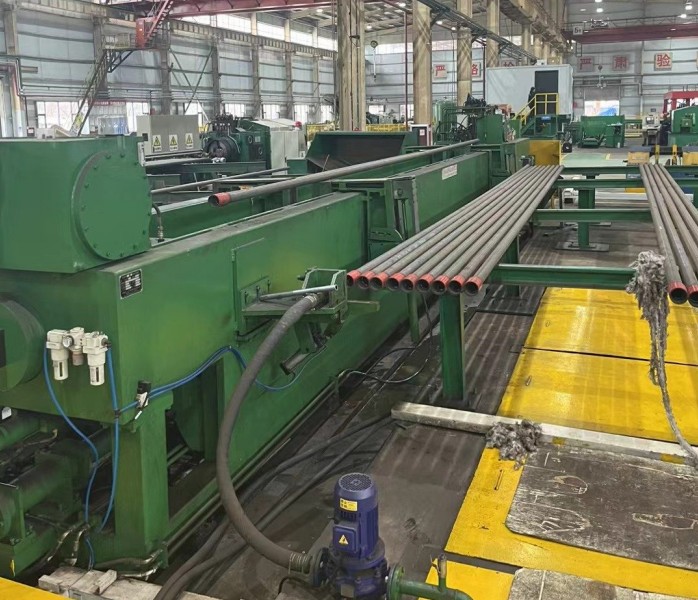
3. End Sealing Is a Critical OCTG Design Decision
For an OCTG hydrostatic testing machine, end sealing is often one of the most important interfaces between the product and the equipment. The appropriate arrangement depends on pipe dimensions, end preparation, test pressure, contact conditions and the production process.
A sealing solution that works for plain-end pipe may not be suitable for every upset, threaded or threaded-and-coupled configuration. Contact with sensitive thread surfaces must also be considered where relevant.
The design review should address three practical questions:
-
Where can the pipe be sealed? The selected sealing position must suit the end geometry and approved test procedure.
-
How is the pipe positioned and restrained? Alignment and the mechanical loads generated during pressurization must be addressed in the equipment design.
-
How are leakage and seal wear identified? The inspection and maintenance plan should distinguish sealing-system problems from potential pipe leakage.
Repeated leakage at the test heads should not automatically be interpreted as a defective pipe. Seal wear, incorrect positioning, unsuitable contact geometry and damaged end surfaces may produce similar symptoms. A sound troubleshooting procedure checks the test setup before making a product rejection decision.
4. Integrating Testing into Casing and Tubing Production
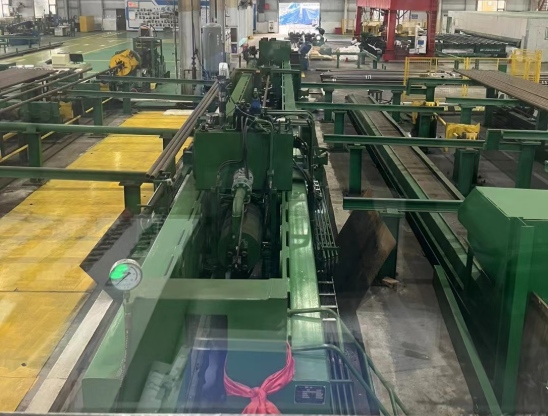
A steel pipe hydrostatic testing machine must fit the surrounding production process, not just perform an isolated pressure test. Loading, positioning, sealing, filling, air removal where required, pressurization, holding, pressure release and unloading all influence cycle time and operational consistency.
The exact sequence and automation level depend on the machine configuration and the manufacturer's requirements.
For high-volume production, automatic transfer and positioning may reduce manual handling and improve repeatability. For product ranges with frequent size changes, accessible changeover points and clearly defined setup procedures may be more valuable than maximizing automation alone.
Pressure sensors, PLC control, alarms and test-data recording can be incorporated according to the required level of process control and traceability. Their purpose is to support the specified inspection procedure; the presence of a PLC or a recorded pressure curve does not, by itself, demonstrate compliance with API 5CT.
Before commissioning, the manufacturer should verify the machine's pressure capability, measurement system, holding sequence, sealing performance, safety interlocks and product-handling functions against agreed acceptance criteria.
5. What Should OCTG Manufacturers Provide When Ordering Equipment?
Because casing and tubing production ranges vary between mills, a customized hydrostatic testing machine should be designed from a confirmed requirement sheet rather than an assumed standard specification.
At minimum, the equipment inquiry should include:
-
Pipe outside diameter, wall thickness, length and weight ranges.
-
Steel grades and applicable product specifications.
-
Plain-end, upset, threaded or coupled conditions to be tested.
-
Required test pressures, hold times and approved inspection procedures.
-
Target production output and expected product changeovers.
-
Available floor space, transfer direction and upstream/downstream equipment.
-
Pressure measurement, data storage, traceability and reporting requirements.
These details allow the equipment designer to assess the pressure system, end-sealing arrangement, handling mechanism and automation scope as one integrated solution.
Matching hydrostatic test equipment to API 5CT casing and tubing production requires more than choosing a pressure rating. Product dimensions, grade, end finish, approved test conditions, sealing reliability, measurement control and production throughput must be considered together.
For OCTG manufacturers, the most suitable OCTG hydrostatic testing machine is the one engineered around the actual product range and inspection procedure. A requirement-based design review helps reduce avoidable sealing problems, unsuitable equipment configurations and production bottlenecks before the machine is manufactured.