


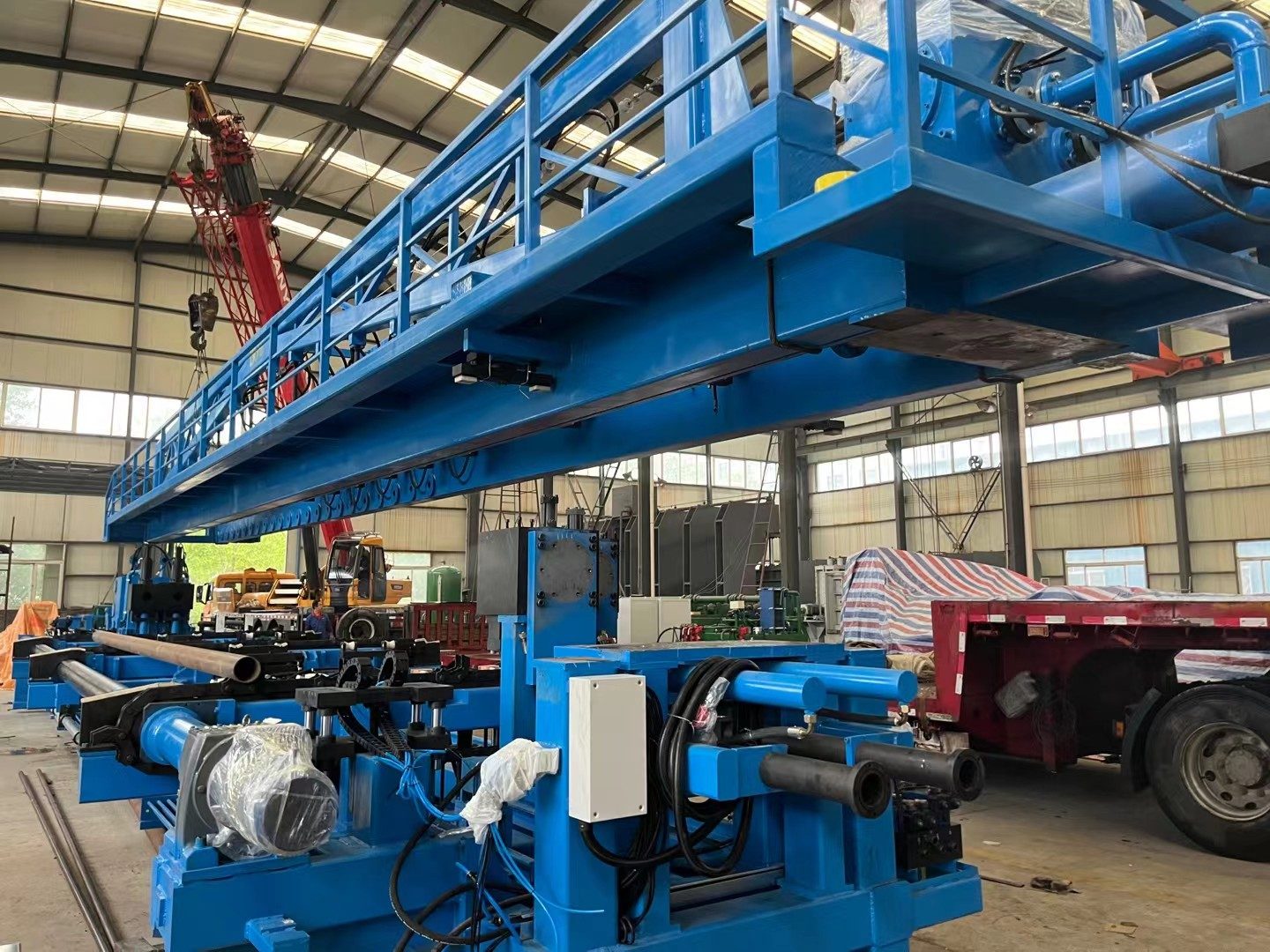
An existing pipe hydro testing machine may be able to handle a wider range of steel pipe sizes, but the modification depends on more than adjusting the sealing heads. Pipe diameter, wall thickness, test pressure, pipe length and production speed determine whether the existing mechanical and hydraulic systems remain suitable.
For steel pipe manufacturers introducing new product sizes, retrofitting can reduce the need for a complete equipment replacement. However, the existing machine must be evaluated against the new operating range before any components are modified.
1. Assess the Existing Machine Before Making Changes
The first step is to compare the current pipe range with the proposed range. A machine designed for small-diameter pipes cannot automatically handle larger pipes at the same test pressure.
During hydrostatic testing, internal pressure creates an axial force on the pipe ends. The approximate force is:
[
F=Ptimesfrac{pi D_i^2}{4}
]
where (F) is the pressure-induced end force, (P) is the internal test pressure and (D_i) is the effective internal diameter.
This relationship explains why increasing pipe diameter can significantly increase the load on the sealing heads, cylinders and machine frame.
| Parameter | What must be checked |
|---|---|
| Pipe outside diameter | Head opening, sealing range and positioning clearance |
| Wall thickness and test pressure | Pressure-system capacity and structural loading |
| Pipe length and weight | Support spacing, alignment and handling capacity |
| Production target | Filling time, changeover time and total test cycle |
The assessment should cover the most demanding combination of pipe size and test pressure, not simply the maximum diameter and maximum pressure considered separately.
2. Identify Which Components Need Modification
Not every retrofit requires rebuilding the complete machine. Some changes may involve replaceable tooling, while others require substantial mechanical or hydraulic redesign.
| Component | Potential modification | Engineering consideration |
|---|---|---|
| Sealing heads and seals | Replace heads, sealing elements or adapters | Diameter compatibility, end condition and pressure rating |
| Pipe supports and rollers | Adjust height, spacing or support arrangement | Pipe sag, centering and stable movement |
| Hydraulic cylinders and frame | Upgrade only after engineering review | Required thrust, cylinder capacity and structural strength |
| Water filling and pressure system | Reassess pump, valves and piping | Required pressure, flow and filling time |
| PLC and instrumentation | Revise settings, interlocks or measurement range | Pressure accuracy, operating sequence and traceability |
A larger sealing head should not be installed simply because it fits the pipe. Its pressure rating, effective sealing area, mechanical restraint and compatibility with the existing frame must also be verified.
Likewise, increasing pump capacity does not solve a mechanical limitation. The pressure-generation system and load-bearing structure must be assessed separately.
3. Check Whether the Retrofit Will Maintain Production Efficiency
A wider operating range can increase changeover time even when the machine can technically test every required size. Frequent replacement of sealing parts, manual adjustment of supports or repeated repositioning of test heads may reduce output.
Before approving the modification, compare the existing and proposed operating conditions.
| Checkpoint | Question to resolve |
|---|---|
| Changeover | How long does it take to switch between pipe sizes? |
| Sealing reliability | Can each size maintain the required test pressure without leakage? |
| Cycle time | Will filling, pressurization and drainage remain within the target cycle? |
| Automation | Can the existing control system handle the revised settings and interlocks? |
| Safety | Are the modified pressure-containing and load-bearing components adequately rated? |
After modification, the machine should undergo documented commissioning tests across the intended operating range. These should verify sealing performance, pressure control, holding time, instrumentation and safety interlocks under approved test conditions.
Do not use production testing as a substitute for engineering verification of modified pressure-containing components or structural restraints.
4. When Is Retrofitting Worthwhile?
Retrofitting is generally worth evaluating when the new pipe sizes remain within the machine's verified pressure and structural capabilities, and the required changes are limited to tooling, positioning or control adjustments.
A major redesign may be necessary when the new range exceeds the rated capacity of the test heads, cylinders, frame or pressure system. If several critical systems require replacement, a newly configured machine may offer a better long-term solution.
For this reason, a retrofit decision should compare modification cost, downtime, changeover efficiency, maintenance requirements and future production needs—not just the initial purchase cost.
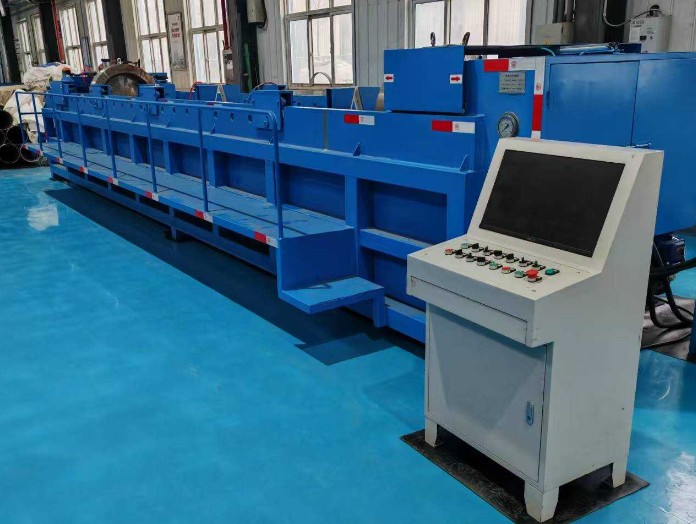
Retrofitting an existing pipe hydro testing machine for a wider pipe size range is feasible only when the complete machine remains suitable for the revised operating envelope. Sealing, structural loading, hydraulic performance, pipe handling and safety must be assessed together.
At Marley Machinery, hydro testing equipment is configured according to the customer's pipe dimensions, required test pressure, production capacity and automation requirements. The same engineering approach can be used to assess an existing machine before deciding which components can be retained, modified or replaced.
For a retrofit assessment, prepare the current machine specifications, proposed pipe diameter and length ranges, wall thicknesses, test pressures and target production rate. These details provide the basis for a technically sound modification plan.