


A steel pipe manufacturer should consider upgrading an existing hydro testing machine when its current equipment can no longer meet production requirements, product specifications, maintenance needs or inspection-record requirements. However, an upgrade is not always more economical than purchasing a new machine.
The decision should start with the condition and design capacity of the existing equipment. Pipe size range, test pressure, sealing capability, spare-part availability, automation and production-line compatibility all need to be reviewed before any modification is approved.
1. The Existing Machine Cannot Handle New Pipe Specifications
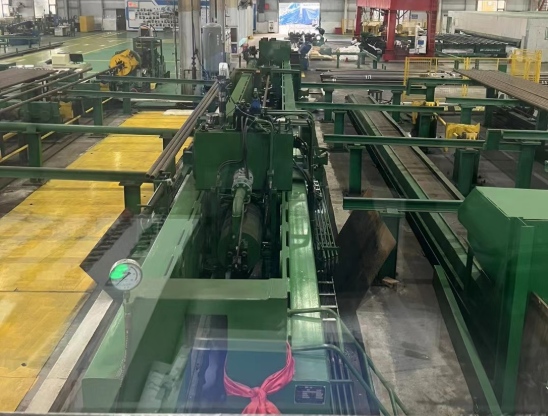
A change in product range is one of the clearest reasons to review an existing hydro testing machine for pipe.
A factory may begin producing larger-diameter pipes, thicker walls, longer sections or different material grades. The original machine may still operate reliably, but its sealing heads, support arrangement or pressure system may not cover the new requirements.
Before extending the operating range, compare the existing machine design with the new production specifications.
| Item to check | Existing machine | New production requirement |
|---|---|---|
| Pipe outside diameter | Current minimum and maximum OD | Required OD range |
| Wall thickness | Approved range | New minimum and maximum thickness |
| Pipe length | Supported length | Required production length |
| Test pressure | Rated operating pressure | Pressure required by the applicable standard or specification |
| Sealing arrangement | Existing head and seal design | Compatibility with new pipe dimensions and end conditions |
| Production output | Current cycle and handling capacity | Required output per shift |
A higher test pressure must never be achieved simply by installing a larger pump. The pressure boundary, end closures, frame, hydraulic components, valves, piping, instrumentation and safety devices must be checked against the proposed operating conditions. Structural modifications require proper engineering assessment.
When only the pipe range or handling arrangement needs adjustment, replacing sealing heads, supports or positioning components may be practical. When the new requirements exceed the machine's fundamental design capacity, a larger upgrade or replacement may be necessary.
2. Spare Parts Are Becoming Difficult to Obtain
Frequent downtime caused by unavailable spare parts can make an older Pipe Testing Machine expensive to maintain.
Common components requiring attention include high-pressure pumps, control valves, sealing elements, hydraulic cylinders, pressure transducers, PLC modules and electrical components.
The important question is not simply whether a component is old. It is whether a reliable replacement is available and whether that replacement can work safely with the existing system.
A practical spare-parts review should cover:
-
Availability and delivery time of critical components.
-
Whether discontinued PLCs, drives or control modules can still be supported.
-
Compatibility of replacement pressure sensors and valves with existing circuits.
-
Availability of sealing parts for the actual pipe diameter range.
-
Time required to repair the machine after a component failure.
Replacing an obsolete control cabinet or upgrading selected hydraulic components may extend the service life of an otherwise sound machine. But repeated failures in the pressure system or major structural components should trigger a wider equipment assessment.
3. Manual Operations Are Limiting Production Output
An older hydro testing machine may still meet the required test pressure but depend heavily on manual loading, pipe positioning, sealing, unloading or record entry.
As production volume increases, these operations can become the main bottleneck rather than the pressure-testing process itself.
Possible upgrade areas include automatic pipe loading, roller conveyors, centering devices, powered positioning, automatic sealing-head movement, PLC-controlled testing sequences and automatic unloading.
The upgrade should target the actual bottleneck. For example, adding an automatic loading system will not improve overall output significantly if pipe positioning or unloading still requires excessive manual handling.
Before introducing automation, compare the existing cycle time with the required production rate. Also check whether the existing machine structure, control system and surrounding production line can support the additional equipment.
4. Test Records No Longer Meet Traceability Requirements
For manufacturers supplying customers with strict quality documentation requirements, handwritten records or basic pressure displays may no longer be sufficient.
An upgrade to the control and data-acquisition system can provide more consistent recording and easier retrieval of test results.
Useful functions may include:
| Data or function | Purpose |
|---|---|
| Pipe identification | Links each test result to a specific pipe |
| Pressure-time curve | Shows pressure development and holding performance |
| Peak pressure and holding time | Records key test conditions |
| Test date and operator | Supports production accountability |
| Pass/fail result | Provides a consistent inspection outcome |
| Data export and backup | Supports quality audits and record retention |
| Calibration information | Helps establish confidence in measurement results |
A new touchscreen alone does not guarantee reliable traceability. Pressure sensors must be suitable for the operating range and maintained with appropriate calibration. Data storage, backup, time settings and the relationship between pipe identification and test results should also be checked.
Where the mechanical system remains in good condition, a PLC and data-recording upgrade may provide substantial value without replacing the complete Pipe Pressure Testing Equipment.
5. The Existing Machine No Longer Fits the Production Line
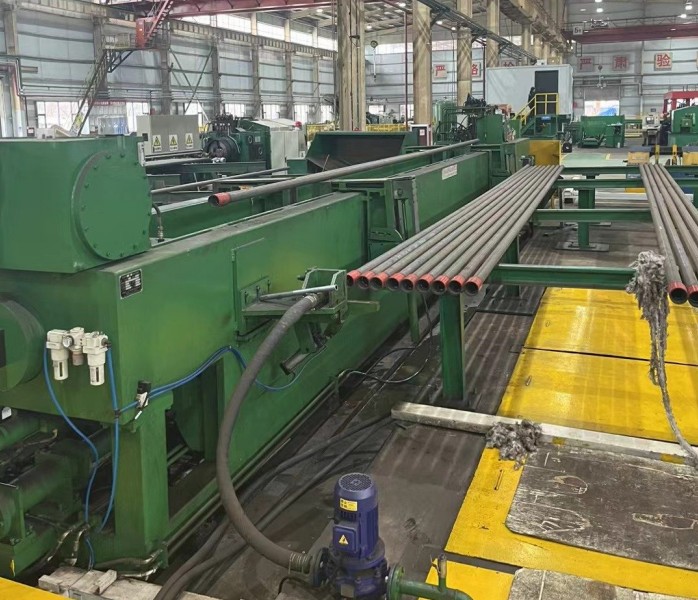
A machine that once matched the factory layout may become unsuitable after production-line expansion.
New handling equipment, increased output or changes in pipe dimensions can affect the available space, pipe transfer direction and connection with upstream or downstream processes.
A compatibility review should include the machine footprint, foundation and load requirements, pipe centerline, loading and unloading routes, electrical supply, hydraulic and pneumatic connections, water supply and drainage.
Control-system integration also matters. The upgraded machine may need to exchange signals with conveyors, transfer equipment or the factory production-management system. Safety interlocks must remain effective after integration.
If the proposed modifications require major reconstruction of the frame, foundation, utilities and control architecture, the total upgrade cost may approach the cost of a replacement machine.
Upgrade or Replace: How to Make the Decision
| Situation | More reasonable direction |
|---|---|
| Main frame and pressure system remain suitable; only sealing parts need adjustment | Consider a targeted upgrade |
| PLC or data-recording system is outdated, but mechanical components are sound | Consider a control-system upgrade |
| Manual handling is the main production bottleneck | Evaluate automation retrofit |
| Required test pressure exceeds the machine's verified design capacity | Consider major redesign or replacement |
| Structural condition or safety deficiencies cannot be economically corrected | Replacement may be more appropriate |
| New pipe sizes cannot be accommodated without extensive reconstruction | Compare full retrofit cost with a new machine |
The decision should be based on the remaining service life, technical feasibility, downtime during modification, maintenance cost and expected production requirements—not only the initial upgrade quotation.
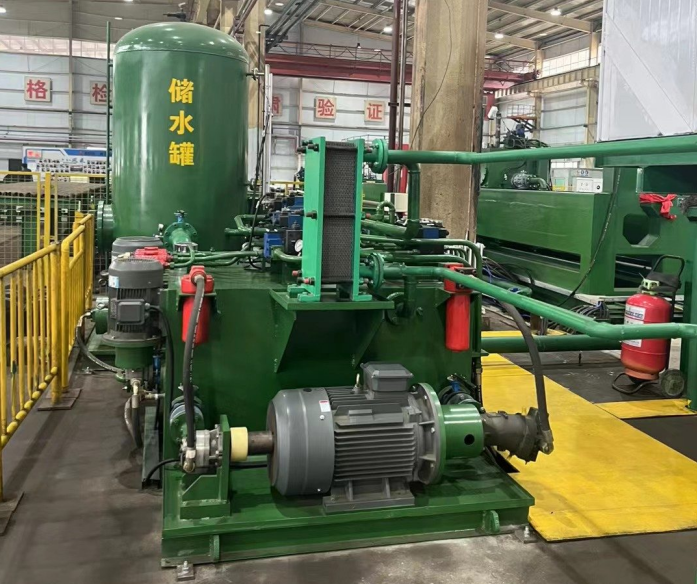
Upgrading an existing hydro testing machine can be a sensible investment when the pressure-bearing structure remains suitable and the required improvements are limited to specific components, controls or handling systems.
When new pipe specifications exceed the original design, spare parts are no longer supportable or the existing layout cannot meet production demands, replacing the machine may be the more reliable long-term option.
For a custom hydro testing machine for pipe, the manufacturer should review the existing machine drawings, pipe dimensions, test pressure, production target, automation requirements and current equipment condition before recommending an upgrade. This avoids spending money on modifications that do not solve the factory's actual limitations.