


A hydrostatic test record has limited value if it cannot be linked to the pipe that was actually tested. For a steel pipe manufacturer, recording the target pressure and final result is not enough. Quality personnel may also need to identify the pipe, review its pressure-time curve, confirm the test conditions and retrieve the original inspection record months after production.
An automatic hydro testing machine for pipe can support this process by connecting pipe identification, test parameters, pressure measurements and inspection results in one record. The critical design requirement is not simply data storage. It is maintaining a reliable link between each physical pipe and its test history.
1. What Should Each Hydrostatic Test Record Contain?
A useful record should identify the product, document the test conditions and preserve the measured results. The exact fields depend on the manufacturer's quality procedures and applicable product specification.
| Record category | Information to record | Purpose |
|---|---|---|
| Pipe identification | Unique pipe ID, heat number and batch number | Identifies the tested product |
| Product details | Grade, outside diameter and wall thickness | Defines the pipe configuration |
| Test settings | Target pressure and required holding time | Identifies the assigned test conditions |
| Measured results | Actual pressure, pressure-time curve and holding duration | Provides evidence of test execution |
| Test outcome | Pass, fail, interrupted or invalid | Records the inspection status |
| Equipment information | Machine ID, test station and relevant instrument identification | Supports investigation and measurement control |
| Test information | Date, time and operator ID, where required | Establishes the test history |
The unique pipe ID is particularly important. A heat number or batch number may identify multiple pipes, so it should not replace individual product identification when pipe-level traceability is required.
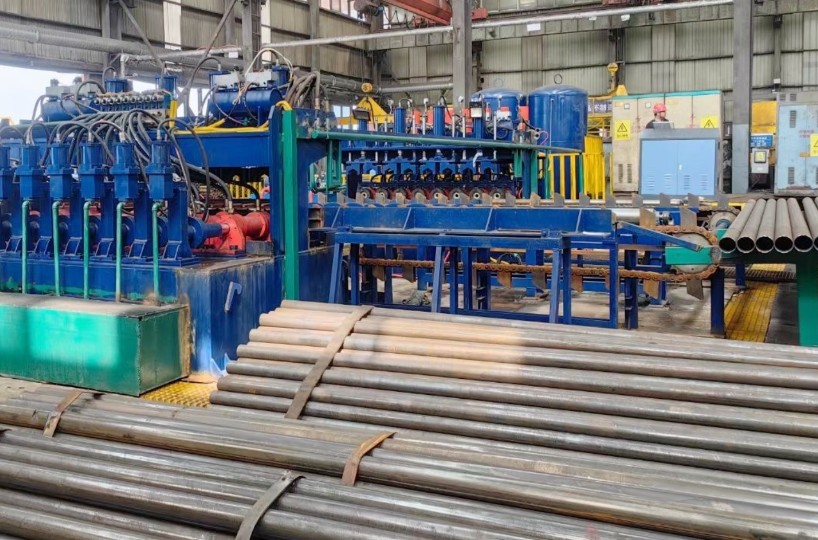
2. How Automatic Test Data Recording Works
Data collection should follow the actual testing sequence. It should not depend on an operator manually entering the final result after the machine has completed its cycle.
A typical process is:
Pipe identification → Test parameter confirmation → Water filling → Pressurization → Pressure holding → Result evaluation → Record storage
The process involves several coordinated operations:
Pipe identification: The pipe number is entered manually, scanned through a barcode or QR code, or obtained through another configured identification system.
Parameter confirmation: The system selects or confirms the corresponding test settings, including target pressure and holding time. These settings must match the approved inspection procedure.
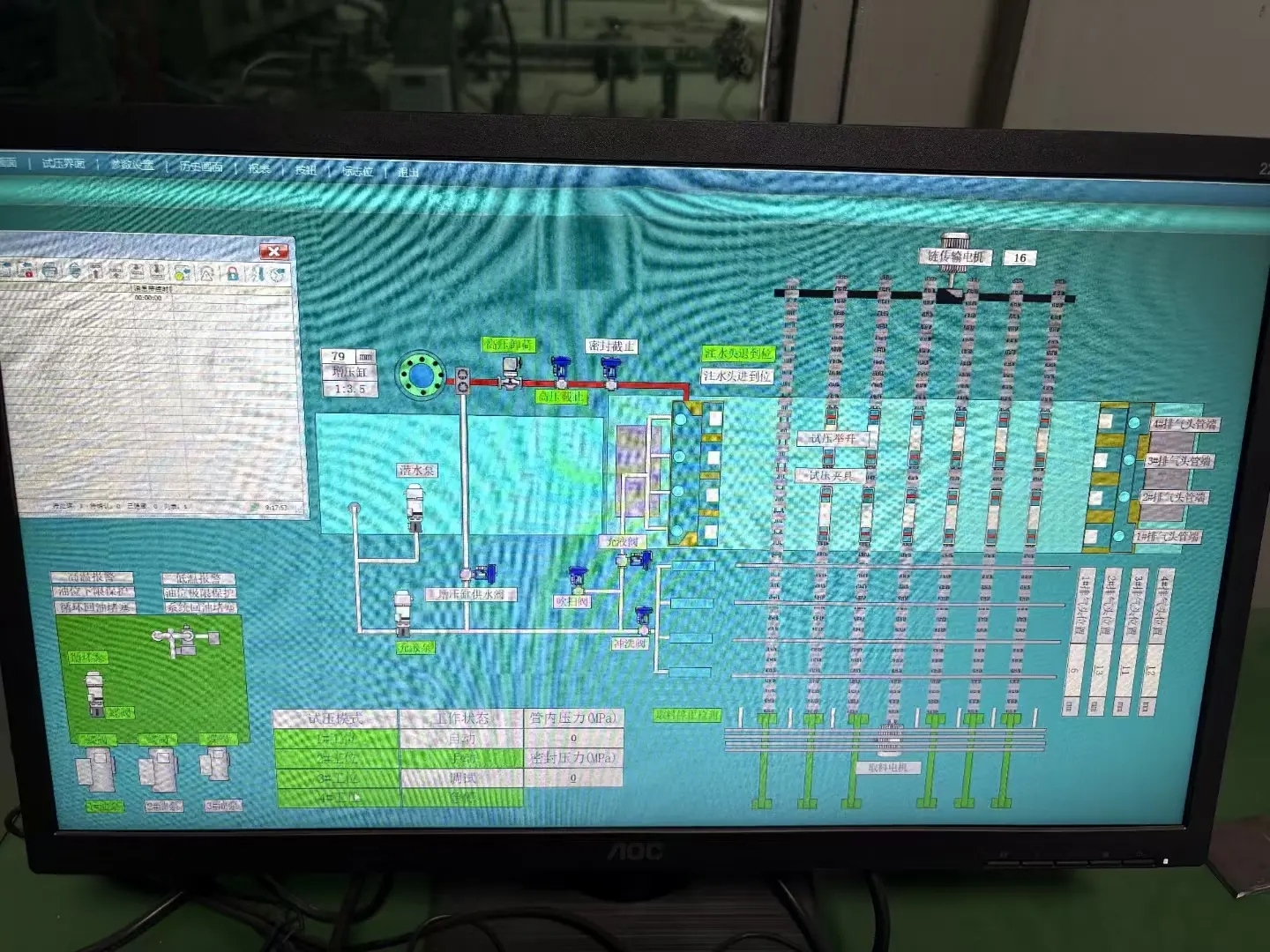
Pressure measurement: During pressurization and holding, the pressure transmitter provides measurement signals to the control system. The PLC coordinates the testing sequence and collects relevant operating data.
Result evaluation: The completed test is classified according to the configured acceptance criteria. A cycle that stops because of an alarm or incomplete test sequence should not automatically be recorded as a successful test.
Record storage: The test data is saved together with the pipe ID, timestamp and relevant machine information. Authorized personnel can retrieve the record later.
The identification method and storage arrangement depend on the factory's requirements. Manual entry, barcode scanning, local storage and database communication are different configuration options, not standard functions that every Hydro Testing Machine must include.
3. Why Pressure-Time Curves Matter
A single pressure value only shows what the system indicated at a particular moment. It does not explain how pressure developed or what happened during the holding stage.
A pressure-time curve provides a more useful record of the test process.
| Recorded information | What it helps verify |
|---|---|
| Pressure build-up | Whether pressure increased through the intended sequence |
| Peak pressure | Whether pressure exceeded the configured target or permitted limit |
| Holding-stage pressure | Whether pressure remained within the specified acceptance limits |
| Holding duration | Whether the required test interval was completed |
| Pressure release | Whether the test cycle followed the intended release sequence |
Recording frequency should be suitable for the hydraulic system's response. If the sampling interval is too long, a short pressure overshoot may occur between recorded points and remain absent from the saved curve.
Timestamps also matter. Pressure readings and test events should use a consistent time reference so that quality personnel can reconstruct the sequence.
A recorded curve does not independently prove that a pipe is acceptable. It must be evaluated against the applicable test procedure, measurement requirements and acceptance criteria.
4. Data Recording vs. Product Traceability
These two functions are related but not identical.
| Function | Automatic data recording | Product traceability |
|---|---|---|
| Stores pressure readings | Yes | Yes |
| Saves pressure-time curves | If configured | If linked to product identity |
| Identifies the individual pipe | Not necessarily | Required for pipe-level retrieval |
| Links results to batch information | Not necessarily | Where required |
| Retrieves records by pipe ID | Not always | Essential for effective retrieval |
| Retains failed and repeated tests | Depends on configuration | Important for a complete inspection history |
| Connects with MES or ERP | Optional | Optional, according to factory requirements |
Consider a practical situation: a customer questions the test result of a particular steel pipe several months after delivery.
If the factory stores records only by production date, the quality department may have to search through hundreds of unrelated pressure curves. If each test is linked to the pipe's unique ID, the relevant record can be retrieved directly.
Repeated tests also require careful handling. A failed or interrupted test should not simply be overwritten by the next successful result. Each test event should be retained and linked to the same pipe identification so that its inspection history remains complete.
5. What Should Buyers Specify Before Ordering?
The data-recording system should be defined during equipment design, alongside the hydraulic and mechanical requirements.
Before ordering pipe hydro testing equipment, buyers should confirm:
-
Identification method: Manual entry, barcode, QR code or automatic identification.
-
Data fields: Pipe details, target pressure, actual pressure, pressure curves and final results.
-
Test status: How successful, failed, interrupted and invalid cycles are classified.
-
Record retrieval: Whether searches are required by pipe ID, batch number or test date.
-
Report format: Whether CSV, Excel or PDF output is required.
-
Storage and retention: Where records are stored and how long they must be retained.
-
System integration: Whether communication with MES, ERP or an existing quality database is needed.
-
Data protection: User permissions, backup, recovery and access history requirements.
These functions should also be included in equipment acceptance testing. The customer should verify that the correct pipe ID is associated with each cycle, pressure data is saved correctly and historical records can be retrieved.
6. Applicable Standards and Quality Requirements
Different standards address product inspection and measurement management from different perspectives.
| Standard | Scope | Relevance to test records |
|---|---|---|
| API Specification 5L | Line pipe manufacturing and inspection | Addresses testing, marking, traceability and related production records |
| API Specification 5CT | Casing and tubing | Defines product-specific technical delivery and inspection requirements |
| ISO 10012 | Measurement management systems | Supports confidence in the validity and reliability of measurement results |
API 5L applies to line pipe, while API 5CT applies to casing and tubing. The applicable edition, addenda and purchase requirements should be checked when defining inspection records and retention arrangements.
ISO 10012:2026 provides a framework for managing measurement processes and measurement equipment. It is relevant to pressure instrument control and measurement reliability, but it does not prescribe a universal data-record format for every pipe hydrostatic testing machine.
The exact test records, retention period and acceptance requirements should follow the applicable product specification, customer requirements and the manufacturer's quality management system.
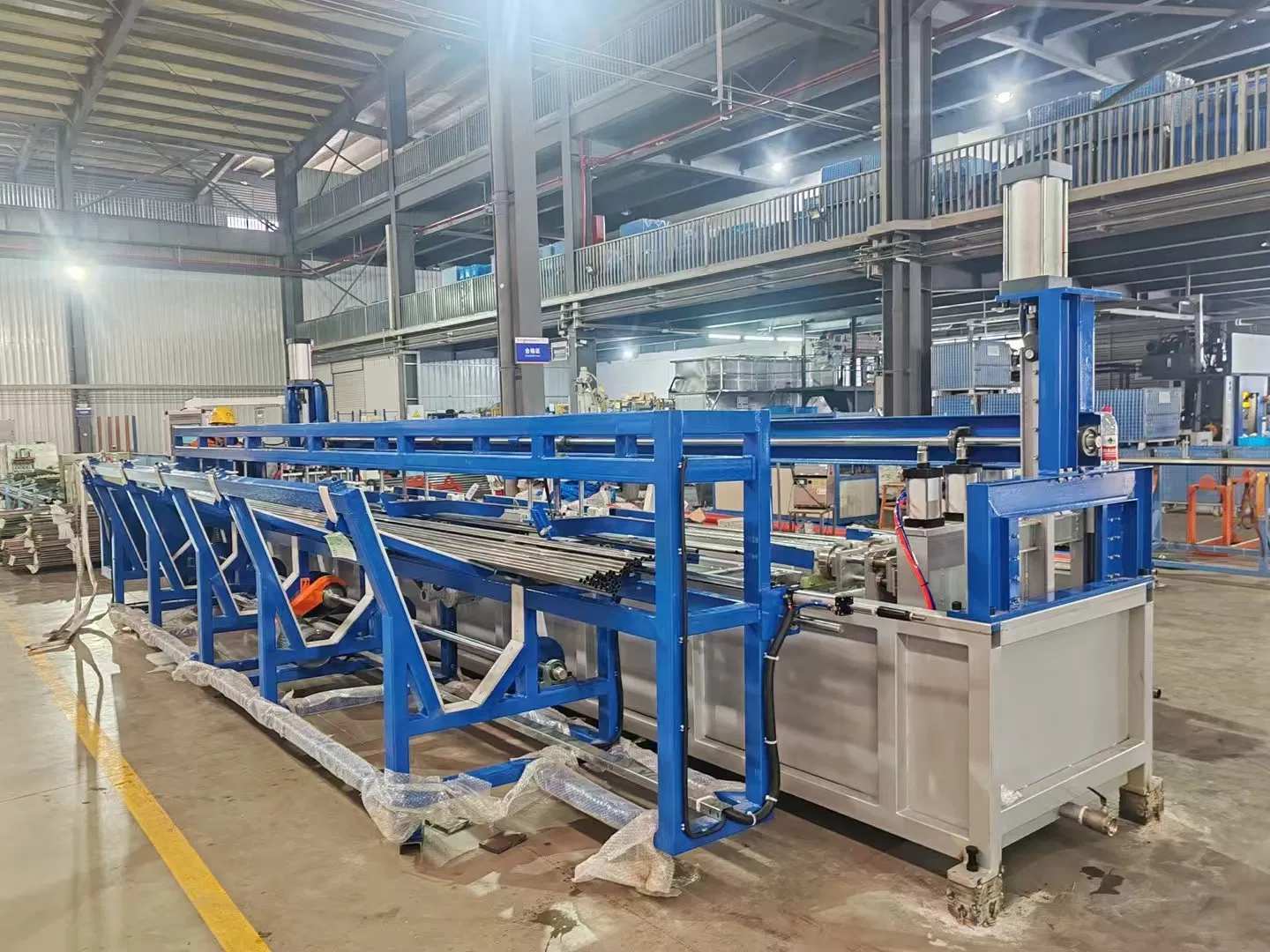
Automatic test data recording becomes meaningful when every result can be traced back to the correct steel pipe. Reliable traceability requires unique product identification, documented test conditions, pressure-time records and proper handling of failed or repeated tests.
For a hydro testing machine for pipe, data storage is only one part of the system. The more important requirement is ensuring that each test record is complete, retrievable and linked to the actual inspection event.