








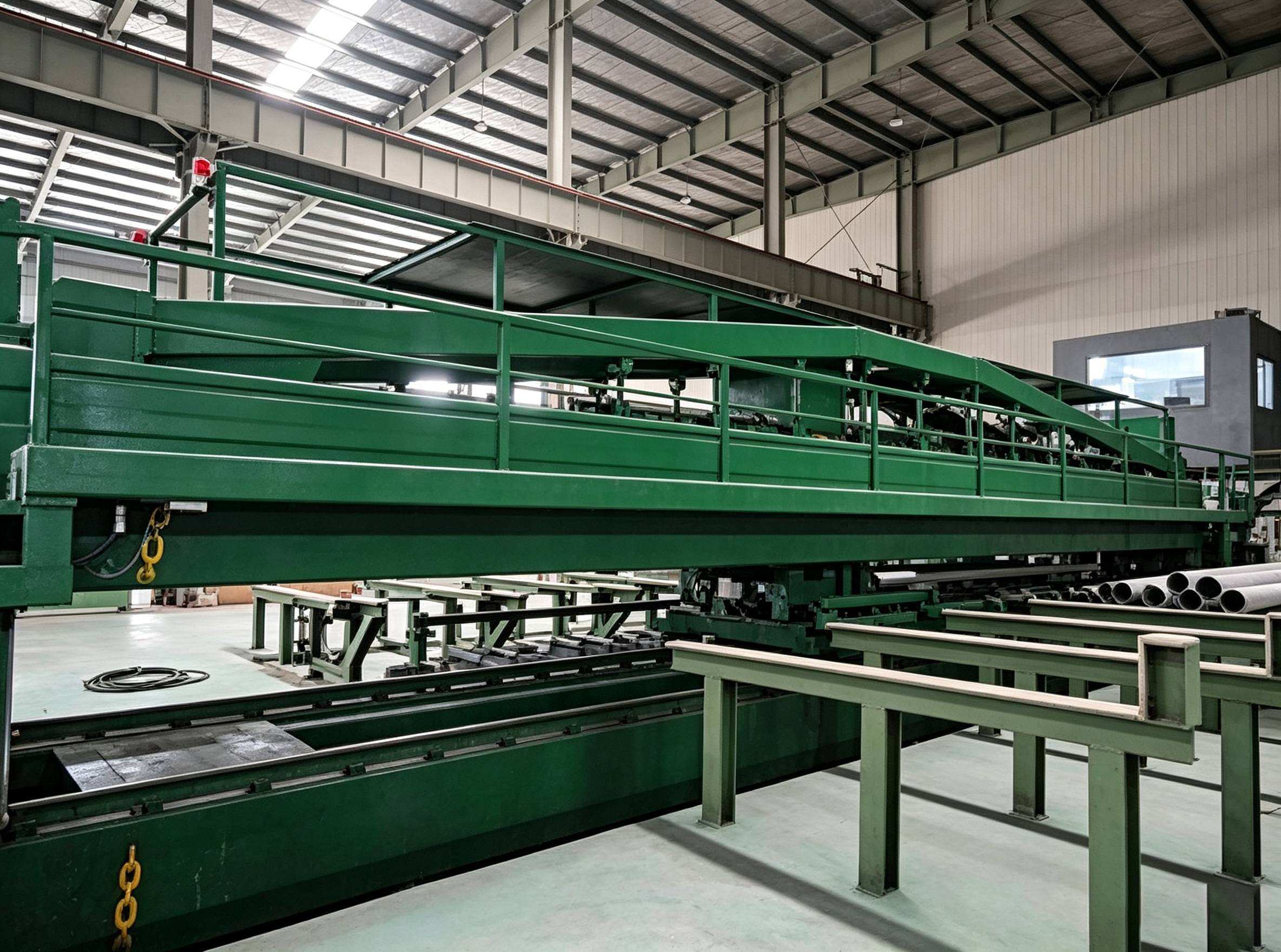
Hydrostatic test pressure in a pipe hydrotest machine is controlled by a closed-loop system that continuously compares the actual pipe pressure measured by a calibrated pressure sensor with the target test pressure programmed in the PLC. The controller adjusts the high-pressure pump, proportional valve, or other pressure-regulating components to increase, reduce, or maintain water flow. As the target pressure is approached, the system normally reduces the pressurization rate to minimize overshoot. During the holding period, the controller continuously monitors pressure and compensates for small changes so that the test remains within the specified tolerance.
How Does Pressure Control Work?
A modern hydrostatic testing machine normally uses several components working together rather than relying on the pump alone.
The basic control loop is:
Pressure Sensor → PLC → Control Output → Pump/Valve → Pipe Pressure → Pressure Sensor
The pressure transmitter measures the actual pressure inside the pipe and sends a continuous signal to the PLC. The PLC compares this value with the programmed setpoint and determines whether additional water pressure is required.
During initial pressurization, the system can operate the pump at a relatively high flow rate. As the measured pressure approaches the target, the PLC reduces the pumping rate or adjusts the regulating valve. This staged approach provides smoother pressure control than simply switching a high-pressure pump on and off.
|
Control Component |
Main Function |
|
Pressure transmitter |
Measures actual test pressure |
|
PLC |
Compares actual pressure with the setpoint |
|
High-pressure pump |
Generates the required test pressure |
|
Proportional valve |
Fine-tunes water flow and pressure |
|
Pressure relief system |
Protects the equipment against excessive pressure |
|
HMI |
Allows operators to set and monitor test parameters |
|
Data recorder |
Stores pressure and test-cycle information |
How Is Pressure Maintained During the Holding Period?
Reaching the target pressure is only part of the process. A pipe hydro testing machine must also maintain the required pressure for the specified holding period.
Small pressure changes can occur because of pipe expansion, water temperature, trapped air, seal behavior, or changes in the hydraulic system. The pressure sensor detects these changes, and the PLC responds according to the programmed control logic.
If pressure falls below the allowable range, the system can introduce additional water or adjust the control valve to restore the pressure. If pressure approaches or exceeds the upper control limit, the system reduces pumping or closes the regulating valve.
This closed-loop approach is particularly important for automated Steel Pipe Testing, where hundreds of pipes may be tested under similar conditions during a production shift.
What Prevents Pressure Overshoot?
Pressure overshoot occurs when the actual pressure temporarily exceeds the target value. It can result from pump inertia, excessive flow, delayed valve response, incorrect control parameters, or trapped air.
Modern pipe pressure testing machines reduce this problem by using multi-stage pressure control. For example, the machine may use high flow during initial filling and pressurization, then switch to a lower flow rate as the target pressure is approached.
Properly tuned PID or other closed-loop control parameters can further reduce pressure fluctuations. The exact control strategy depends on the pump characteristics, pipe volume, required pressure, and equipment design.
Engineering Considerations
Accurate pressure control depends on more than the PLC program.
Pressure transmitters must be correctly selected, installed, and periodically calibrated. The pump and valves must also be sized for the required pressure range and production cycle.
Engineers should verify:
- Pressure sensor calibration
- Target pressure and allowable tolerance
- Pump response characteristics
- Valve response time
- Pipe filling and air removal
- Pressure holding time
- Pressure relief settings
- Test data recording accuracy
The applicable product standard and customer specification should always determine the required test pressure and acceptance criteria. The machine's control system should then be configured to achieve those requirements consistently.
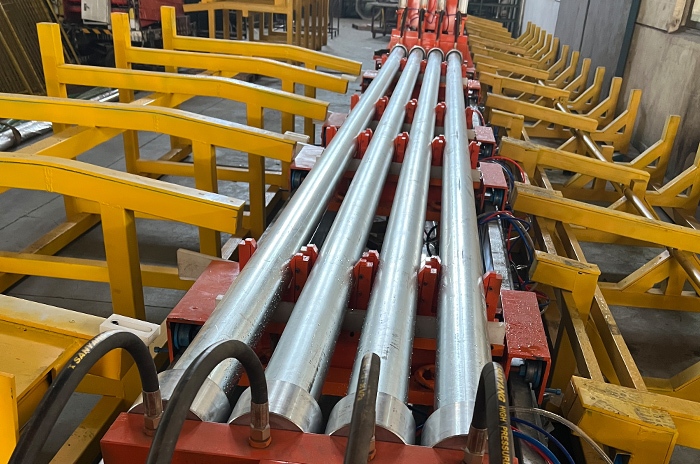
A pipe hydrotest machine controls hydrostatic test pressure through a closed-loop combination of pressure sensors, PLC control, pumps, valves, and safety devices. The system continuously measures actual pipe pressure, compares it with the programmed setpoint, and adjusts water flow to reach and maintain the required test pressure.
For automated hydrostatic testing, accurate sensor feedback and properly tuned pressure control are more important than simply using a higher-capacity pump. A well-designed hydrostatic testing machine should provide controlled pressurization, minimal overshoot, stable pressure holding, and reliable test records for consistent steel pipe quality inspection.