








When selecting a pipe pressure testing machine for large-diameter pipes, many buyers focus only on pressure capacity or price.
But in real pipe mills, especially for large steel pipes used in oil, gas, and structural applications, the real challenge is not pressure alone — it is fixture size, structural stability, and handling efficiency.
A wrong machine size choice can lead to:
- Pipe not fitting into the testing chamber
- Low efficiency due to long loading time
- Sealing failure on large diameters
- Inaccurate pressure results
- Production bottlenecks in the whole line
That is why selecting the right pipe pressure testing machine size is critical for large pipe production.
Real Factory Insight: Why Size Matters More Than Pressure
In large pipe production (especially above 219mm and up to 1420mm), the testing process becomes more mechanical than hydraulic.
What we observe in real factories is:
- Large pipes require stronger support frames
- Manual handling becomes inefficient
- Sealing systems must adapt to diameter variation
- Machine length often limits pipe throughput
A pipe pressure testing machine is not just about pressure rating — it must physically match your production line layout.
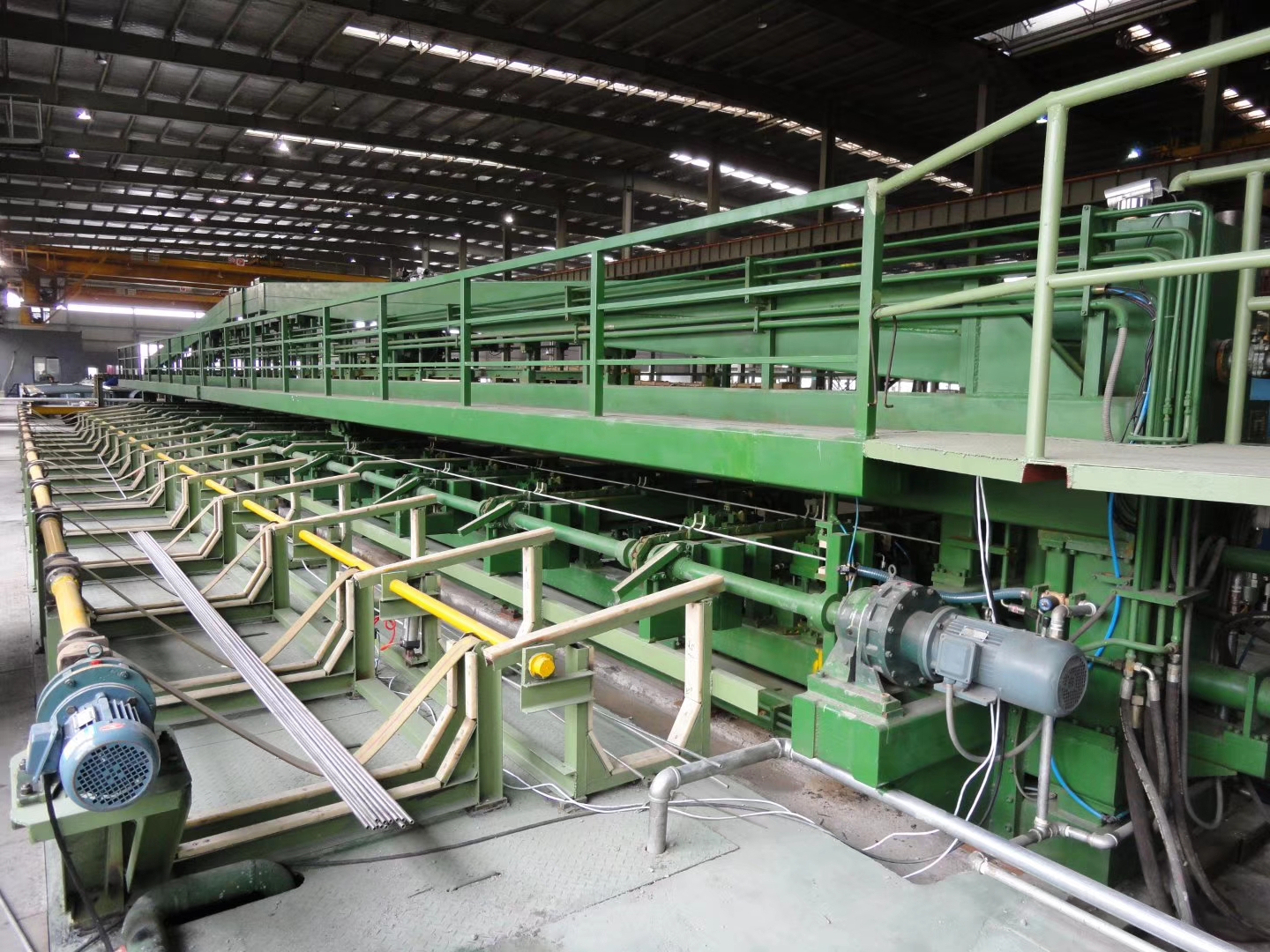
Section 1: Pipe Size vs Machine Structure
Pipe size comparison chart (OD vs machine type)
|
Pipe OD Range |
Recommended Machine Type |
|
89–219mm |
Standard hydro testing machine |
|
219–508mm |
Reinforced frame testing machine |
|
508–1420mm |
Heavy-duty large pipe testing system |
Key Factor 1: Machine Frame Size
For large pipes, structural design matters more than pressure rating.
A proper pipe pressure testing machine must have:
- Heavy-duty steel frame
- Long stroke hydraulic cylinders
- Reinforced pipe support rollers
- Stable base foundation
Without these, vibration and misalignment will affect test accuracy.
Key Factor 2: Sealing System for Large Diameters
Large pipe sealing is completely different from small pipe testing.
Challenges include:
- uneven pipe roundness
- larger sealing surface area
- higher force requirement
- alignment sensitivity
A well-designed pipe pressure testing machine uses:
- segmented sealing rings
- hydraulic centering system
- adjustable clamping force
- wear-resistant rubber seals
Key Factor 3: Loading & Handling System
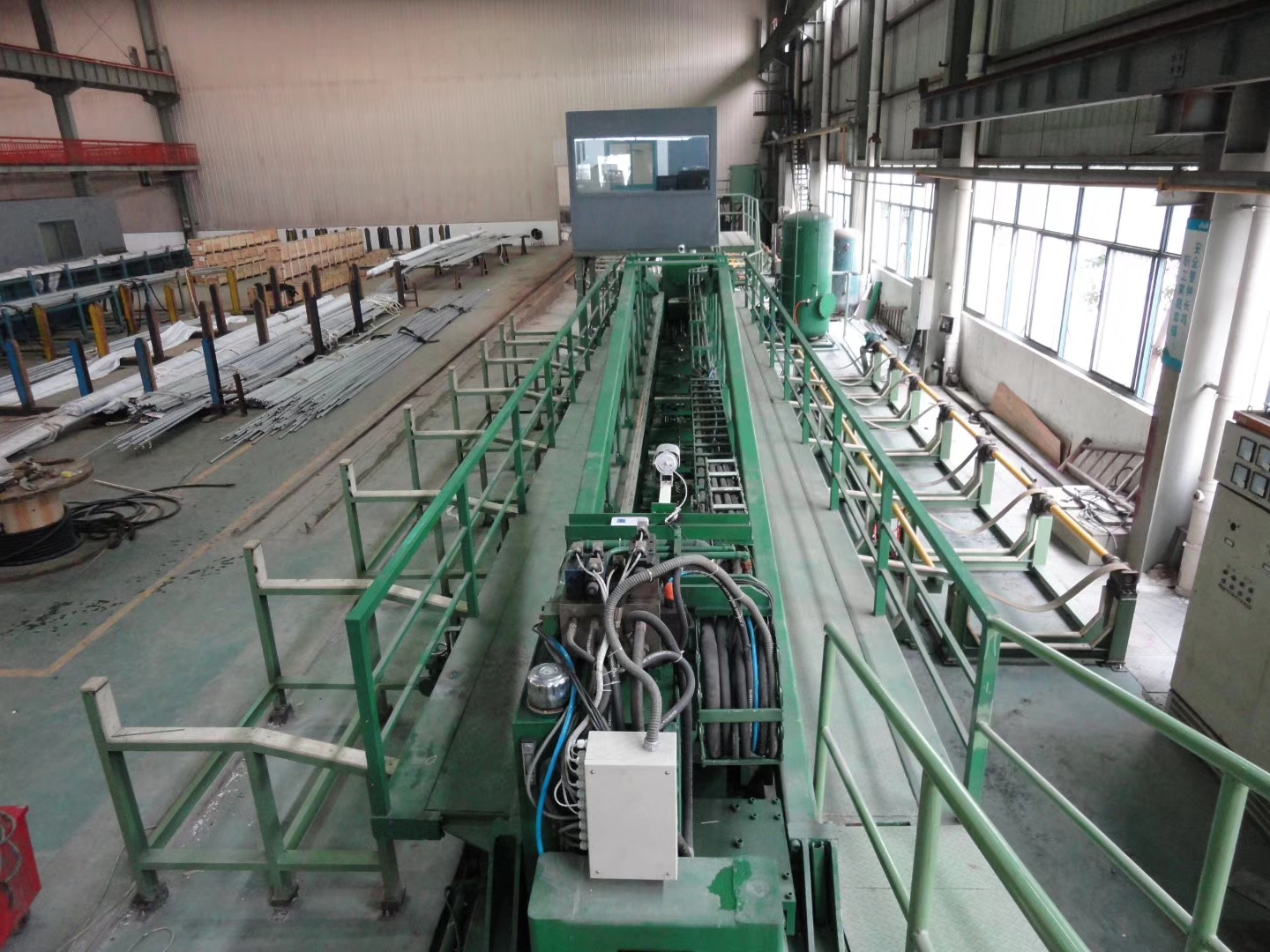
For large pipes, manual loading becomes inefficient and unsafe.
Modern systems integrate:
- roller conveyor beds
- hydraulic lifting support
- automatic pipe centering
- optional overhead crane integration
A slow loading system can reduce your entire line efficiency by 30–40%.
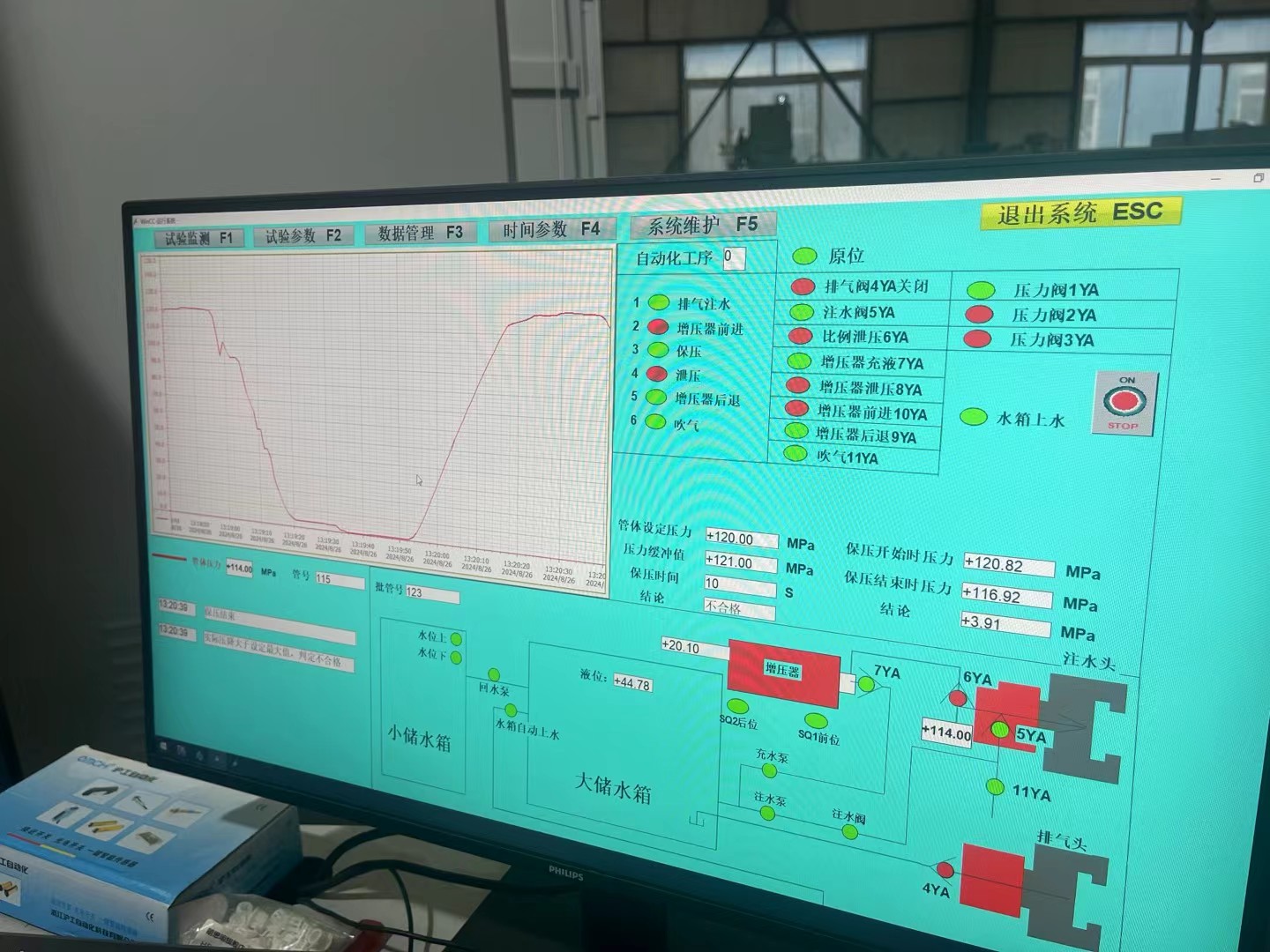
Key Factor 4: Pressure Stability on Large Volume Water Systems
Large pipes require more water volume, which increases system complexity.
Common issues:
- pressure delay
- slow stabilization
- pump overload
- uneven pressure distribution
A stable pipe pressure testing machine must ensure:
- constant flow control
- fast pressure ramping
- accurate holding phase
Key Factor 5: Floor Space & Layout Planning
Many buyers ignore factory layout.
But large pipe systems require:
- long machine footprint
- crane access space
- pipe buffer area
- safety distance zones
Incorrect layout causes:
- production congestion
- slow pipe transfer
- operator inefficiency
Quick Decision Guide
|
Pipe Size Range |
Machine Type Needed |
Key Requirement |
|
Small (≤219mm) |
Standard system |
Speed |
|
Medium (219–508mm) |
Reinforced system |
Stability |
|
Large (508–1420mm) |
Heavy-duty system |
Structure + handling |
Real Factory Experience
In real pipe mills, mistakes usually happen when:
- buyers underestimate pipe diameter growth
- they only check pressure rating
- they ignore loading system limitations
- they don’t plan factory space properly
A proper pipe pressure testing machine selection is always a system decision — not just a machine purchase.
Choosing the right size pipe pressure testing machine for large pipes is not about buying the biggest or most expensive system.
It is about matching:
- pipe diameter range
- factory layout
- production speed
- sealing structure
- handling system
In large pipe production, machine size determines efficiency more than pressure rating itself.