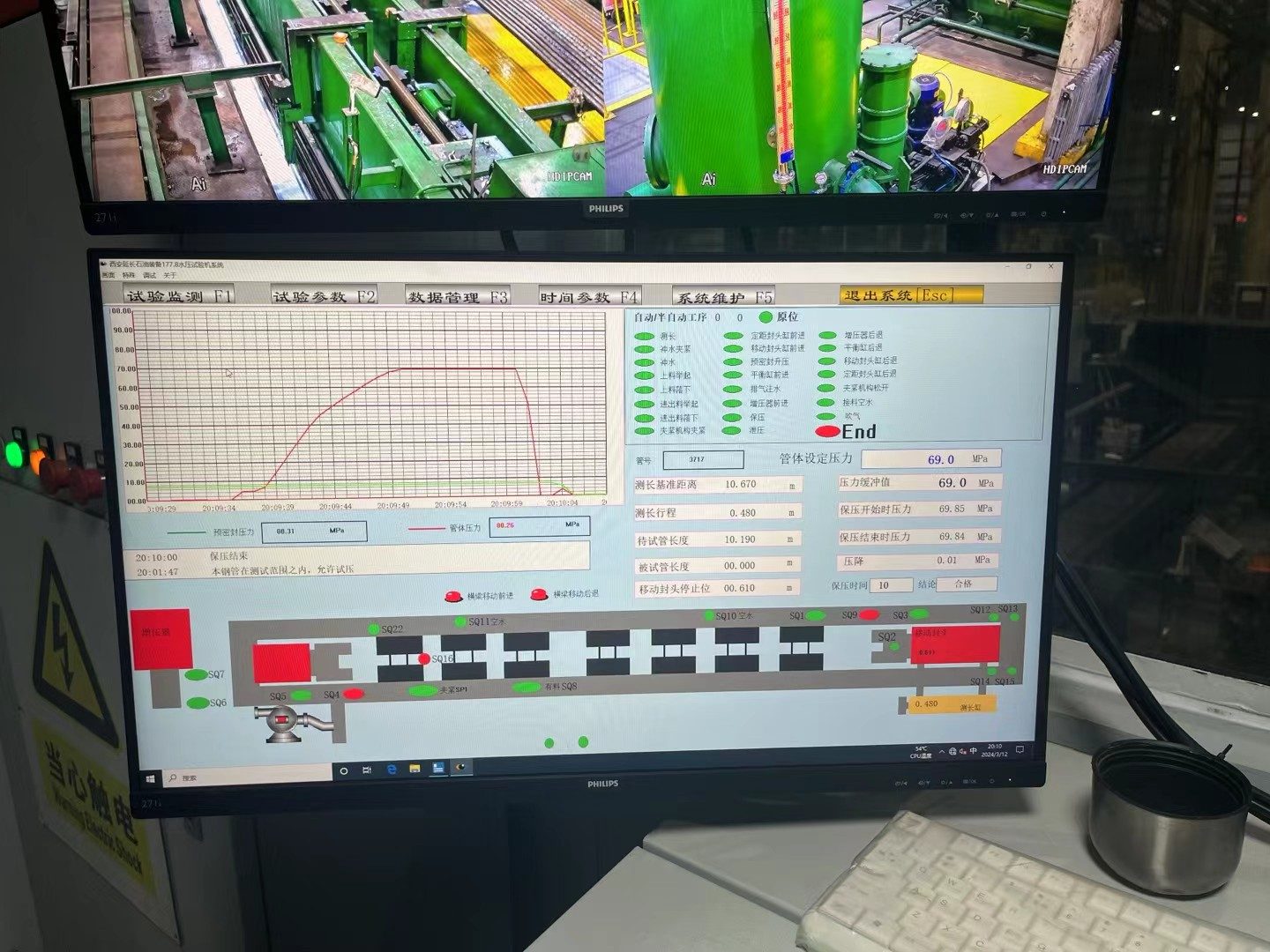


A suitable hydro testing machine for pipe should match the factory's pipe specifications, required test pressure and production output. Loading and unloading speed, pressure control, sealing efficiency and changeover time all affect the overall testing cycle.
1. Start with the Required Production Output
Before selecting a hydro testing machine, determine how many pipes the factory needs to test per shift. The target should be based on accepted and completed test cycles, not the pump's rated capacity or the theoretical operating speed of the machine.
A typical hydrostatic testing cycle includes several operations:
-
Pipe loading and positioning.
-
End sealing and connection.
-
Water filling and air removal.
-
Pressure build-up.
-
Pressure holding and inspection.
-
Controlled depressurization and draining.
-
Pipe unloading.
The actual cycle time is influenced by all these operations. If the pressure-holding stage is relatively short but manual positioning takes considerable time, increasing pump capacity will have little effect on total output.
Manufacturers should identify the slowest operation first. This helps determine whether the improvement should come from a faster filling arrangement, automatic positioning, improved sealing-head movement or a different machine layout.
2. Match the Machine to the Pipe Specification Range
A hydro testing machine designed for a narrow pipe diameter range may require frequent adjustments or tooling changes when production involves different sizes.
Before purchasing equipment, confirm the complete range of pipes to be tested. Diameter, wall thickness and length affect the sealing arrangement, support structure, water volume and handling method.
| Selection parameter | Information to confirm | Effect on machine design |
|---|---|---|
| Pipe outside diameter | Minimum and maximum OD | Sealing-head range and positioning |
| Wall thickness | Minimum and maximum thickness | Pipe handling and test requirements |
| Pipe length | Shortest and longest pipe | Support arrangement and loading layout |
| Pipe material | Carbon steel, stainless steel or other grades | Handling and application requirements |
| Test pressure | Required pressure for each product | Pump, valves, piping and pressure-system design |
| Holding time | Required duration for each test | Determines part of the cycle time |
| Production target | Pipes per shift or hour | Handling method and station arrangement |
| Product changeover | Frequency of size changes | Adjustment and tooling requirements |
The machine should cover the actual production range, rather than an assumed maximum size that is rarely manufactured. For factories with frequent size changes, quick-adjustment mechanisms or interchangeable sealing components can reduce changeover time.
Test pressure and holding time must follow the applicable product standard, customer specification and approved inspection procedure. Shortening the required holding period is not an acceptable way to increase output.
3. Select the Right Pressure System and Pump Capacity
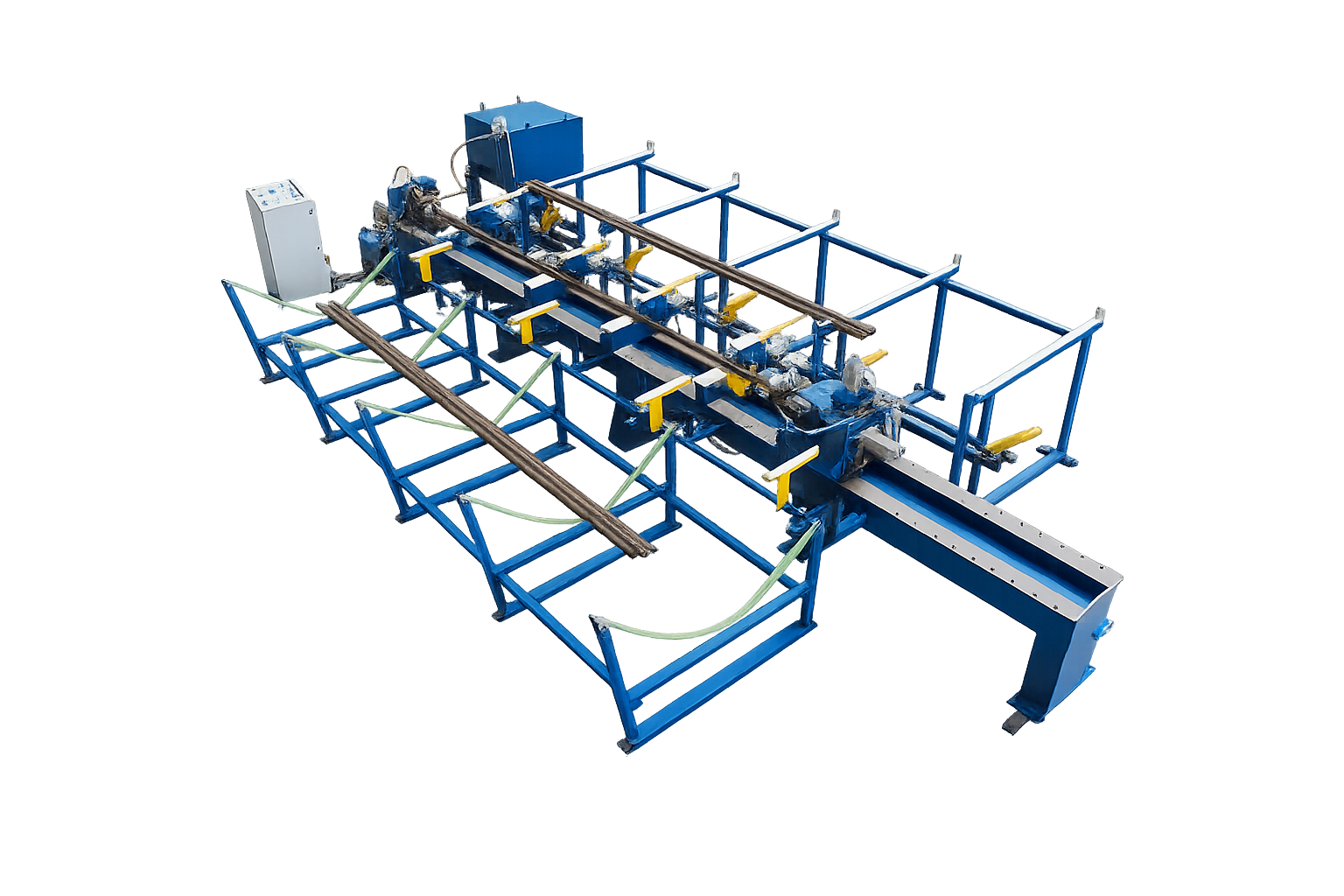
Pump selection has a direct effect on the pressure build-up stage, but pressure rating and flow capacity must be considered together.
A pump may be capable of reaching the required pressure but take too long to fill and pressurize a large test volume. Conversely, excessive flow during the final approach to the target pressure may cause pressure overshoot.
A properly configured hydraulic system should provide suitable filling capacity, controlled pressure increase and stable operation near the specified test pressure.
For some applications, a combination of high-flow filling and a separate high-pressure stage may be appropriate. The final arrangement depends on pipe dimensions, test pressure, water volume and the required cycle sequence.
The pressure control system should also respond consistently when operating conditions change. Suitable pressure sensors, control valves and PLC settings help reduce unnecessary pressure fluctuations and repeated adjustments.
4. Reduce Time Lost in Loading, Sealing and Unloading
Manual handling can consume a significant part of the production cycle, especially when pipes are long, heavy or manufactured in large batches.
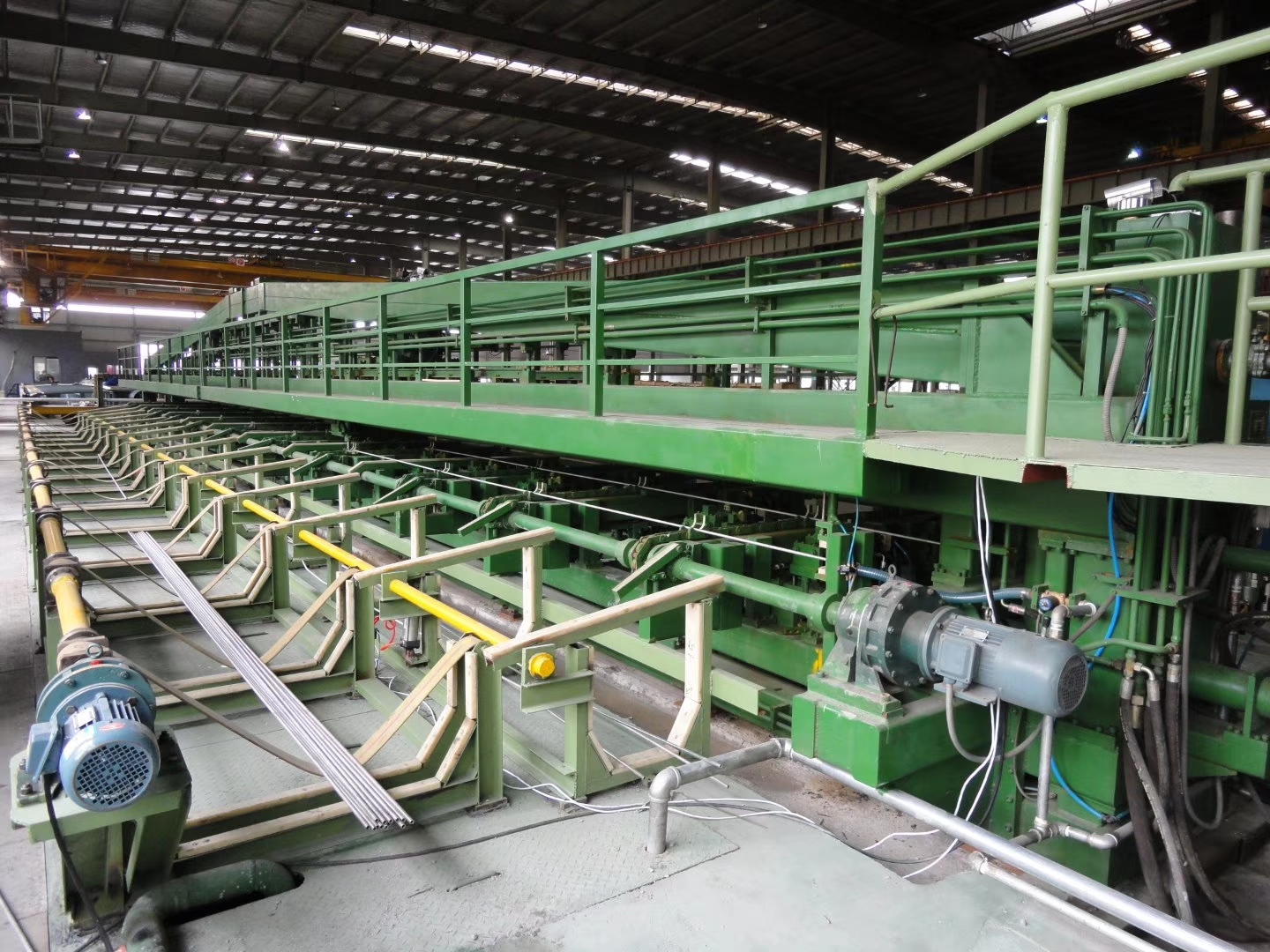
Depending on the factory layout, an automatic hydro testing machine may incorporate:
-
Powered roller conveyors for pipe transfer.
-
Automatic loading and unloading devices.
-
Pipe centering and positioning mechanisms.
-
Hydraulic or powered sealing-head movement.
-
Automatic test-sequence control.
-
Interlocks between handling equipment and the pressure system.
Automation should be selected according to the actual bottleneck. For example, automatic loading alone will not improve overall line output if pipe positioning and unloading remain manual operations.
Sealing is another important factor. Poor alignment, unsuitable sealing components or slow manual adjustment can lead to leakage, repeated clamping and unnecessary downtime. The sealing arrangement should suit the specified pipe diameter range and end conditions.
5. Improve Changeover and Test Data Management
Production efficiency also depends on how easily operators can switch between pipe specifications and verify completed tests.
For factories producing multiple pipe sizes, the control system can use predefined test recipes. Each recipe may contain the relevant pressure target, holding time and operating sequence. Authorized operators can select the correct settings for the product being tested.
A data-recording system can also reduce manual paperwork and make inspection results easier to retrieve.
| Recorded information | Production value |
|---|---|
| Pipe identification | Links results to the tested pipe |
| Test pressure | Confirms the recorded test condition |
| Pressure-time curve | Allows review of the pressure cycle |
| Holding time | Supports verification of the test sequence |
| Pass/fail result | Simplifies inspection records |
| Date and test identification | Supports traceability and audits |
The usefulness of automatic records depends on correct sensor calibration, reliable data storage and accurate pipe identification. A touchscreen without a reliable measurement and recording process does not provide meaningful traceability.
6. Consider the Machine as Part of the Production Line
A Pipe Testing Machine should not be selected as an isolated piece of equipment. Its layout and operating sequence must fit the upstream pipe handling process and the downstream production route.
Check the available installation space, pipe transfer direction, roller-table height, power supply, water connections, drainage and control-system interfaces.
For higher production requirements, multiple testing positions or parallel operating stations may be worth evaluating. However, adding stations only improves output when loading, water supply, pressure systems and unloading capacity can support the increased workload.
The goal is to avoid transferring the bottleneck from the testing machine to another part of the production line.